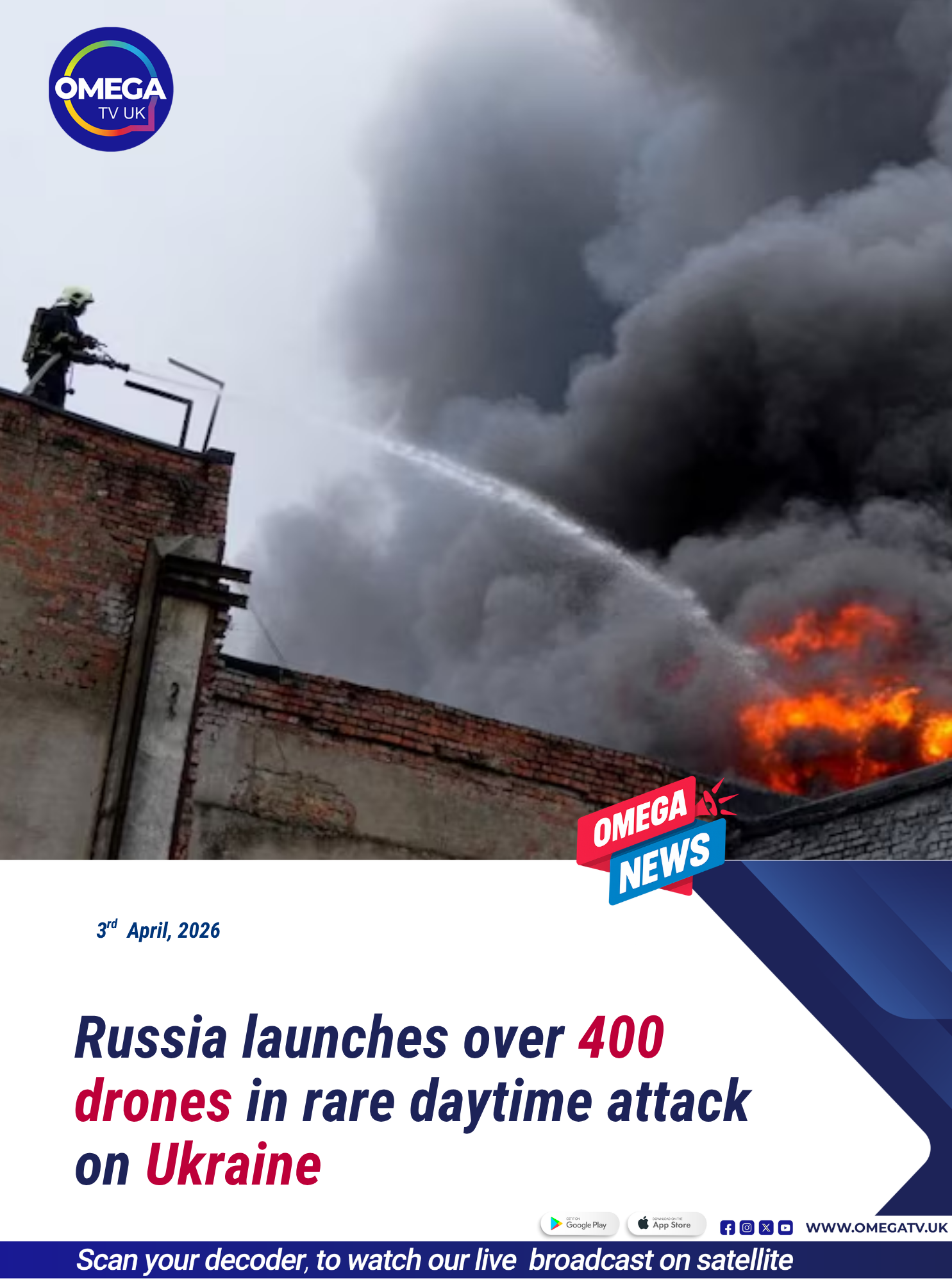
Russia launched more than 400 drones at Ukraine in a rare large-scale daytime assault, according to Ukrainian military officials, marking a significant escalation in aerial attacks during daylight hours.

The strikes, which took place on Tuesday, targeted multiple regions across the country, including areas near the capital, Kyiv, as well as the western city of Lviv. Ukrainian air defence systems were quickly activated in response, engaging incoming drones as authorities worked to limit damage and casualties.
Air force spokesperson Yuriy Ihnat confirmed the scale of the assault, describing it as one of the largest drone attacks carried out during the daytime since the war began. While Russia has frequently used drones in its campaign against Ukraine, such strikes have typically occurred at night, when visibility is lower and detection is more difficult.
The unusual timing of the attack has raised concerns among analysts and officials, who say it may signal a shift in strategy. By launching drones during the day, Russian forces may be attempting to test Ukraine’s air defence readiness under different conditions or to overwhelm systems already strained by sustained bombardment.
Residents in Kyiv reported hearing air raid sirens and explosions as defence systems intercepted drones over and around the city. Authorities urged civilians to seek shelter and remain vigilant as the situation developed. In Lviv, which lies relatively close to the Polish border, similar warnings were issued as air defences engaged targets approaching the region.
Lviv has often been considered a safer area compared to eastern and southern parts of Ukraine due to its distance from the front lines. However, it has increasingly come under threat as Russian forces expand the geographical scope of their strikes, targeting infrastructure and key supply routes.
Although officials have not yet released a full assessment of damage or casualties, the scale of the drone deployment suggests a coordinated and sustained operation. Emergency services were placed on high alert, and local authorities began assessing potential impacts on infrastructure, including energy facilities and transport networks.
The continued use of drones has become a defining feature of the conflict, allowing Russia to strike deep into Ukrainian territory without deploying manned aircraft. These unmanned aerial vehicles are often used in large numbers to overwhelm air defence systems, increasing the likelihood that some will reach their intended targets.
Ukraine, for its part, has significantly strengthened its air defence capabilities with support from Western allies. Systems supplied by international partners have played a crucial role in intercepting incoming drones and missiles, helping to protect major cities and critical infrastructure.
However, repeated large-scale attacks continue to place pressure on these systems, both in terms of resources and personnel. Military experts warn that sustained barrages, especially those involving hundreds of drones at once, are designed to test the limits of Ukraine’s defences.
The broader context of the attack highlights the ongoing intensity of the conflict, which shows little sign of easing. Both sides continue to engage in long-range strikes, with Ukraine also targeting Russian military and energy infrastructure in response to attacks on its territory.
The use of drones has added a new dimension to modern warfare in the region, enabling rapid, flexible, and relatively low-cost operations. As both sides adapt their strategies, the frequency and scale of such attacks are likely to remain high.
For civilians, the impact is immediate and deeply unsettling. Daytime attacks, in particular, disrupt daily life and increase anxiety, as they occur when people are more active and exposed. The psychological toll of constant air raid warnings and the threat of sudden હુમ is becoming an increasingly significant aspect of life in Ukraine.
As investigations and damage assessments continue, Ukrainian authorities remain focused on maintaining defensive readiness and protecting the population. Meanwhile, the international community continues to monitor developments closely, amid ongoing concerns about the potential for further escalation.