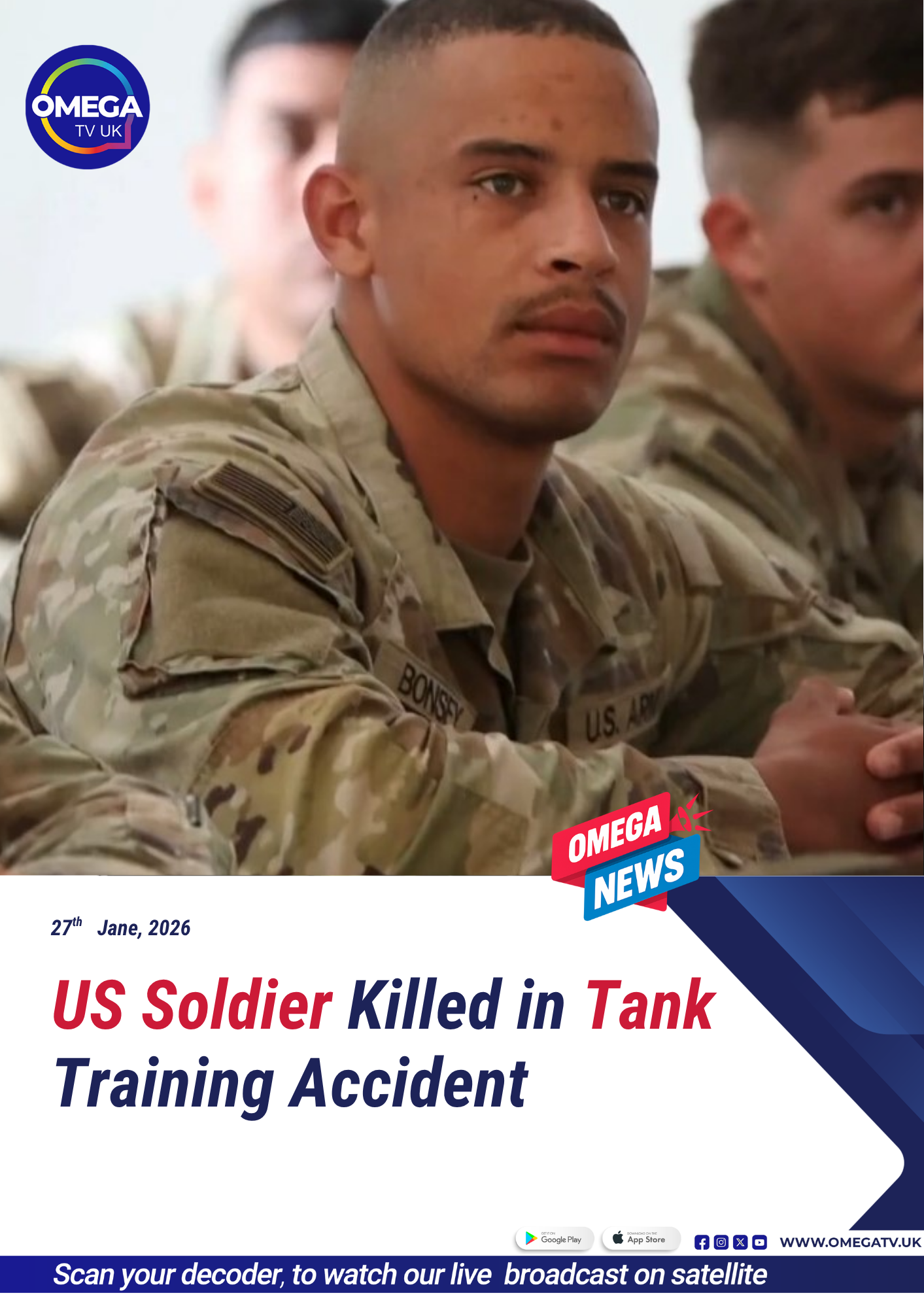
A U.S. soldier has died after being struck and crushed by a 27-ton armored fighting vehicle during a military training exercise in California’s Mojave Desert, prompting an investigation into the fatal incident.

Combat engineer Adrian Bonsey, 29, was taking part in a large-scale training operation at the National Training Center when he was hit by an M2 Bradley fighting vehicle in the early hours of June 10. According to the U.S. Army, the accident occurred at approximately 4:30 a.m. under conditions of limited visibility.
Bonsey was assigned to the 3rd Infantry Division at Fort Stewart after joining the unit two months earlier. Before arriving at Fort Stewart, he served at Fort Carson, Colorado, and completed a deployment to Poland in 2024.
Major General John Lubas described Bonsey as an exceptional soldier dedicated to serving his country. In a statement, he expressed condolences to the soldier’s family, friends, and fellow service members, calling the loss devastating for the entire division.
The training exercise formed part of a month-long combat readiness program designed to simulate battlefield conditions before military units are certified for potential overseas deployments. Such exercises involve complex operations using armored vehicles, infantry units, and live tactical scenarios intended to prepare soldiers for real-world combat environments.
The M2 Bradley fighting vehicle involved in the incident is a heavily armored combat vehicle weighing approximately 27 tons. Operated by a three-person crew, it is designed to transport infantry soldiers while providing fire support with a 25mm chain gun, machine gun, and anti-tank missile system.
Military training accidents remain a concern despite improvements in safety over recent decades. Pentagon data shows that 31 U.S. Army personnel died in training-related incidents during 2025, with fatalities resulting from aircraft crashes and ground accidents. Many ground incidents have involved military vehicles, particularly rollovers and maneuvering accidents during demanding field exercises.
Previous Army investigations into similar incidents have identified contributing factors such as fatigue, limited visibility, insufficient training, and inexperienced supervision during high-risk operations. Military officials have continually reviewed safety procedures in an effort to reduce preventable deaths while maintaining realistic combat training.
Authorities have not released additional details about the circumstances surrounding Bonsey’s death, and the incident remains under official investigation. The findings are expected to determine the exact sequence of events and whether any procedural changes are required to improve safety during future training exercises.