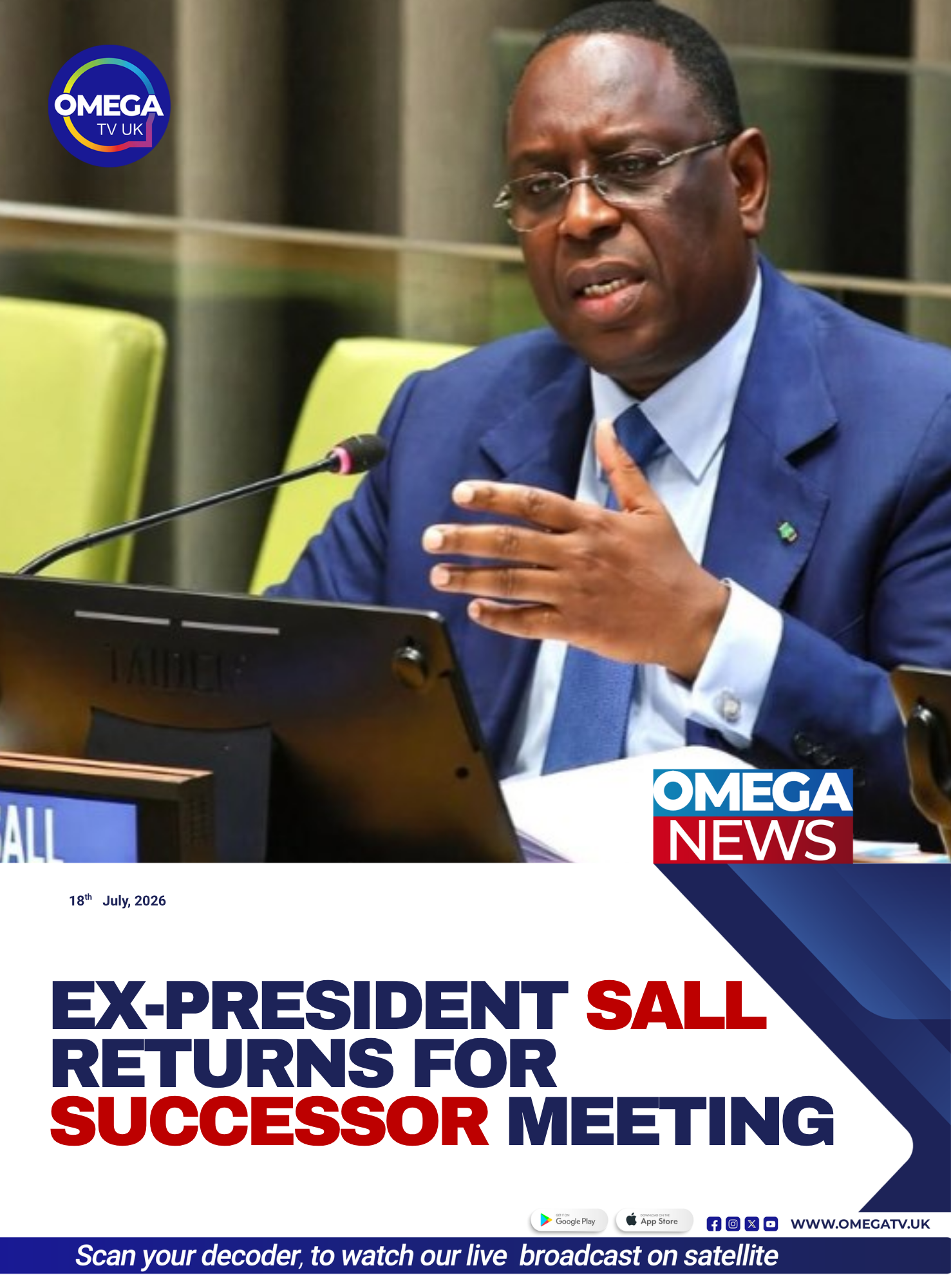
Former Senegalese President Macky Sall returned to Dakar on Friday for the first time since leaving office in April 2024, making a brief visit to meet his successor, President Bassirou Diomaye Faye.

The visit comes as Sall campaigns to become the next United Nations secretary-general and has generated significant political debate within Senegal.
Hundreds of supporters gathered at a military airport in Dakar to welcome the former president upon his arrival. Waving flags and cheering, the crowd celebrated Sall’s return before accompanying him towards the presidential palace, where he was scheduled to hold talks with President Faye.
Sall’s political party, the Alliance for the Republic (APR), encouraged supporters to turn out in large numbers for the occasion.
Despite the warm reception from his supporters, the visit has been met with criticism from political opponents and some members of the current administration.
Since leaving office after serving as president from 2012 to 2024, Sall has lived in Morocco while remaining active in international and regional affairs.
The current Senegalese government has accused his administration of overseeing political repression during its final years in power, allegations linked to deadly protests that resulted in dozens of deaths. Officials have also accused the former government of concealing economic information, claims that continue to fuel political tensions.
Sall has not publicly responded to those allegations.
President Faye’s decision to meet his predecessor has also created divisions within his own political camp.
The meeting comes after Faye’s political relationship with former ally and Prime Minister Ousmane Sonko deteriorated, prompting speculation that the president may be seeking broader political engagement.
Sonko and Sall have long been considered political rivals.
Ahead of the meeting, presidential adviser Alioune Ibnou Abitalib Sow announced his resignation, saying he opposed President Faye’s decision to receive the former president.
In a statement shared on social media, Sow argued that many families were still seeking answers over the deaths that occurred during Sall’s presidency.
Civil society groups have also criticised the visit, calling for accountability over the political violence that took place during Sall’s final years in office.
The Senegalese presidency has not publicly commented on the controversy surrounding the meeting.
Sall had previously announced that his stay in Dakar would be brief and that he planned to leave the country immediately after meeting President Faye.
His visit also comes as Burundi has nominated him as Africa’s candidate for the position of United Nations secretary-general, placing the former president back in the international spotlight.
As Senegal continues navigating a changing political landscape, the meeting between the country’s current and former presidents is expected to remain a topic of national debate.