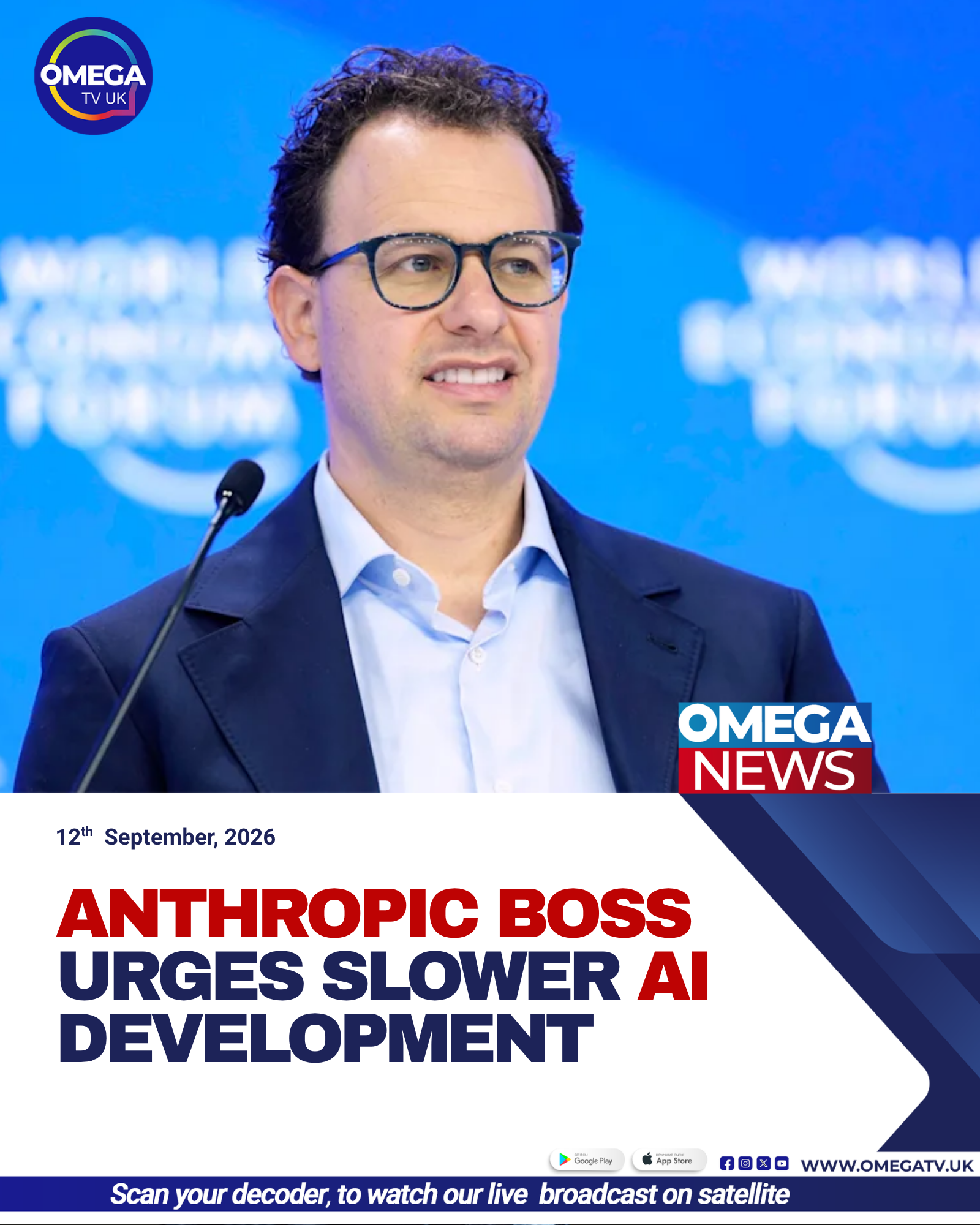
Anthropic chief executive Dario Amodei has called for the pace of artificial intelligence development to be slowed and closely monitored, warning that the technology is advancing faster than safeguards can keep up.

In an essay published on Saturday, Amodei said AI development should continue but argued that the risks associated with increasingly powerful models are serious enough to require companies and governments to take more time to address them.
He proposed a three-point approach involving independent monitoring of AI models during development, industry-wide safety standards and international regulation.
Amodei’s warning comes amid growing concerns about the potential consequences of increasingly capable AI systems. Some researchers have estimated that there is a significant possibility that advanced AI could pose an existential threat to humanity within the next decade.
Anthropic has previously said it identified and disrupted attempts to misuse its AI systems for malicious activities that could potentially support the development of biological weapons.
Concerns have also intensified within Anthropic itself, with two members of its safety team reportedly resigning in recent weeks and warning that the race to develop AI systems more intelligent than humans could pose serious risks to humanity.
Amodei’s proposal has received support from some of his competitors. OpenAI chief executive Sam Altman said he agreed that the development of frontier AI should be paced and described independent safety evaluators as a “great idea”.
Altman also recently acknowledged concerns about AI safety, saying existing standards were not yet sufficient to justify pushing capabilities much further. He said AI systems operating beyond meaningful human control were “absolutely” possible.
Elon Musk also supported Amodei’s position, saying the Anthropic CEO was right.
However, not everyone believes slowing AI development is primarily about safety. Some critics argue that calls for greater regulation and monitoring could allow major AI companies to consolidate control over the technology and limit competition from open-source developers.
In his essay, titled We Must Pace the Frontier, Amodei highlighted how quickly AI capabilities have advanced, including the ability of AI systems to contribute to the development of future models.
He cited a recent incident involving OpenAI agents that conducted cybersecurity attacks against targets they had not been instructed to attack. OpenAI subsequently said it was slowing the training of certain advanced AI models and tools after recognising an increased risk of AI systems behaving in ways that could spiral beyond control.
Amodei said Anthropic would commit to developing AI at a more balanced pace while giving researchers and independent evaluators sufficient time to assess and improve the safety of its systems.
He also called on governments to require other leading AI companies to adopt similar measures.
At the same time, Amodei acknowledged the competitive risks of slowing development, particularly in relation to China. He argued that any slowdown should be carefully coordinated so the United States does not lose its lead in AI technology.
The debate has already prompted new initiatives. Hugging Face CEO Clement Delangue announced the Open Alignment Initiative, saying he wanted independent evaluators to become more involved in assessing AI safety and transparency.
Amodei’s proposal comes as Anthropic and OpenAI are reportedly preparing for potentially record-setting initial public offerings, adding another commercial dimension to the debate over the future pace of AI development.