

Iran’s Pezeshkian Tells Trump Tehran Will Not ‘Bend the Knee’
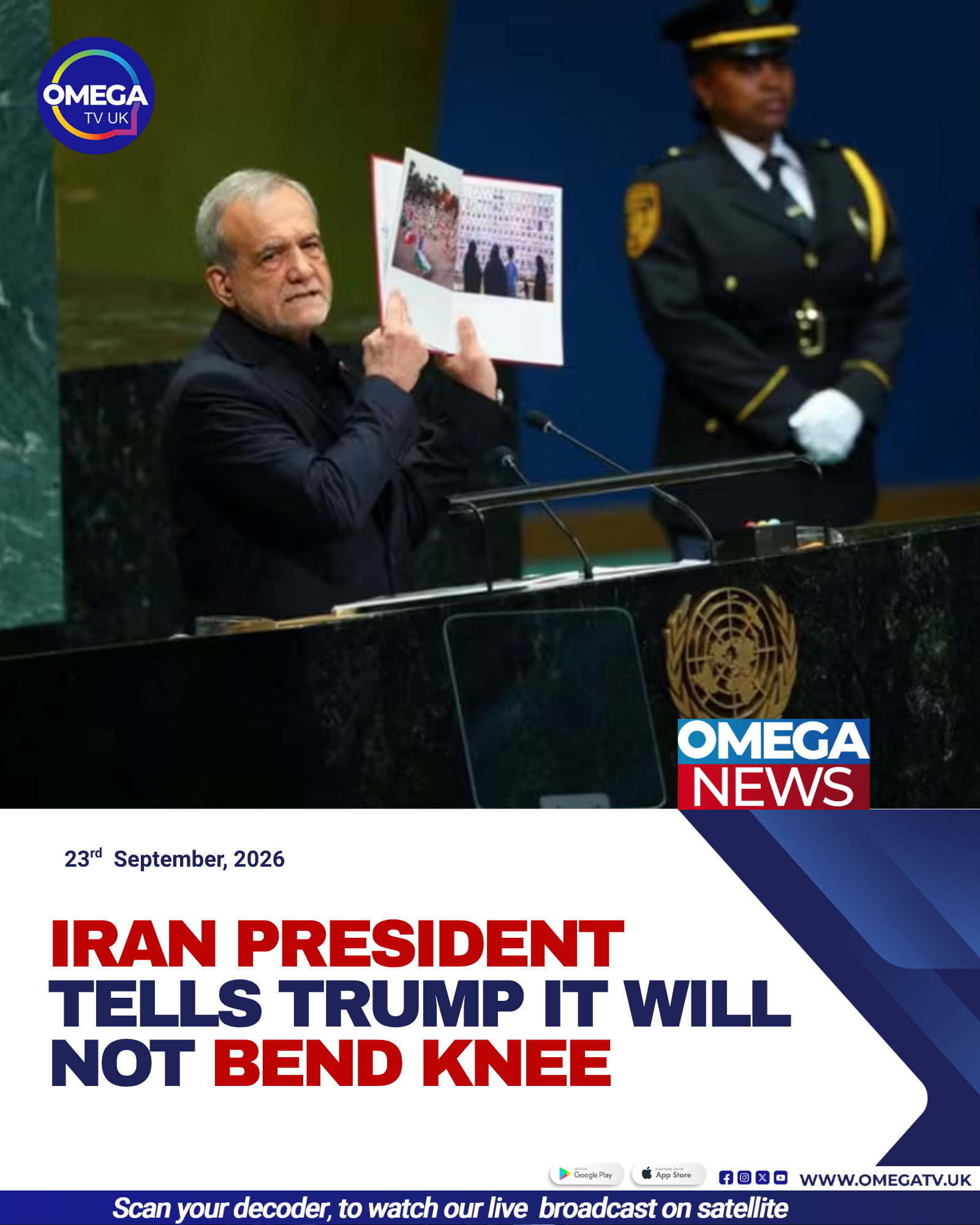
Iranian President Masoud Pezeshkian has told the United States that Tehran will not surrender to pressure, saying Iran will “never bow our head or bend the knee” despite months of conflict with Washington and Israel. He made the remarks during his address to the United Nations General Assembly in New York on Wednesday.

Iran Still Open to Diplomacy
Despite his defiant message, Pezeshkian said Iran remained prepared for dialogue and negotiations. He said Tehran was willing to pursue diplomacy but would not accept negotiations conducted under threats or military pressure. His comments came a day after US President Donald Trump warned that Iran could face “annihilation” if an agreement was not reached.
Strait of Hormuz Becomes Key Issue
Pezeshkian said any agreement would have to address the US blockade and Iran’s access to the Strait of Hormuz. He argued that Iran could not accept a situation in which other countries benefited from the strategic waterway while Iranian vessels were prevented from using it. The strait was a major international shipping route before the conflict, carrying about a fifth of global oil and liquefied natural gas shipments.
US Delegation Walks Out
The US delegation left the General Assembly chamber at the beginning of Pezeshkian’s address. The departure came after Trump’s speech the previous day, in which he defended US military action against Iran and called for Tehran to abandon its nuclear ambitions.
Pezeshkian Accuses US of Terrorism
Pezeshkian also accused the United States of terrorism and said Iran had been the victim of attacks. During the speech, he displayed photographs of former Supreme Leader Ayatollah Ali Khamenei and civilians who Iranian authorities say were killed during attacks earlier in the conflict. The US has disputed responsibility for some of the reported civilian deaths.
Iran Defends Nuclear Programme
The Iranian president reiterated that Tehran would not abandon its civilian nuclear programme. He said Iran did not seek nuclear weapons but would continue to defend what it considers its right to peaceful nuclear technology. Trump has argued that the war prevented Iran from obtaining a nuclear weapon and has demanded that Tehran give up its nuclear ambitions.
Shipping Tensions Continue
The dispute over the Strait of Hormuz comes as shipping remains heavily affected by the conflict. An attack on a cargo ship in the waterway on Wednesday reportedly killed an Indian sailor, according to reports citing Indian and Omani authorities. India called for safe and unrestricted passage through the strait to be restored.
US and Iran Resume Indirect Talks
The latest confrontation comes alongside renewed diplomatic contacts. Iranian Foreign Minister Abbas Araghchi and US envoy Steve Witkoff held indirect discussions in New York on Tuesday, with Qatari officials helping to mediate. Witkoff described the discussions as potentially constructive, while Iran said its existing conditions remained unchanged.
Iran Sets Conditions for Agreement
Iranian officials have said an agreement would need to include an end to the US blockade and the release of frozen Iranian assets. Tehran has also linked the future of the Strait of Hormuz to any broader settlement, while Washington has rejected Iran’s demand for control or fees connected to vessels using the waterway.
Diplomatic Gap Remains
Despite the renewed talks, Iranian and US officials remain divided over how to end the conflict. A senior Iranian official told Reuters that the two sides were still far apart, although diplomacy would continue.
Conflict Enters Another Diplomatic Phase
Pezeshkian’s UN address highlighted the competing positions at the centre of the conflict: Iran says it will resist pressure while remaining open to negotiations, while Washington continues to demand concessions on Iran’s nuclear programme and other issues. With talks underway and the Strait of Hormuz still a major point of dispute, the diplomatic process remains uncertain.