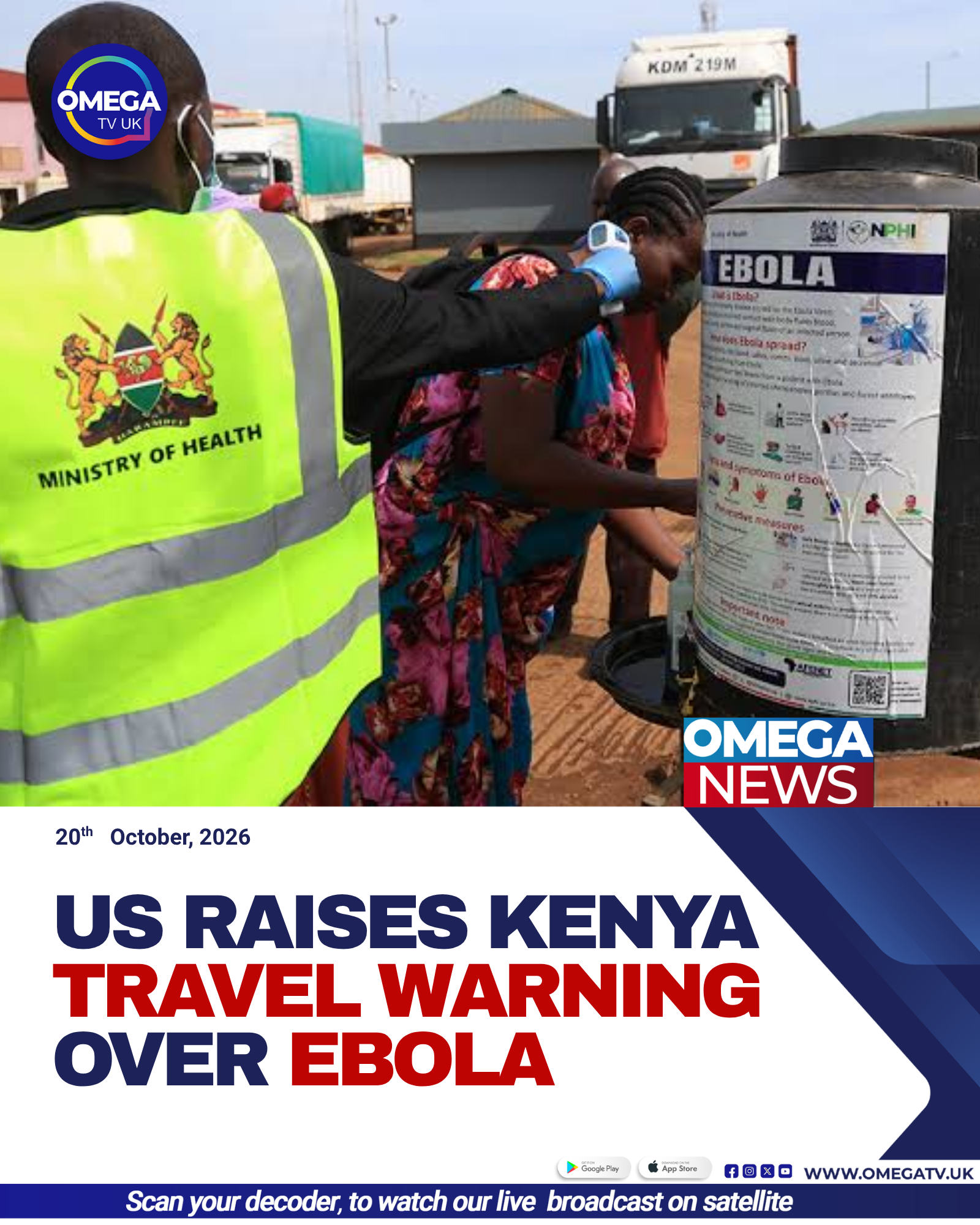
US Raises Kenya Travel Warning
The United States has raised its travel advisory for Kenya to Level 3, urging Americans to reconsider travel because of Ebola concerns and security risks, including terrorism, kidnapping and crime.

US cites health and security risks
The updated advisory, issued on October 19, moves Kenya from Level 2 to Level 3, reflecting increased concerns about public safety and health risks.
The US warning identifies Ebola, crime, kidnapping, terrorism, civil unrest and road safety as reasons for travellers to exercise caution and reconsider non-essential trips.
Washington has also maintained its highest travel warning, Level 4, for specific locations in Kenya. These include Nairobi’s Eastleigh and Kibera neighbourhoods and parts of several counties, where Americans are advised not to travel.
The advisory comes as Kenyan authorities work to contain an Ebola outbreak while addressing concerns about security and reassuring residents and international visitors.
Kenya says wider transmission has not been detected
Kenya’s health authorities have said there is no evidence of wider community transmission of Ebola. Officials are monitoring people who may have been exposed to the virus and maintaining containment measures to limit further spread.
The Ministry of Health has also maintained that the overall risk to the public remains low, despite the confirmed cases and the need to monitor contacts closely.
Health officials are tracing people who may have come into contact with infected individuals, including healthcare workers, while placing identified contacts under quarantine where necessary.
Ebola cases rise to eight
Kenya’s confirmed Ebola cases rose to eight on Sunday after another person tested positive while in quarantine. The patient had been identified as a contact of the first confirmed case.
Health Ministry Director-General Dr Patrick Amoth said the latest case involved a 49-year-old patient attendant who had cared for the first Ebola patient.
The initial patient was a 40-year-old Kenyan man who travelled from Congo through Uganda before arriving in Kenya on October 3. A relative drove him to hospital, and he died at Nairobi Hospital on October 5, two days after arriving in the country.
Amoth said people in quarantine were being tested after developing symptoms. He added that six other patients were stable after receiving supportive treatment.
The latest confirmed case highlights the importance of identifying contacts and monitoring them for symptoms. Health workers and others who may have been exposed remain a focus of the response as authorities seek to prevent further infections.
More than 120 contacts remain in quarantine
Following the first patient’s death, authorities listed approximately 130 contacts, including healthcare workers, for monitoring. According to the health update, 128 people remained in quarantine.
Contact tracing is a key part of containing Ebola because people who have been exposed may develop symptoms after an incubation period. Monitoring allows health officials to identify suspected infections and arrange testing and treatment where required.
Authorities are also relying on public health measures to reduce the possibility of transmission. These include isolating suspected cases, monitoring exposed individuals and following infection prevention procedures in healthcare settings.
How Ebola spreads
Ebola is a serious infectious disease that can spread through direct contact with the bodily fluids of an infected person, including blood and vomit. Transmission can also occur through contaminated materials and surfaces, such as bedding and clothing.
The risk of infection is linked to exposure, making infection prevention, appropriate protective equipment and careful handling of potentially contaminated materials important during an outbreak.
The report states that Congo has experienced a severe outbreak, with at least 4,000 deaths recorded since May. The movement of people across borders has added to concerns about possible transmission, although Kenyan officials say there is currently no evidence of wider community spread within the country.
Kenya faces pressure to reassure travellers
The US advisory adds an international dimension to Kenya’s efforts to manage the outbreak and maintain confidence among residents and visitors.
While American officials have advised travellers to reconsider trips, Kenyan health authorities continue to emphasise containment measures and the monitoring of exposed people.
The situation remains dependent on developments in case numbers, contact tracing and the effectiveness of public health controls. Travellers are being urged to consult official guidance and pay attention to restrictions affecting specific locations.