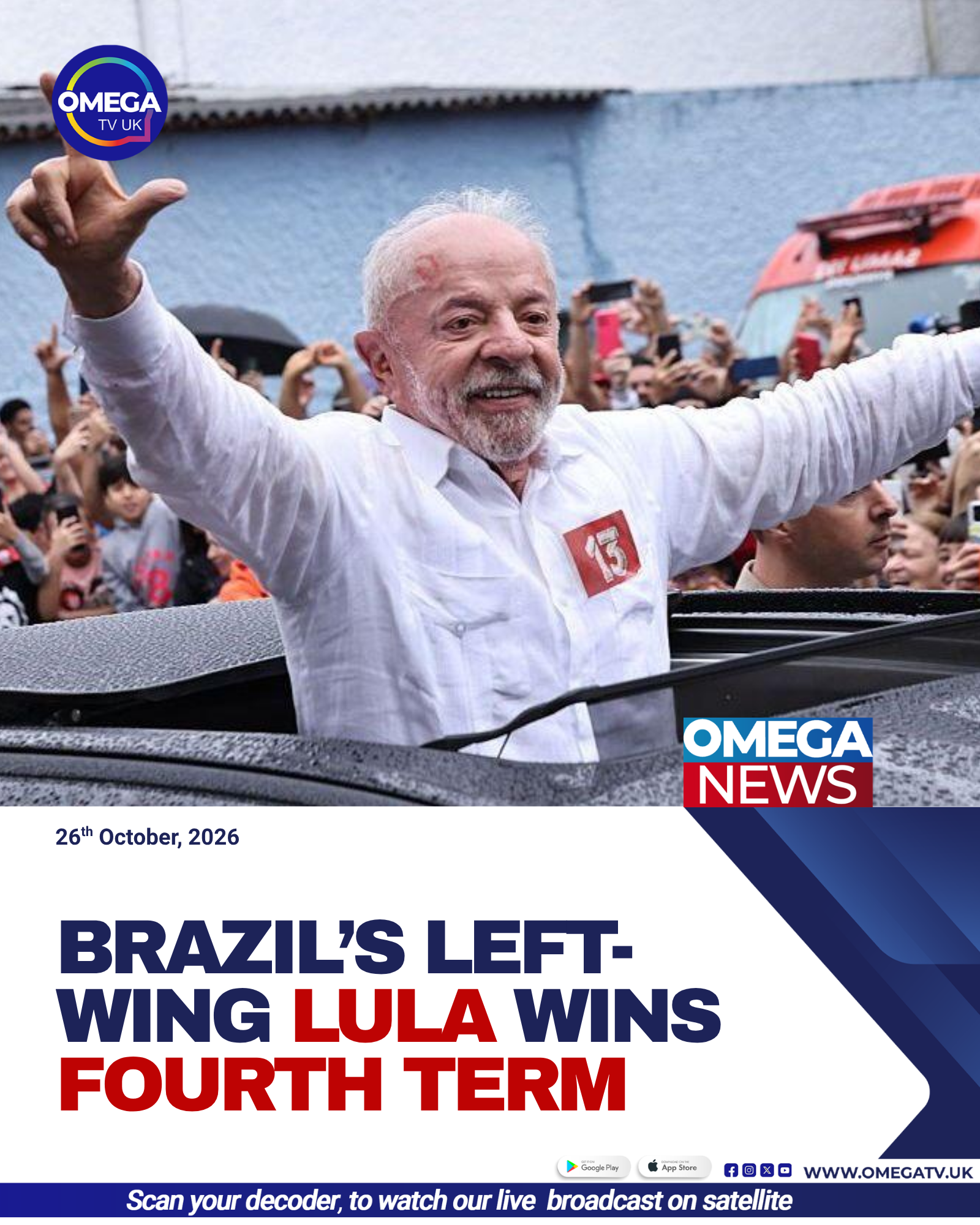
Brazilian President Luiz Inácio Lula da Silva has won a fourth term in office, defeating right-wing senator Flávio Bolsonaro in a closely contested presidential election.

The bitterly fought vote marks a significant victory for Lula, 80, and a setback for Bolsonaro, the son of imprisoned former president Jair Bolsonaro. Flávio Bolsonaro had secured the most votes in the first round earlier this month, raising expectations that he could take the presidency.
His defeat represents a major upset, as no candidate had previously failed to win Brazil’s presidency after finishing first in the opening round of voting.
The election has drawn attention beyond Brazil, as it contrasts with a broader political trend in parts of Latin America, where voters have increasingly supported right-wing candidates.
Lula’s campaign focused on national sovereignty, presenting the election as a choice between competing visions for Brazil’s future and its relationship with the United States.
During the campaign, the president said voters were choosing between someone who kissed the Brazilian flag and someone who kissed the American flag. The remarks highlighted his argument that Brazil should maintain independence in its political and economic decisions.
Flávio Bolsonaro, meanwhile, represented the right-wing political movement associated with his father, Jair Bolsonaro, who previously served as Brazil’s president and is now imprisoned.
The contest was closely watched because of its implications for Brazil’s political direction, both domestically and internationally. Lula’s victory gives the left-wing leader another opportunity to pursue his agenda while facing opposition from supporters of the Bolsonaro political movement.
Voting was extended by two hours at some polling stations earlier in the election after both campaigns pushed for additional time. The extension reflected the intense interest surrounding the contest, which had attracted significant participation and attention.
Lula’s return to office for another term also reinforces his long-standing position in Brazilian politics. A former trade union leader, he has remained one of the country’s most influential political figures across several decades.
The result is expected to shape Brazil’s domestic policies and its engagement with other countries during the coming years. It also provides a contrasting outcome to recent electoral shifts elsewhere in Latin America, where right-wing candidates have gained ground.
For Flávio Bolsonaro and his supporters, the defeat is a major disappointment after his first-round performance placed him in a strong position heading into the final vote.
The election’s narrow margin underscores the deep political divisions within Brazil, with voters split between Lula’s left-wing leadership and the conservative movement represented by the Bolsonaro family.
Lula’s fourth-term victory now places renewed focus on how his government will address the country’s challenges and manage political divisions following one of Brazil’s most closely watched presidential contests.