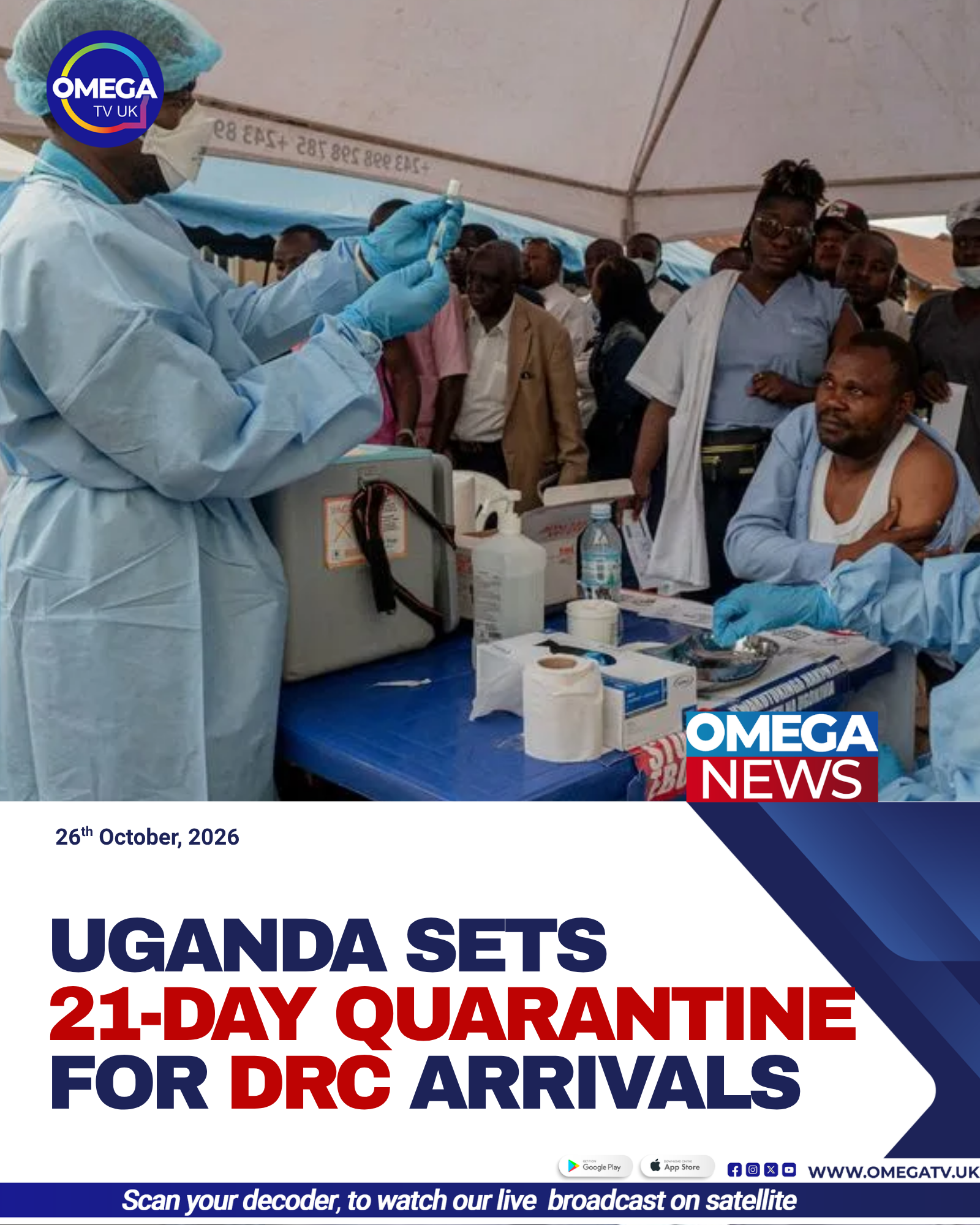
Uganda Imposes 21-Day Quarantine for Returnees from DR Congo
Uganda has introduced a mandatory 21-day quarantine for its citizens returning from the Democratic Republic of Congo (DR Congo) who have a history of travel to the country, as health authorities strengthen measures to prevent the spread of Ebola.

The Ugandan Ministry of Health announced the requirement on Sunday, 25 October, saying returning citizens would have to cover the cost of their quarantine. Officials have also intensified health screening at Entebbe International Airport, land border crossings and designated road checkpoints.
The measures come as the Democratic Republic of Congo continues to battle its worst Ebola outbreak on record. The country has reported thousands of deaths from the Bundibugyo strain of the virus, raising concerns about further spread across borders.
According to the World Health Organization (WHO), DR Congo had recorded 9,704 confirmed cases and 4,687 deaths by 20 October 2026. The outbreak was declared in May and has spread across several provinces. https://www.who.int/emergencies/disease-outbreak-news/item/2026-DON622
Uganda shares a border with DR Congo and has previously experienced cases linked to travel from its neighbour. In August, the WHO and Africa Centres for Disease Control and Prevention declared Uganda’s outbreak over after 20 confirmed cases, including two deaths.
Health officials are now working to prevent the virus from being reintroduced. In addition to quarantine for returning Ugandans with a history of travel to DR Congo, the country has tightened screening and monitoring for travellers at key entry points.
Ebola spreads through direct contact with the bodily fluids of an infected person or contaminated materials. The disease can cause severe illness and may be fatal. The current outbreak is caused by the Bundibugyo virus, a strain for which there is currently no approved vaccine or specific treatment.
Concerns have also grown after Kenya and Nigeria reported imported cases during October. Kenya recorded its first confirmed case in a person who had travelled from DR Congo through Uganda. Further cases were subsequently detected among people linked to that patient.
Nigeria confirmed an imported case in Abuja on 20 October involving a patient who had travelled from Uganda. Investigations are continuing to establish the full travel history and possible source of infection.
Ugandan government spokesperson Alan Kasujja rejected suggestions that the Nigerian patient necessarily contracted the virus in Uganda, describing that conclusion as “absurd”. Authorities have said the source of exposure remains subject to investigation.
The WHO has stressed the importance of cross-border surveillance, traveller screening, contact tracing and rapid detection of suspected cases as the outbreak continues to affect the region.
Uganda’s latest measures are intended to reduce the risk of further transmission while health authorities monitor the situation in neighbouring countries. Officials are urging travellers to comply with screening requirements and quarantine instructions as efforts continue to contain the outbreak.