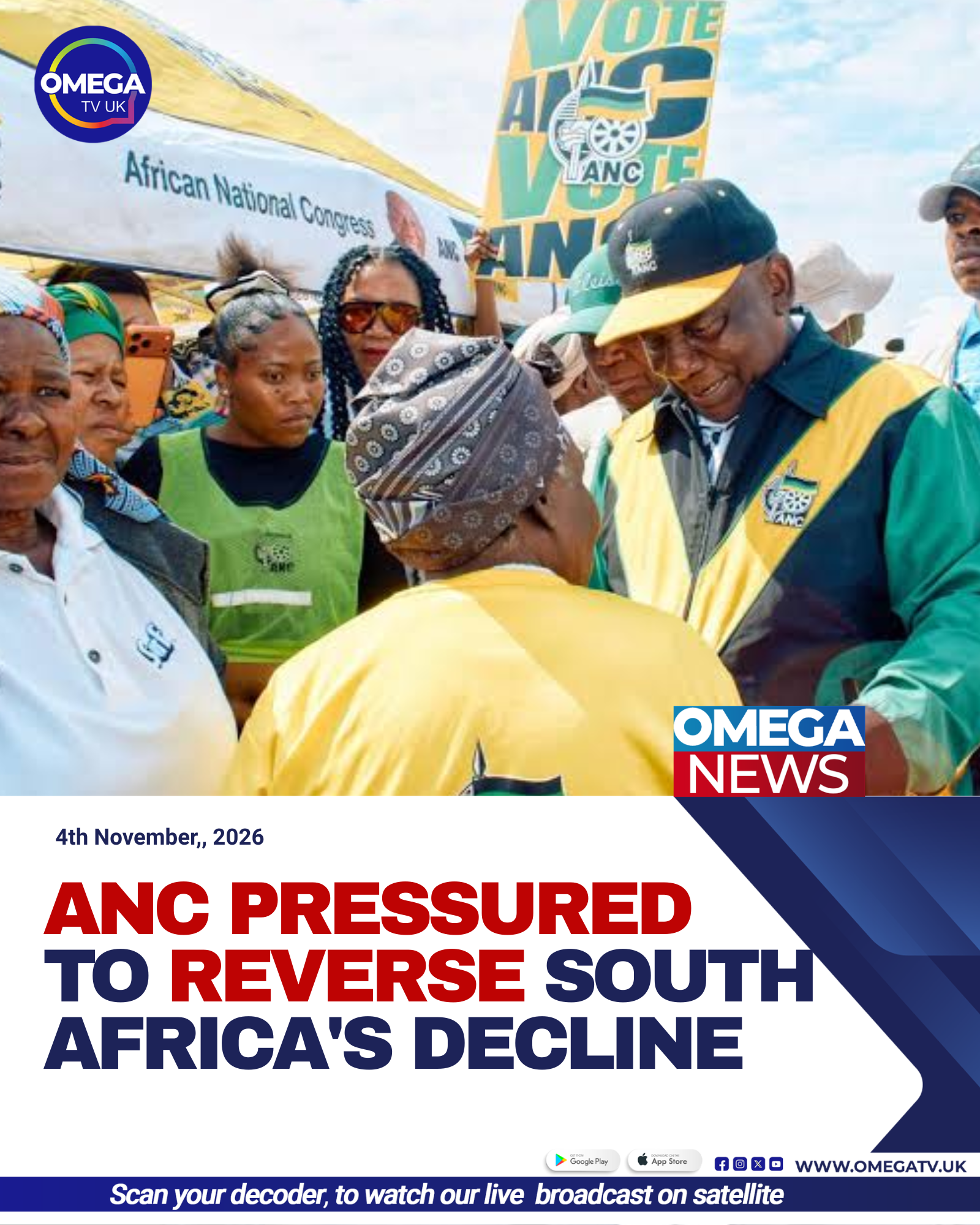
ANC Faces Growing Pressure as South Africa Prepares for Local Elections
South Africa’s ruling African National Congress (ANC) is facing mounting pressure as voters head to the polls in highly contested local elections, with predictions of further losses for the party.

The election campaign has been marked by unusual political stunts, with politicians spinning cars, watching grandmothers knit and even wading through oversized potholes to attract voters.
The elections will determine leadership across nearly 300 municipalities responsible for providing essential services, including water, electricity and refuse collection.
For the ANC, the vote presents an opportunity to demonstrate that it can still govern effectively following its poor performance in the last national election, when it lost its parliamentary majority for the first time since the end of apartheid in 1994.
The party’s support has declined over the years amid public frustration over corruption, unemployment and crime.
In 2004, the ANC secured around 70% of the vote in the general election. By 2024, its share had fallen to approximately 40%.
Opinion polls and political analysts have predicted further losses in the local elections. However, President Cyril Ramaphosa has rejected suggestions that the party is in decline.
Speaking at the ANC’s final election rally on Sunday, he told supporters: “What I’m seeing here is that the ANC is going higher and higher and on the 4th [of November] we will show those naysayers.”
Voter frustration in Alexandra
In Alexandra, a township north-east of Johannesburg where the ANC has traditionally enjoyed strong support, poor governance and voter apathy are increasingly affecting the party’s standing.
Residents have raised concerns about deteriorating basic services, including unreliable electricity and water supplies, as well as uncollected rubbish and damaged roads.
Eighteen-year-old Sanele Ntombela, a first-time voter, said he was looking forward to participating in the election despite the challenges facing his community.
“We face many challenges in Alexandra. There’s rubbish everywhere and we struggle with electricity and water and many other issues,” he said.
However, many of his friends said they had no intention of voting, with some not even registered.
Another resident, 33-year-old Zandile Mncube, said she would not vote despite being registered, arguing that local leadership had failed to improve conditions.
“It makes no difference [whether I vote or not]. Things have gotten worse over the years,” she said.
The contrast between Alexandra and nearby Sandton, one of Africa’s wealthiest business districts, is stark. While Sandton is known for its skyscrapers, designer shops and well-maintained roads, Alexandra continues to struggle with overcrowding, poor sanitation and neglected infrastructure.
Service delivery concerns extend to Soweto
Similar frustrations have been reported in other parts of Gauteng province.
In Soweto, residents have also complained about unreliable access to essential services.
Mduduzi Makhubo, 45, who has lived in the township throughout his life, described the community’s ongoing water and electricity challenges.
“Every Monday we know we won’t have water after 2pm,” he said.
Makhubo, who is registered to vote, said he intended to use his vote to challenge what he described as the arrogance of local leaders and push for change.
The elections are expected to provide a significant test of public confidence in the ANC as voters assess the party’s record on governance and basic service delivery.