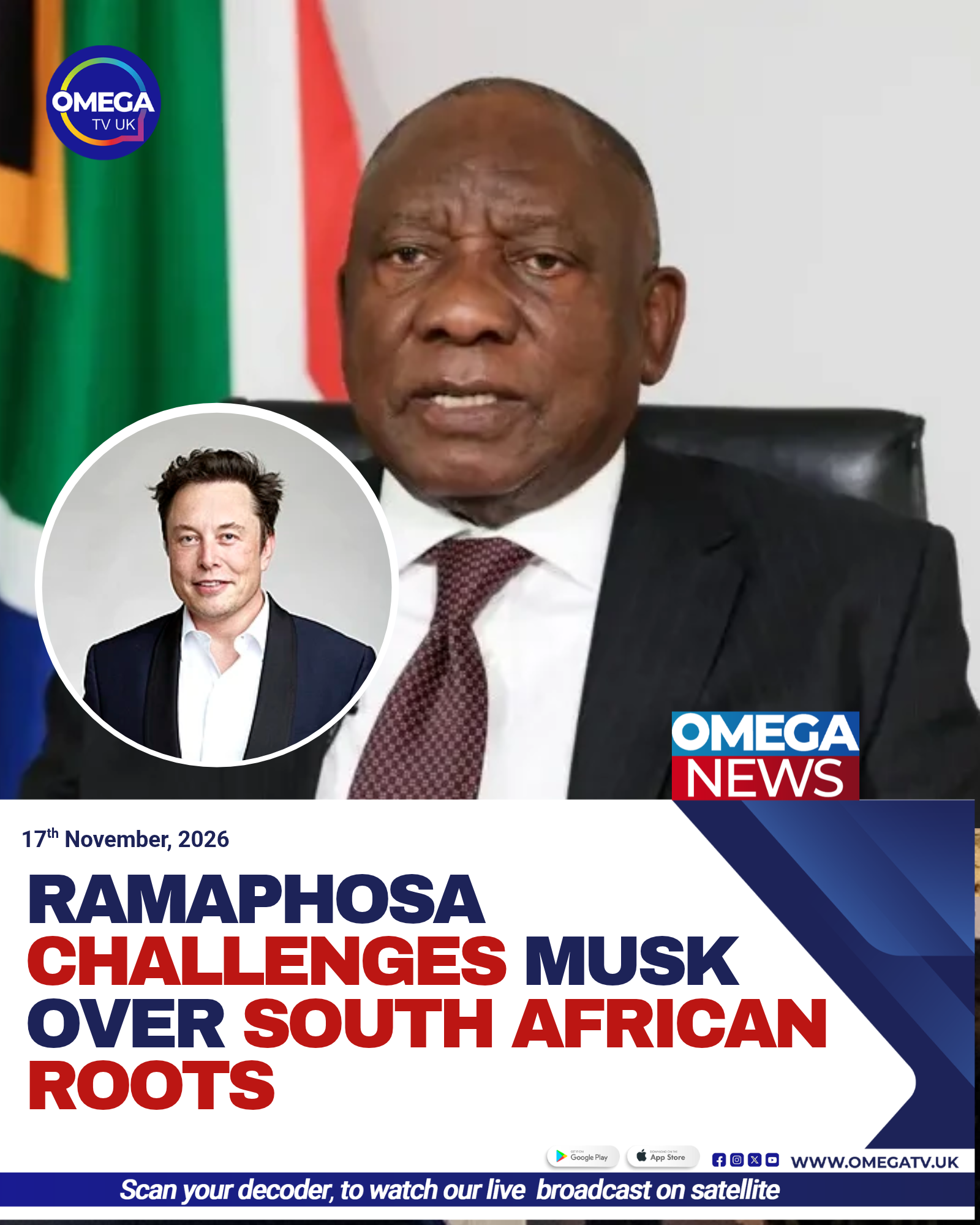
South African President Cyril Ramaphosa has urged billionaire entrepreneur Elon Musk to remember his roots and contribute to the development of the country where he grew up.

Ramaphosa said South Africa helped shape Musk’s success through the education and opportunities he received before moving abroad.
He made the remarks during an interview with ABC News chief Washington correspondent Jonathan Karl at the Semafor: Silicon Valley & The World event in California.
“I have met Elon Musk in the past, and I’ve been awed by his brilliance, but also I would like to chat to him about him remembering his country,” Ramaphosa said.
The president also highlighted the inequalities of apartheid, comparing the educational resources available to Musk with those provided to him.
“When the apartheid government spent R12 on his education, it spent R1 on my education,” he said.
Ramaphosa argued that the former government systematically favoured white South Africans while restricting opportunities for black citizens.
He said understanding this history was essential to appreciating why South Africa continues to pursue policies aimed at addressing historical inequalities.
Musk, who was born in Pretoria, has repeatedly criticised South Africa’s Black Economic Empowerment policies.
He has described the country’s ownership requirements as discriminatory and accused the government of pursuing what he calls “Apartheid 2.0”.
The disagreement has become particularly prominent over Musk’s satellite internet company, Starlink, and its efforts to enter the South African market.
South African regulations require telecommunications licence holders to have at least 30 per cent ownership by historically disadvantaged groups.
Starlink has yet to secure the licences required to provide satellite internet services directly to South African customers.
Ramaphosa defended the country’s regulatory framework, arguing that foreign businesses must comply with national laws.
“All countries have policies in terms of how they admit companies to operate. The United States has the same,” he said.
“When you want to come and operate here, you’ve got to subscribe to the policies of the country.”
Communications Minister Solly Malatsi has previously explored equity-equivalent investment programmes as an alternative. These could allow qualifying investments to meet transformation objectives without transferring local ownership.
The regulatory disagreement remains unresolved.
Ramaphosa’s comments came during a broader effort to attract international technology investment to South Africa.
His Silicon Valley delegation includes government representatives, business leaders, researchers, university students and 24 start-ups.
The programme focuses on artificial intelligence, data centres, digital infrastructure and skills development.
Ramaphosa said South Africa wants to participate actively in developing artificial intelligence rather than remain a consumer of technologies produced elsewhere.
His appeal to Musk highlights the challenge facing South Africa as it seeks international technology investment while maintaining policies designed to address the legacy of apartheid.