
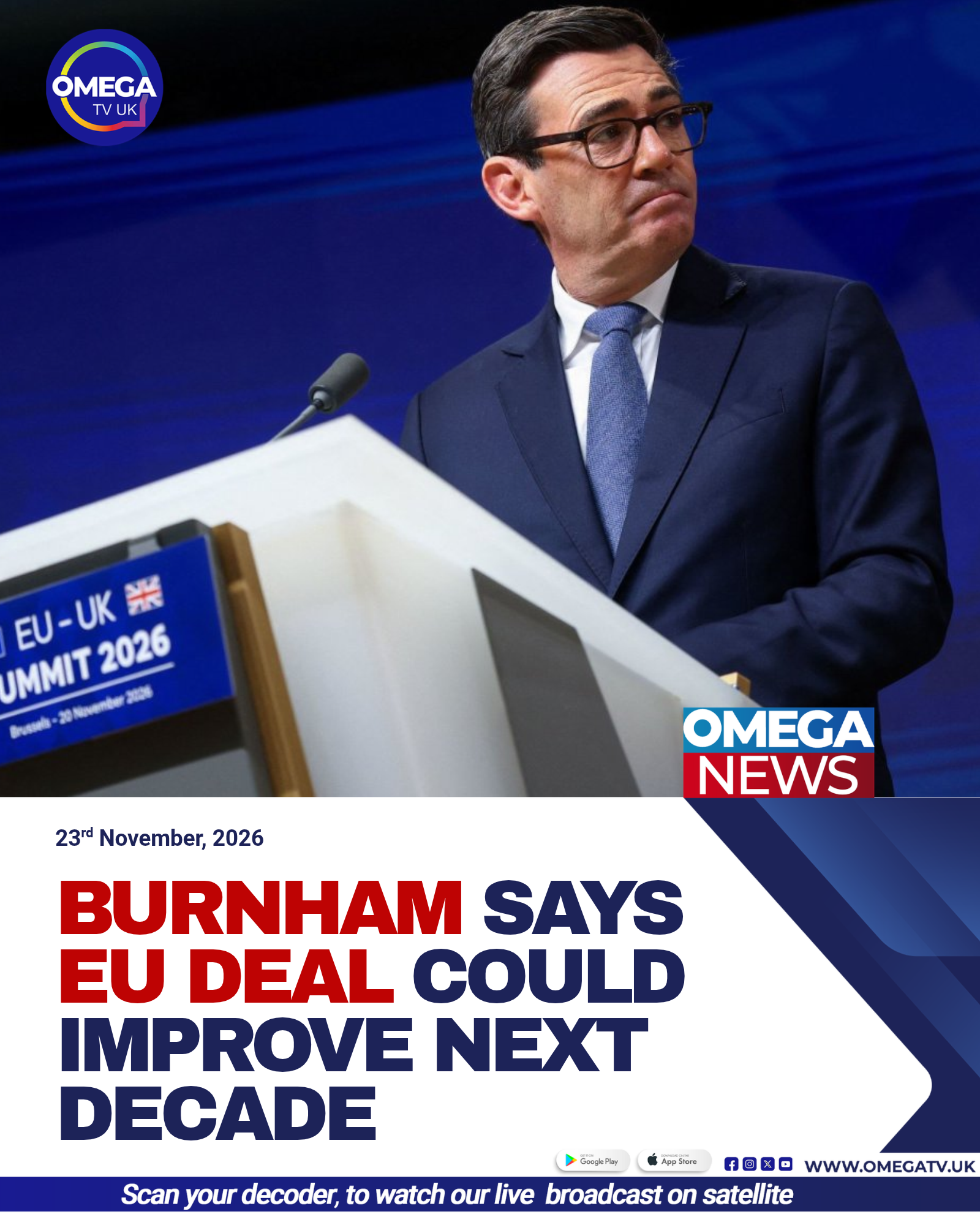
Burnham Says EU Deal Could Make Next Decade Better for Britain
Prime Minister Andy Burnham is set to defend his latest agreement with the European Union, telling MPs on Monday that the deal offers Britain a genuine opportunity to make the next decade better than the previous one.

Burnham is expected to describe the agreement as a landmark decision that could help end years of economic uncertainty and political division, arguing that the country now faces a choice between maintaining the existing situation or embracing change.
He will also present the agreement as the biggest growth measure introduced during the current Parliament, repeating his claim that it could add £17bn to the British economy.
The deal, announced on Friday, covers several areas of cooperation between the UK and the EU, including British food exports, emissions trading and a youth experience scheme.
Burnham believes the agreement could improve economic opportunities, ease pressure on the cost of living and strengthen Britain’s relationship with the European Union without reversing the country’s decision to leave the bloc.
In his address to Parliament, he is expected to argue that the agreement offers the country a chance to move beyond a decade marked by political disagreements and economic challenges.
He is expected to tell MPs that the deal provides a real prospect of making the next decade significantly better for Britain and that the opportunity to move away from years of division should not be ignored.
Burnham is also expected to frame the agreement around issues affecting ordinary households, arguing that closer cooperation could help prevent further increases in food prices while creating opportunities for young people.
He believes polling suggests the British public wants closer relations with the EU and says the agreement responds to that demand.
However, the deal has faced criticism from opposition politicians and several former prime ministers, with opponents questioning its economic benefits and the extent to which it could affect Britain’s independence in setting regulations.
Conservative Party leader Kemi Badenoch has criticised the agreement, arguing that it places British farmers in an unfair position by requiring them to follow rules established by Brussels.
She has also challenged the government’s economic assessment, which Burnham says suggests the agreement could increase Britain’s gross domestic product by up to 0.5%, equivalent to a £17bn boost.
Badenoch questioned the basis of the figure, accusing Burnham of producing an unsupported estimate and arguing that other modelling had suggested little or no economic impact.
Reform UK leader Nigel Farage has also criticised the agreement, describing it as a victory for the European Union rather than Britain.
Farage, who was a prominent campaigner for Brexit during the 2016 referendum, accused Burnham of undermining the country’s decision to leave the EU and said his party would oppose what he described as a betrayal of the British people.
Former prime ministers have also raised concerns about the agreement.
Theresa May, who led the government during several years of Brexit negotiations, said she was deeply concerned about the deal and urged Burnham to move on from the agreement.
Sir Tony Blair, who opposed Britain’s departure from the EU, argued that the UK should only consider rejoining the bloc if it undergoes reforms, including changes that would support innovation in technology.
Rishi Sunak has also joined former prime ministers in criticising the agreement.
The debate is expected to continue on Monday at the Confederation of British Industry’s annual conference, where Badenoch is due to describe the agreement as a poor deal and argue that the government should be doing more to support economic growth.
Farage is also expected to address the conference, warning that closer ties with the EU could create additional regulatory requirements and compliance costs for smaller businesses, including companies that do not trade directly with European markets.
Burnham, however, has defended the agreement as a step towards strengthening economic cooperation while maintaining Britain’s position outside the European Union.
The prime minister said on Friday that the UK and EU would begin an informal process over the coming months to explore options for Britain’s longer-term relationship with the bloc.
He acknowledged that the agreement represented the limit of what his government could achieve during the current Parliament, given the work required to implement the measures.
However, he said discussions could help inform future decisions about Britain’s relationship with the European Union beyond the current Parliament.
The agreement has now become a major political debate, with the government presenting it as an opportunity for economic growth and opposition parties questioning whether the benefits outweigh the costs.

