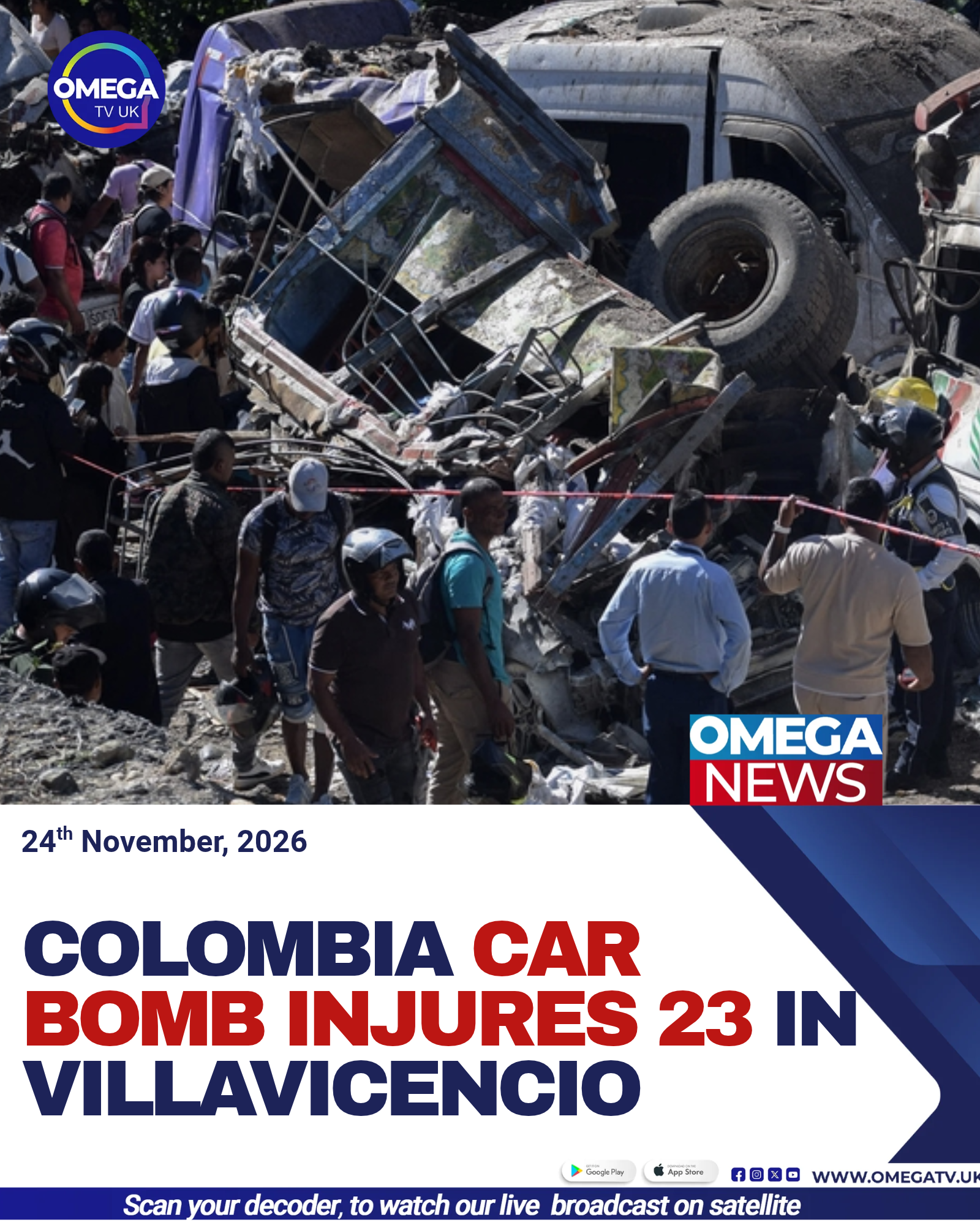
At least 23 people have been injured after a car bomb exploded outside regional government offices in the central Colombian city of Villavicencio.

The explosion occurred on Monday evening, damaging several buildings in the city centre. No group has claimed responsibility for the attack.
Colombian President Abelardo de la Espriella blamed what he described as “narcoterrorism” but provided no further details.
In a social media statement, he vowed a forceful response to attacks targeting the country.
“There will be no impunity and no retreat,” he said, promising to respond to “every drop of Colombian blood spilled”.
The explosion is the latest in a series of attacks involving explosives targeting government buildings and security installations.
Three weeks earlier, a car bomb near army barracks in Tolima province killed three adults and a baby.
Earlier on Monday, drones also dropped explosives on police headquarters in the northern city of Cúcuta.
The Villavicencio bombing occurred on the eve of the 10th anniversary of Colombia’s 2016 peace agreement between the government and the Revolutionary Armed Forces of Colombia (FARC).
The agreement, signed by then-President Juan Manuel Santos and FARC leader Rodrigo Londoño, led thousands of rebel fighters to surrender their weapons.
However, some fighters rejected the deal and continued operating through dissident factions.
Although violence and attacks on security forces declined following the agreement, armed groups have intensified their activities in recent years.
Dissident FARC factions and criminal organisations are fighting for control of drug trafficking, illegal mining and extortion operations.
Former President Gustavo Petro, who governed from August 2022 to August 2026, pursued negotiations with armed groups under his “total peace” strategy.
However, several negotiations stalled after armed groups violated agreed ceasefires.
De la Espriella was elected on a promise to intensify action against armed criminal organisations. He has also criticised the 2016 peace agreement, describing it as a “false peace”.
In a recent social media post, he called the agreement a waste of public resources and blamed it for Colombia’s difficulties.
However, Santos and Londoño defended the agreement in an interview with BBC Mundo ahead of its anniversary.
Santos rejected De la Espriella’s criticism, arguing that current violence resulted from inadequate implementation of the agreement rather than the peace deal itself.