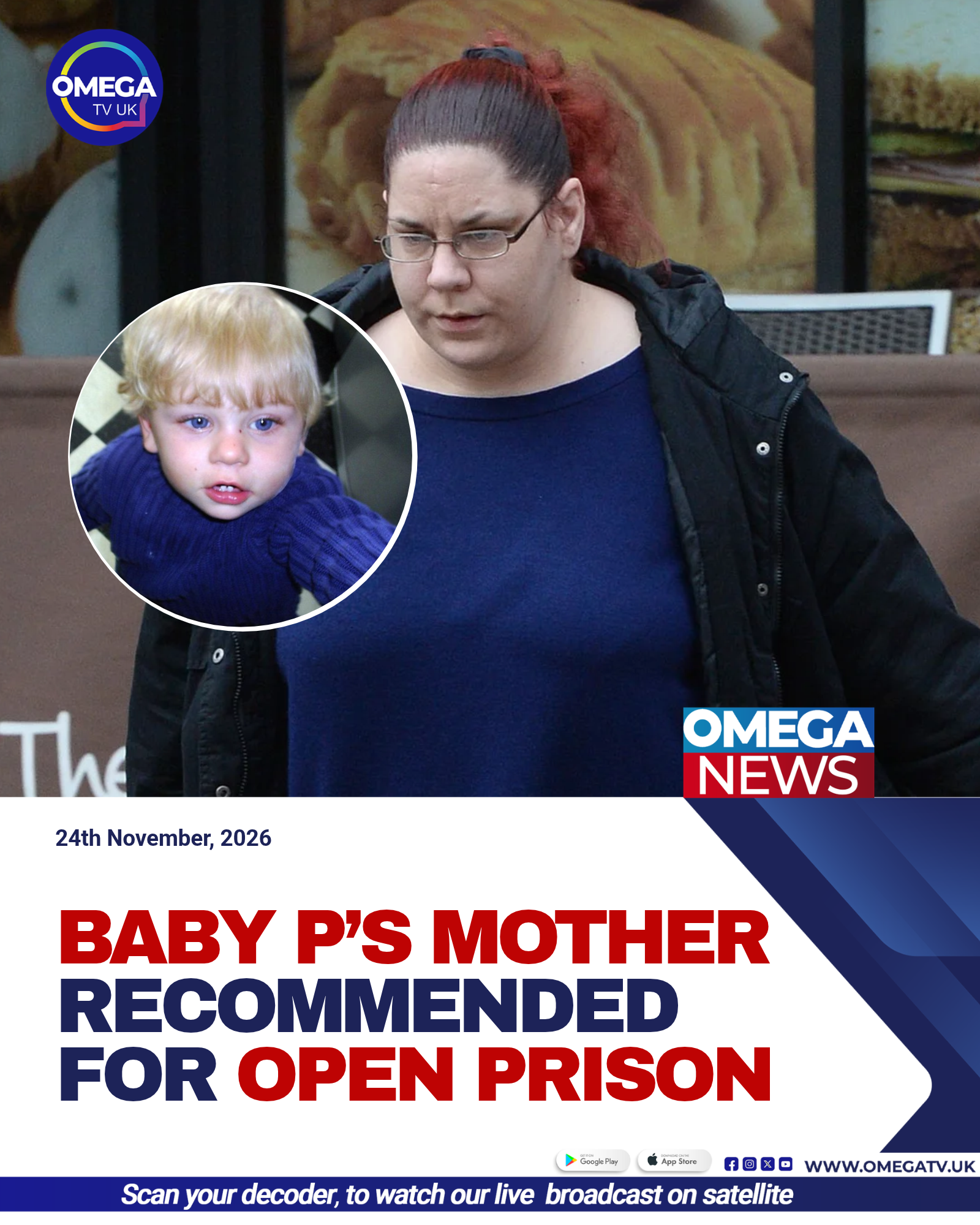
Tracey Connelly, the mother of toddler Peter Connelly, known as Baby P, will remain in prison after the Parole Board recommended that she be considered for a move to open prison conditions.

Connelly, 45, was jailed in 2009 for causing or allowing the death of her 17-month-old son, who suffered months of abuse before dying at their home in Tottenham, north London, in August 2007.
Although the latest review did not recommend her release, the panel concluded that she could be suitable for a less restrictive prison environment. However, the final decision on whether she can move to open conditions rests with the Justice Secretary, Alex Norris.
Connelly has previously been released from prison twice, first in October 2013 and again in July 2022. Both releases were followed by recalls, in February 2015 and August 2024.
Public parole hearings were held last October, but the proceedings were adjourned after the panel decided that a further psychological assessment was necessary before reaching a decision.
During the review, which was livestreamed from prison, Connelly admitted she had been a “horrendous” mother and acknowledged that she had known deep down that her then-boyfriend, Steven Barker, was abusing her son.
She told the panel that she had wanted a relationship with Barker and that her children had suffered as a result of her decisions.
Connelly also said she did not intend to live with another person or be around other people’s children in the future. Describing her plans, she told the review: “I want to be the CEO of my own home and my own life.”
Peter suffered more than 50 injuries during the period of abuse, despite being known to authorities as a child at risk.
Over eight months, he received around 60 visits from social workers, police officers and healthcare professionals. However, the intervention failed to prevent his death.
Barker and his brother, Jason Owen, were also convicted of causing or allowing Peter’s death.
At the Old Bailey in 2009, Connelly received an indeterminate sentence for public protection, commonly known as an IPP sentence. The arrangement allowed prisoners to remain behind bars beyond their minimum term if they were considered a risk, with lengthy licence conditions potentially continuing after release.
IPP sentences were abolished in 2012, although people already serving them remained subject to the system. Subsequent legal reforms have changed how licences operate, including provisions allowing them to end after a specified period without a recall.
The Parole Board said that, without these reforms, it would have recommended Connelly’s release again, subject to strict licence conditions.
The panel also highlighted what it described as an ironic consequence of the changes: measures introduced to address the unfairness associated with IPP sentences had made it more difficult for Connelly to be released.
Despite the latest recommendation, the proposed move to open conditions was not supported by the lawyers representing the Justice Secretary.
Although all professionals who provided evidence to the review supported her release, the government lawyers raised concerns about her previous behaviour.
Their objections included her history of deception, failure to disclose relationships and an assessment that rated her as presenting a high risk of serious harm to children.
These concerns were considered alongside her previous recalls and the need to establish whether the risks she presents could be safely managed outside a closed prison.
A spokesperson for the Parole Board stressed that the decision was only a recommendation and did not mean Connelly had been approved for a transfer.
The spokesperson explained that the Justice Secretary must consider the panel’s advice before making the final decision on whether a prisoner is suitable for open conditions.
The board also said it would only recommend a move to an open prison when a panel was satisfied that the risk to the public had reduced sufficiently to be managed in a less restrictive environment.
Connelly will therefore remain in prison while the recommendation is considered. The outcome will determine whether she can move to open conditions, but it does not amount to a decision to release her into the community.