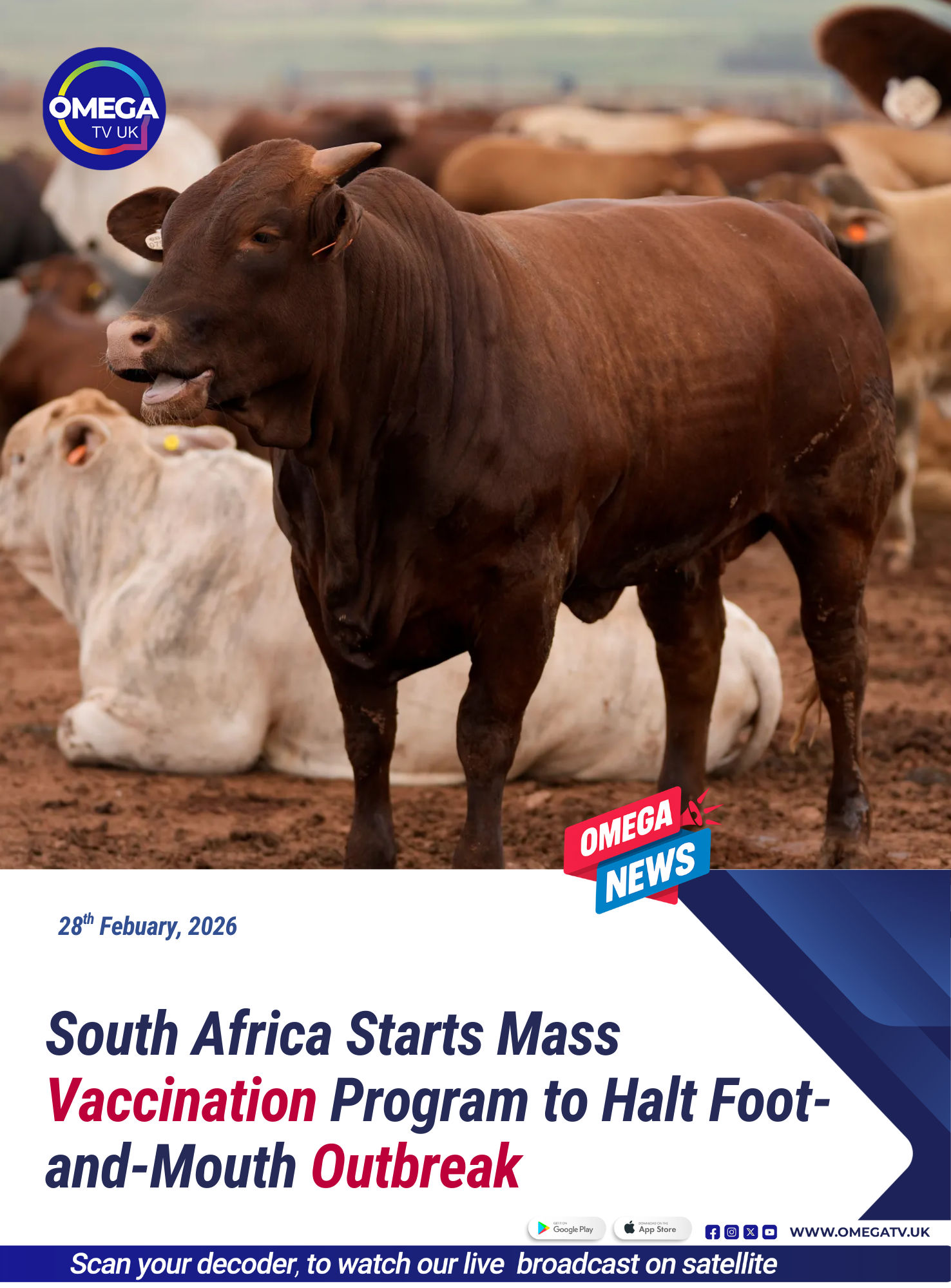
South Africa has launched a nationwide cattle vaccination campaign to combat a fast-spreading outbreak of foot-and-mouth disease that threatens meat and dairy supplies, jobs, and export revenues.

The outbreak, which intensified late last year, has affected more than 297,000 cattle, with over 120,000 animals culled in efforts to contain the disease. Countries including China and Zambia have imposed bans on South African meat imports.
Mass Vaccination Strategy
Agriculture Minister John Steenhuisen officially launched the vaccine rollout, announcing that one million doses had arrived from Turkey, with more shipments expected. However, experts warn that supply remains far below what is needed to vaccinate the country’s nearly 12 million cattle.
“The one strategy that we have ultimately adopted is the mass vaccination strategy,” Steenhuisen said, emphasizing the goal of preventing further outbreaks rather than reacting to new cases.
KwaZulu-Natal Declared Disaster Area
The coastal province of KwaZulu-Natal has been identified as the epicenter, with more than 17,000 farms affected. The outbreak has been declared a national disaster, allowing emergency funding to be directed toward vaccine procurement and containment measures.
South Africa’s National Treasury has allocated approximately $25 million to fight the outbreak.
Industry Under Severe Pressure
Farmers and meat producers are facing mounting losses due to quarantines, halted exports, and vaccine shortages.
Dr. Dirk Verwoerd of Karan Beef, the country’s largest meat producer, said the crisis is affecting the entire supply chain.
“You have massive damage upstream and downstream,” he said. “You cannot purchase cows, so your primary producers now sit with them. They can’t sell, and we can’t purchase. You cannot slaughter, so the consumer pays the price.”
Karan Beef’s feedlot in Heidelberg spans 2,300 hectares and can hold more than 140,000 cattle, underscoring the scale of the industry now at risk.
Officials say stabilizing the national herd through widespread vaccination is the immediate priority to prevent further economic damage and restore export markets.