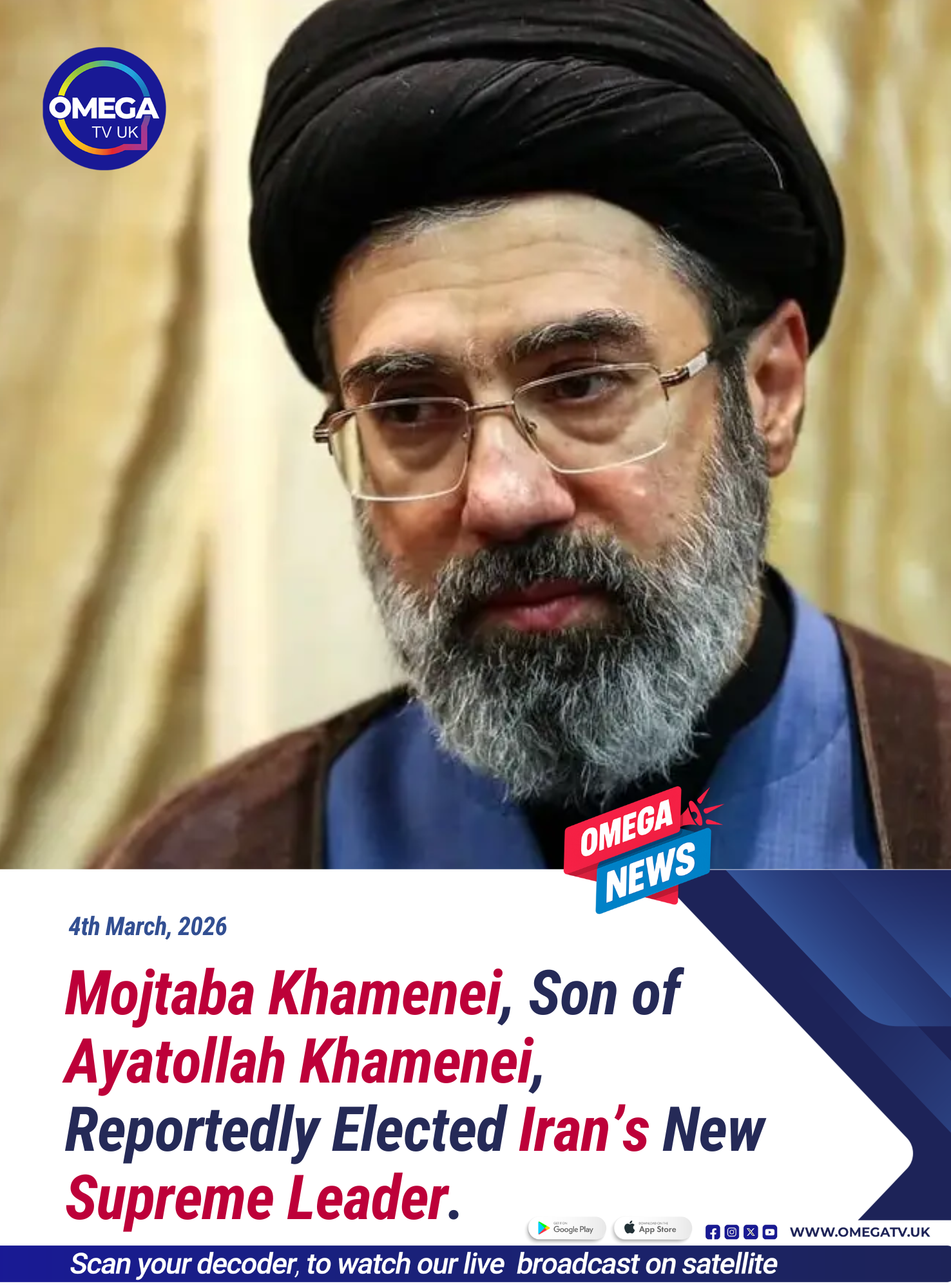
Iran’s Assembly of Experts has reportedly elected Mojtaba Khamenei, the son of the late Ali Khamenei, as Iran’s new supreme leader, according to multiple international media reports.The decision comes amid a turbulent leadership transition following the confirmed death of Ayatollah Ali Khamenei, who was killed in a rare attack in late February. The Assembly of Experts an influential body of clerics vested with choosing the supreme leader is said to have selected Mojtaba, with some reports indicating that pressure from the powerful Islamic Revolutionary Guard Corps (IRGC) influenced the decision.

Mojtaba Khamenei, believed to be in his mid-50s, has long been a prominent behind-the-scenes figure in Iran’s political landscape, known for his strong hard-line conservative stance and close ties to the IRGC. Despite this influence, he has never held significant public office or served in major official religious roles, making his reported elevation controversial.
His appointment marks only the second succession of Iran’s supreme leadership since the 1979 Islamic Revolution, a process traditionally overseen by senior clerics rather than passed within a family lineage. Analysts note that a hereditary transition would represent a striking departure from Iran’s revolutionary ethos, which historically rejected monarchical or dynastic succession.
The reported move has sparked concern among reformist circles and observers who fear that consolidating power within a tight circle linked to the IRGC could intensify hard-line policies domestically and in foreign affairs. Some critics also highlight that Mojtaba’s lack of formal religious credentials and his association with security forces could widen divisions within Iran’s establishment.
As details emerge, Iranian state media have not yet officially confirmed the appointment, and some caution that formal announcements may still be forthcoming. The ongoing conflict in the region has complicated immediate communication from Tehran, adding to uncertainty about the leadership transition process.
If confirmed, Mojtaba Khamenei’s rise to supreme leader will mark a defining chapter in Iran’s political history, reshaping its internal power dynamics and its approach to foreign relations at a time of deep regional tension.