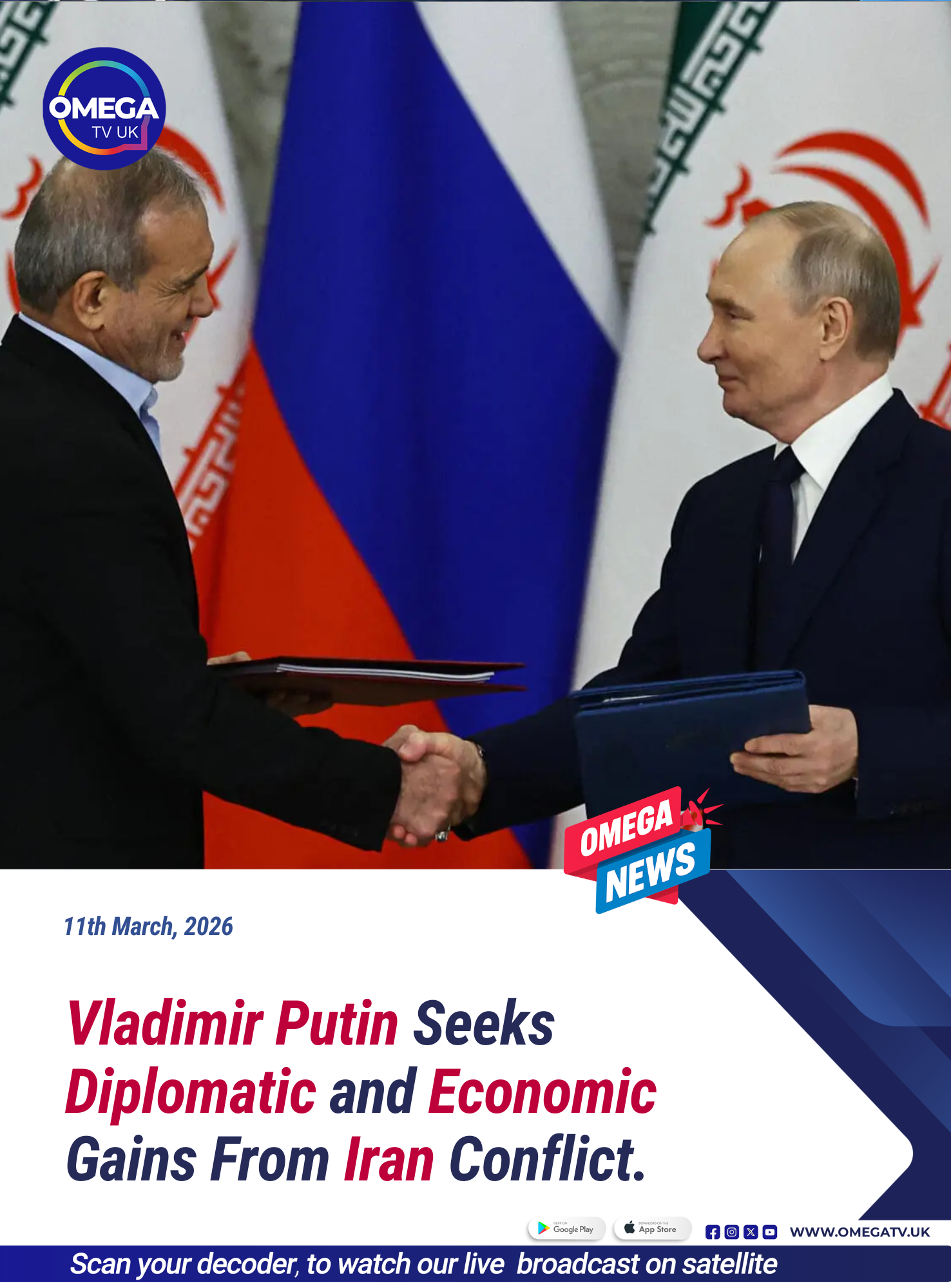
As the United States and Israel continue military strikes against Iran, Russian President Vladimir Putin has been presenting Russia as a potential mediator seeking to ease tensions.

Moscow has called for a swift de-escalation of the conflict and urged a political solution, positioning itself as a diplomatic player in the unfolding crisis in the Middle East. Russian officials say dialogue is necessary to prevent further instability in the region.
However, critics argue that Russia’s efforts to portray itself as a peacemaker are difficult to reconcile with its ongoing military campaign in Ukraine.
In 2022, Putin ordered a full-scale invasion of Ukraine, an action that drew widespread international condemnation. The United Nations General Assembly passed a resolution condemning the invasion, describing it as a violation of the principles of the UN Charter and international law.
Despite Russia’s current calls for de-escalation in the Iran conflict, the war in Ukraine continues with intense fighting and a prolonged military standoff between Russian forces and Ukrainian troops.
Analysts suggest that Russia may also be seeking diplomatic and economic advantages from the conflict involving Iran. Rising geopolitical tensions in the Middle East often affect global energy markets, which can benefit major oil and gas exporters such as Russia.
Additionally, positioning itself as a mediator may allow Moscow to strengthen its influence in international diplomacy and maintain relationships with countries involved in the conflict.
Observers say the Kremlin’s approach reflects a broader strategy to remain a key global power broker while pursuing its own economic and geopolitical interests.
As the situation in the Middle East evolves, Russia is likely to continue balancing its diplomatic messaging with its strategic ambitions on the global stage.