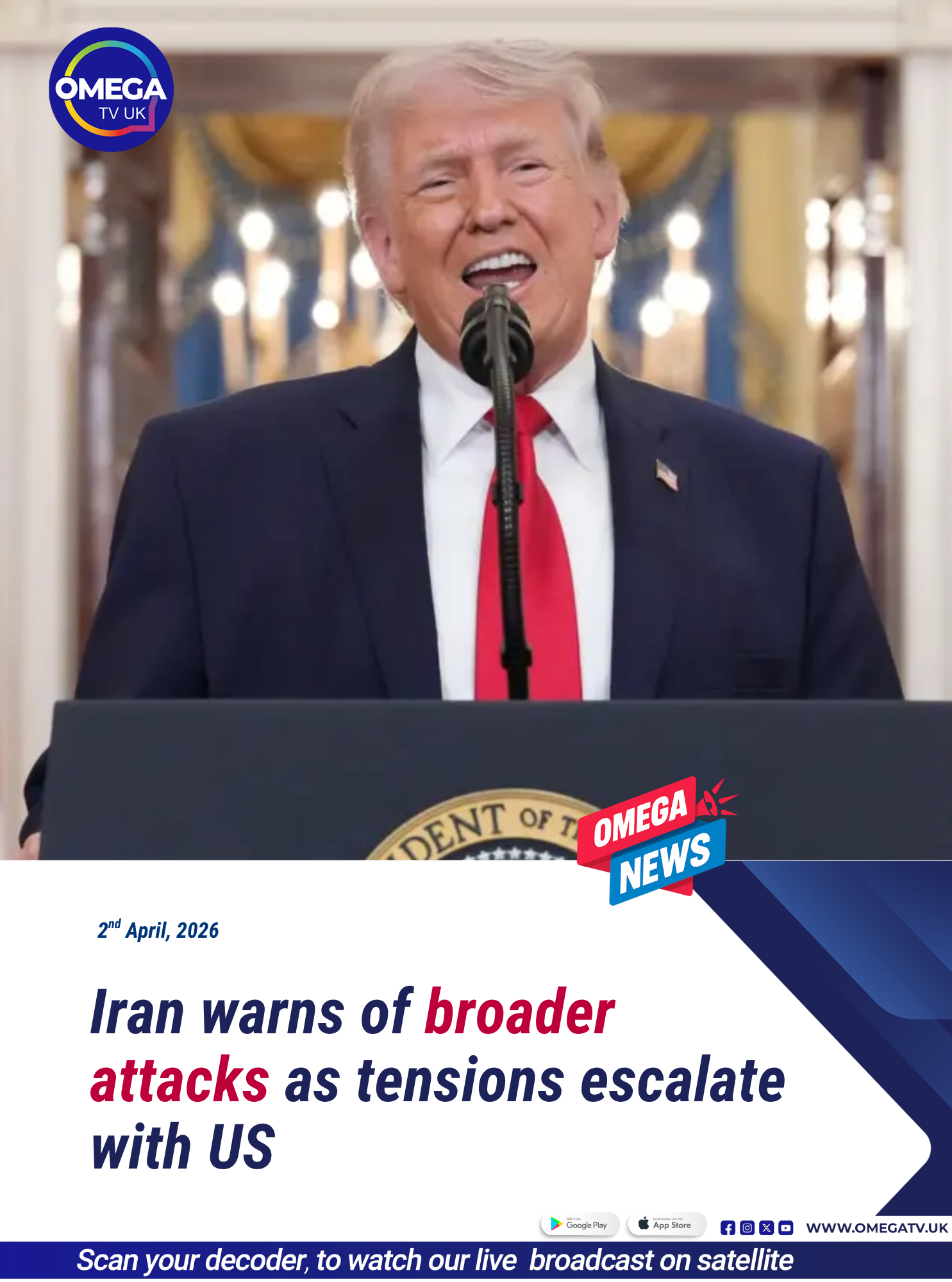
Tensions between the United States and Iran have escalated sharply after former U.S. President Donald Trump warned that the United States could strike Iran “extremely hard” in the coming weeks. In response, Iranian officials have issued strong warnings of “broader” and “crushing” attacks, raising fears of a wider regional conflict.

An Iranian military spokesperson dismissed recent US-Israeli strikes on the country as “insignificant,” claiming that both the United States and Israel lack a full understanding of Iran’s military capabilities. The spokesperson suggested that Iran remains prepared for any escalation and has the means to respond forcefully if provoked further.
The exchange of threats comes amid heightened geopolitical tension in the Middle East, where military posturing and strategic positioning have intensified in recent weeks. Iran’s warning of broader attacks signals that any further strikes could trigger a significant expansion of hostilities, potentially drawing in multiple regional and international actors.
At the same time, global attention has turned to the strategic importance of the Strait of Hormuz, a critical shipping lane through which a large portion of the world’s oil supply passes. UK Foreign Secretary Yvette Cooper is reportedly leading discussions on reopening or securing the waterway, amid concerns that tensions could disrupt global energy markets and trade routes.
The Strait of Hormuz has long been a focal point of international security concerns due to its narrow passage and its importance to global oil transportation. Any disruption to shipping in the area could have far-reaching economic consequences, affecting energy prices and supply chains worldwide. Analysts have warned that reopening or securing the strait will not be straightforward, given the complex military and political dynamics involved.
In a national address delivered on Wednesday evening, Trump told Americans that the United States intends to “finish the job very fast,” although he did not provide a specific timeline for any potential military action. His remarks have added to uncertainty, leaving many questions unanswered about the scope, timing, and objectives of any future strikes.
The speech largely reiterated previous statements made by Trump in recent days, maintaining a firm stance on Iran while offering limited new details. Observers note that while the rhetoric signals a strong position, it also leaves room for interpretation, contributing to heightened speculation about possible next steps in the unfolding situation.
Security analysts have raised concerns about the possibility of miscalculation by either side, which could lead to unintended escalation. With both nations exchanging threats and demonstrating military readiness, the risk of confrontation remains high. The involvement of multiple global players further complicates efforts to de-escalate the situation through diplomatic channels.
International leaders and observers are closely monitoring developments, urging restraint and dialogue to prevent the situation from spiralling into a broader conflict. Diplomatic efforts may be key in reducing tensions, although current signals suggest that both sides remain firmly positioned in their respective stances.
As tensions continue to rise, the world watches closely, aware that any further escalation could have serious implications not only for the region but for global security and economic stability. The coming weeks are likely to be critical in determining whether diplomacy or confrontation will shape the next phase of this growing standoff.