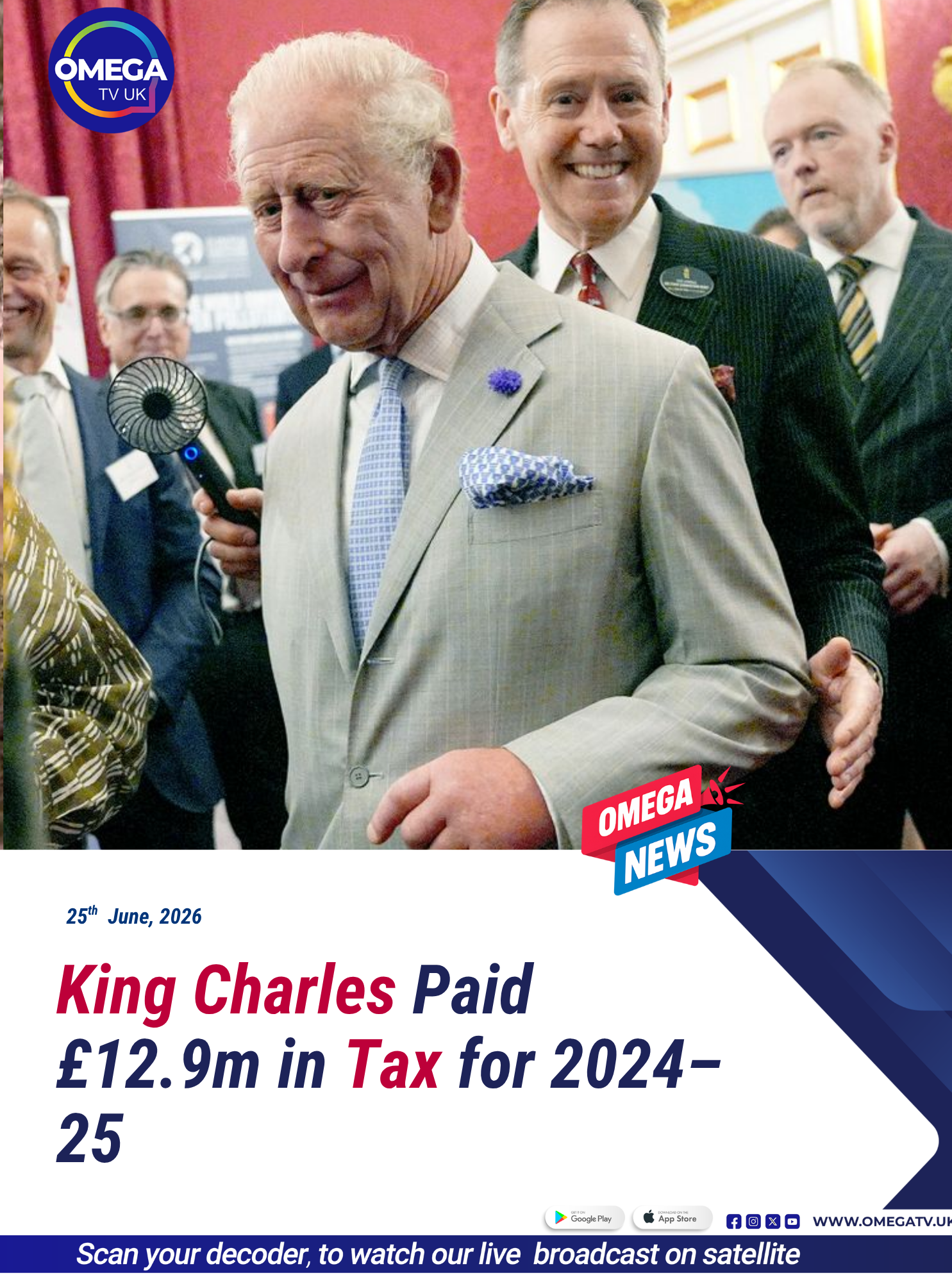
King Charles III has become the first British monarch to publicly disclose his personal tax payments, revealing that he paid £12.9 million in tax during the 2024–2025 financial year in a move aimed at increasing transparency within the Royal Family.

The figures, published in the latest annual Royal Household report and financial accounts, also revealed that Prince William paid £7.76 million in tax over the same period. Buckingham Palace said both disclosures were voluntary decisions intended to improve public understanding of the monarchy’s financial accountability.
The King’s tax payment places him among the UK’s top taxpayers. It follows an £11.7 million tax payment in 2023–2024, while Prince William paid £8.34 million during the same period. Together, father and son have contributed more than £50 million in tax since King Charles ascended the throne in 2022.
Although the report did not provide a detailed breakdown of how the taxes were calculated, it confirmed that the King paid tax at the highest rate. His primary source of income remains the Duchy of Lancaster, a private estate that generated £25.2 million during the 2025–2026 financial year. Additional taxable income comes from his private investments and the royal estates of Balmoral and Sandringham.
Prince William receives his income from the Duchy of Cornwall, the hereditary estate that funds his official duties, household and family expenses. Palace officials confirmed that he also pays income tax at the highest rate on any net surplus after audited operational costs have been deducted.
The financial report also revealed that King Charles and Queen Camilla will continue living at Clarence House instead of moving into Buckingham Palace once its long-running refurbishment project is completed. Officials said the decision will allow Buckingham Palace to remain more accessible to the public and generate additional visitor income.
Renovations to Buckingham Palace, costing nearly £370 million, are expected to be completed by March next year. It will be the first time since Queen Victoria’s reign that a reigning monarch has chosen not to live at the palace.
The report also confirmed that the Sovereign Grant, which funds the official duties and operational costs of the monarchy, will increase to just under £100 million for the 2027–2028 financial year. The funding will support palace maintenance, cybersecurity improvements and environmental projects, including an £11 million programme to replace ageing boilers at Windsor Castle.
Royal officials stressed that the Sovereign Grant does not provide personal income to members of the Royal Family but instead finances the institution’s official responsibilities, staff, palace maintenance and public engagements.
Among other financial disclosures, Prince William announced he will no longer personally receive the approximately £1.5 million annual rent generated by the former Dartmoor Prison site. Instead, the money will be redirected towards supporting local communities around Princetown following the prison’s closure due to high levels of radon gas.
The annual report also detailed royal travel expenses, revealing that Prince William’s three-day visit to Saudi Arabia was the most expensive overseas trip of the year, costing just over £130,000. King Charles and Queen Camilla’s state visit to Italy cost almost £127,000, while the Royal Family made 177 helicopter journeys costing more than £733,000.
Meanwhile, operating profits from the Crown Estate fell from £1.4 billion to £1.2 billion, largely due to declining offshore wind option fees. Although Crown Estate profits help determine the level of the Sovereign Grant, the grant itself is funded through the UK Treasury rather than directly from estate revenues.
The publication of the King’s tax payments has been widely viewed as an effort to increase openness about royal finances at a time of growing public scrutiny over the cost of the monarchy.