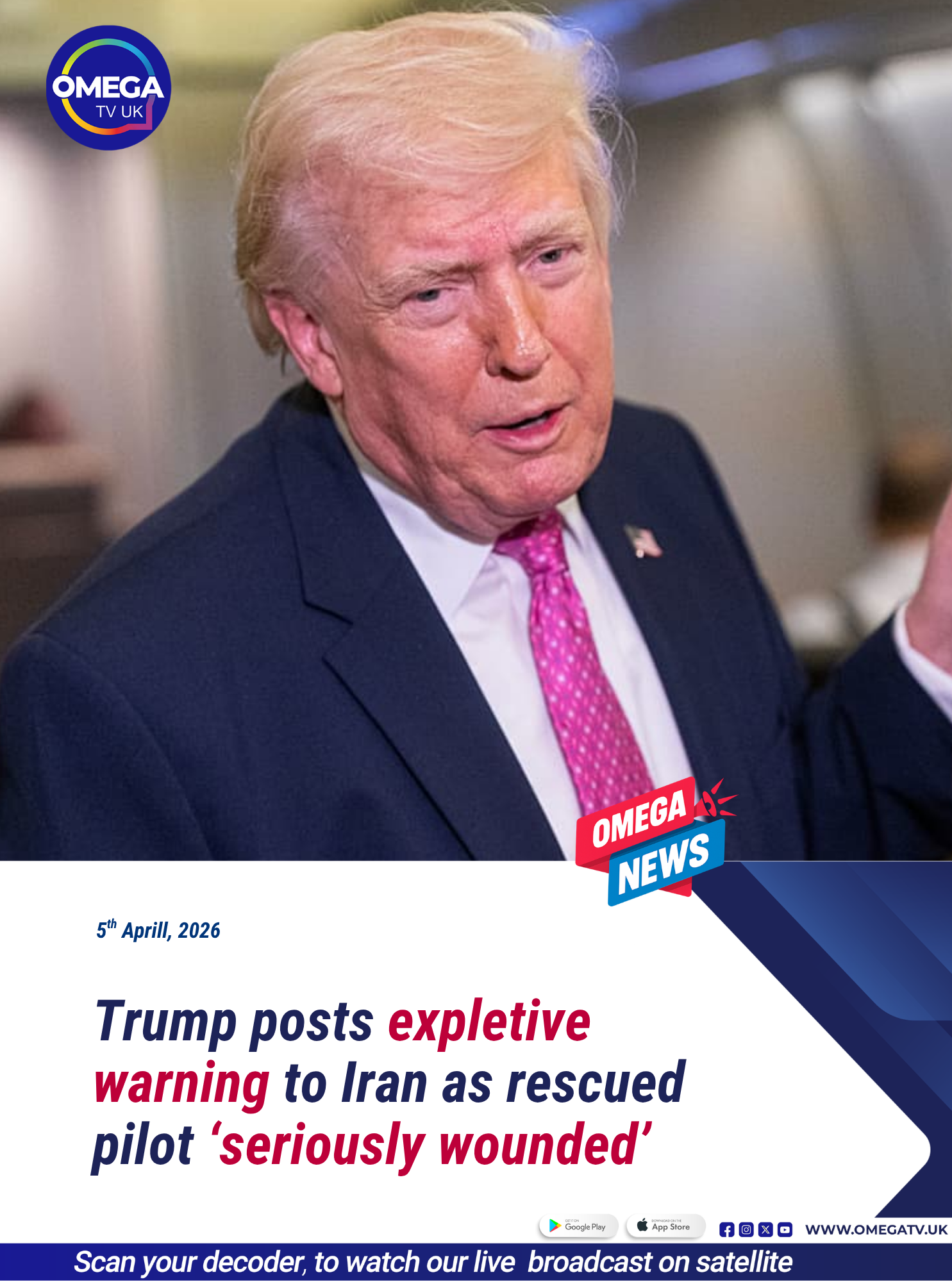
Donald Trump has issued a fresh and strongly worded warning to Iran, threatening severe retaliation if Tehran does not reopen the strategically vital Strait of Hormuz, while also confirming that a rescued US airman is recovering after being seriously wounded.

In a series of posts on Truth Social, Trump used unusually blunt and expletive-filled language, warning that Iran would face devastating consequences if it continued to restrict access to the key global shipping route. He reportedly vowed that Iran would be “living in hell” if the waterway was not reopened within the set timeframe.
The warning comes as tensions between the US and Iran continue to escalate following the downing of a US F-15 fighter jet inside Iranian territory. The incident triggered a high-risk search-and-rescue operation that has now successfully recovered both crew members.
Trump confirmed that the second crew member, a weapons systems officer, has been found and is now “safe and sound,” although he sustained serious injuries during the ordeal.
According to US officials, the rescue mission was one of the most complex and dangerous operations carried out in recent years. It involved hundreds of troops, dozens of aircraft, and a coordinated intelligence effort, including a deception campaign led by the Central Intelligence Agency to mislead Iranian forces.
The airman had reportedly been hiding in rugged terrain while Iranian forces searched for him. His extraction came just as enemy units were closing in, adding urgency to the operation. Despite the risks, US forces managed to carry out the mission without losing personnel, although some equipment was damaged during the process.
The successful rescue marks a significant moment for the Trump administration, avoiding the possibility of a captured US serviceman being used for propaganda by Iran. Analysts say such a scenario could have intensified the conflict both politically and militarily.
The downing of the jet itself represents a rare and serious escalation. It is one of the first confirmed instances of a US manned aircraft being shot down over Iran during the current conflict, highlighting the growing intensity of direct confrontations between the two sides.
Meanwhile, the Strait of Hormuz remains a central flashpoint. The narrow waterway is one of the world’s most important النفط shipping routes, with a significant portion of global oil supply passing through it daily. Its disruption has already contributed to rising energy prices and increased economic uncertainty worldwide.
Trump has repeatedly insisted that the US can reopen the strait and has given Iran a strict deadline to comply. His latest remarks suggest a willingness to escalate military action further if Tehran does not back down.
Iranian officials, however, have dismissed US threats, with military leaders warning of their own retaliatory measures if American forces continue operations in the region.
As the situation develops, the combination of military confrontation, economic pressure, and diplomatic uncertainty is raising concerns about a broader regional conflict. The rescue of the wounded airman may be seen as a tactical success, but it underscores the high stakes and volatility of the ongoing crisis.