Mali junta leader breaks silence, says situation “under control” after deadly coordinated attacks

Mali’s military leader, General Assimi Goïta, has insisted that the security situation in the country is “under control” after unprecedented coordinated attacks rocked several regions over the weekend, marking one of the most serious challenges yet to his junta-led government.
Goïta made his first public address on Tuesday evening after remaining out of sight for three days, a silence that had sparked widespread speculation about his safety and the stability of his rule. His televised speech came just hours after jihadist groups threatened to impose a blockade on the capital, Bamako.
“As I am speaking to you, security arrangements have been reinforced. The situation is under control and clearing operations, search efforts, intelligence gathering and security measures are continuing,” he said during his national address.
He acknowledged the seriousness of the crisis, describing the situation as one of “extreme gravity,” but urged citizens to remain calm and united.
“I call on all Malians to stand up against division and national fracture. Our country needs clarity, not panic,” he added.
Goïta’s reappearance followed days of uncertainty after jihadist fighters and Tuareg separatists launched a coordinated wave of attacks across key military and strategic positions, including areas near Bamako. The assaults, which began on Saturday, were among the most significant in nearly 15 years.
According to security sources, at least 23 people were killed during two days of intense clashes. Among the dead was Defence Minister Sadio Camara, a central figure in Mali’s military leadership and a key architect of its growing alignment with Russia.
The attacks involved fighters from the Azawad Liberation Front (FLA), a Tuareg separatist group, and militants linked to the Al-Qaeda-affiliated Group for the Support of Islam and Muslims (JNIM). Analysts say the coordination between these historically rival factions marks a dangerous new phase in Mali’s conflict.
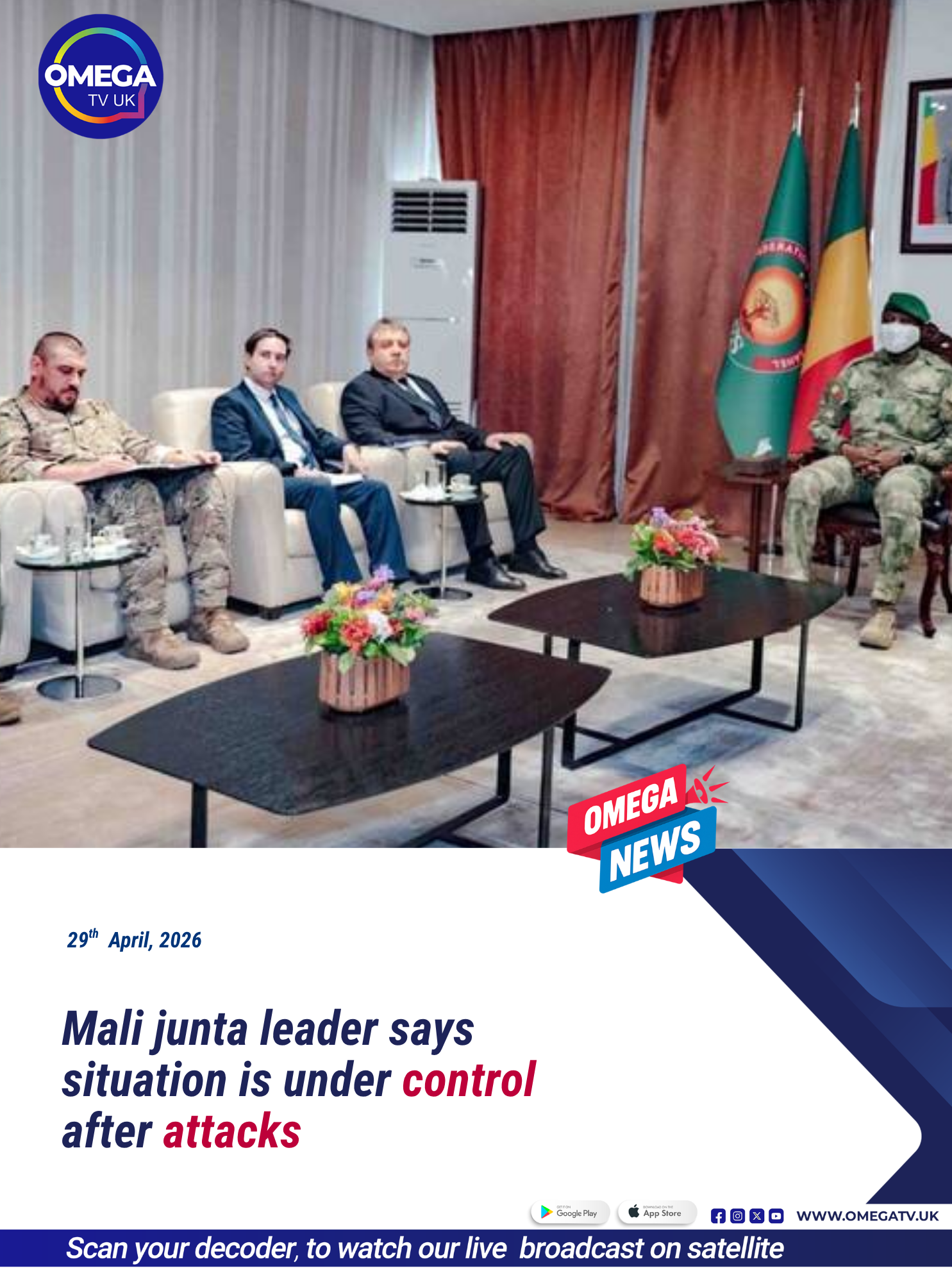
On Tuesday, Goïta also met with wounded soldiers and civilians, alongside Russia’s ambassador to Mali, Igor Gromyko. The meeting was presented as a show of stability and continued international backing.
According to the presidency, the Russian envoy reaffirmed Moscow’s commitment to supporting Mali in its fight against terrorism.
However, Russia’s military presence in the country has come under renewed scrutiny. Reports confirmed that fighters from Russia’s Africa Corps, which replaced the Wagner Group in Mali, were forced to withdraw from Kidal following the latest offensive by separatist forces.
Kidal, a strategic northern city long contested by the Malian state, was recaptured by government forces in 2023 with Russian support. Its reported loss represents a significant symbolic and military setback for the junta.
The Malian army has also reportedly withdrawn from several positions in the Gao region, further raising questions about the government’s ability to maintain control across the vast northern territory.
Meanwhile, the JNIM group released a video statement claiming it was imposing a blockade on Bamako and surrounding areas, warning civilians to avoid travel into the capital.
Spokesman Bina Diarra said people could leave Bamako freely but warned that entry into the city was “forbidden until further notice.” He also extended the warning to the military town of Kati, a key junta stronghold near the capital.
Authorities have not independently confirmed whether the blockade is fully in effect, but tension in the capital remains high.
Security analysts believe the weekend offensive may have been strategically designed as a diversion to allow separatist forces to regain control of Kidal in the north. The city had previously been a stronghold for Tuareg rebels before being retaken by the army in late 2023.
Mali has faced instability for more than a decade, with jihadist insurgencies and separatist rebellions often overlapping and competing for control. The latest attacks echo the 2012 crisis, when an alliance between Tuareg rebels and Islamist militants briefly took over large parts of northern Mali before collapsing into internal conflict.
Today, despite ideological differences, both groups appear increasingly aligned against a shared enemy: the ruling military junta and its Russian-backed security strategy.
While Goïta’s speech aimed to reassure the nation, the scale of the attacks and the continued presence of armed groups across multiple regions suggest Mali’s crisis is far from over.