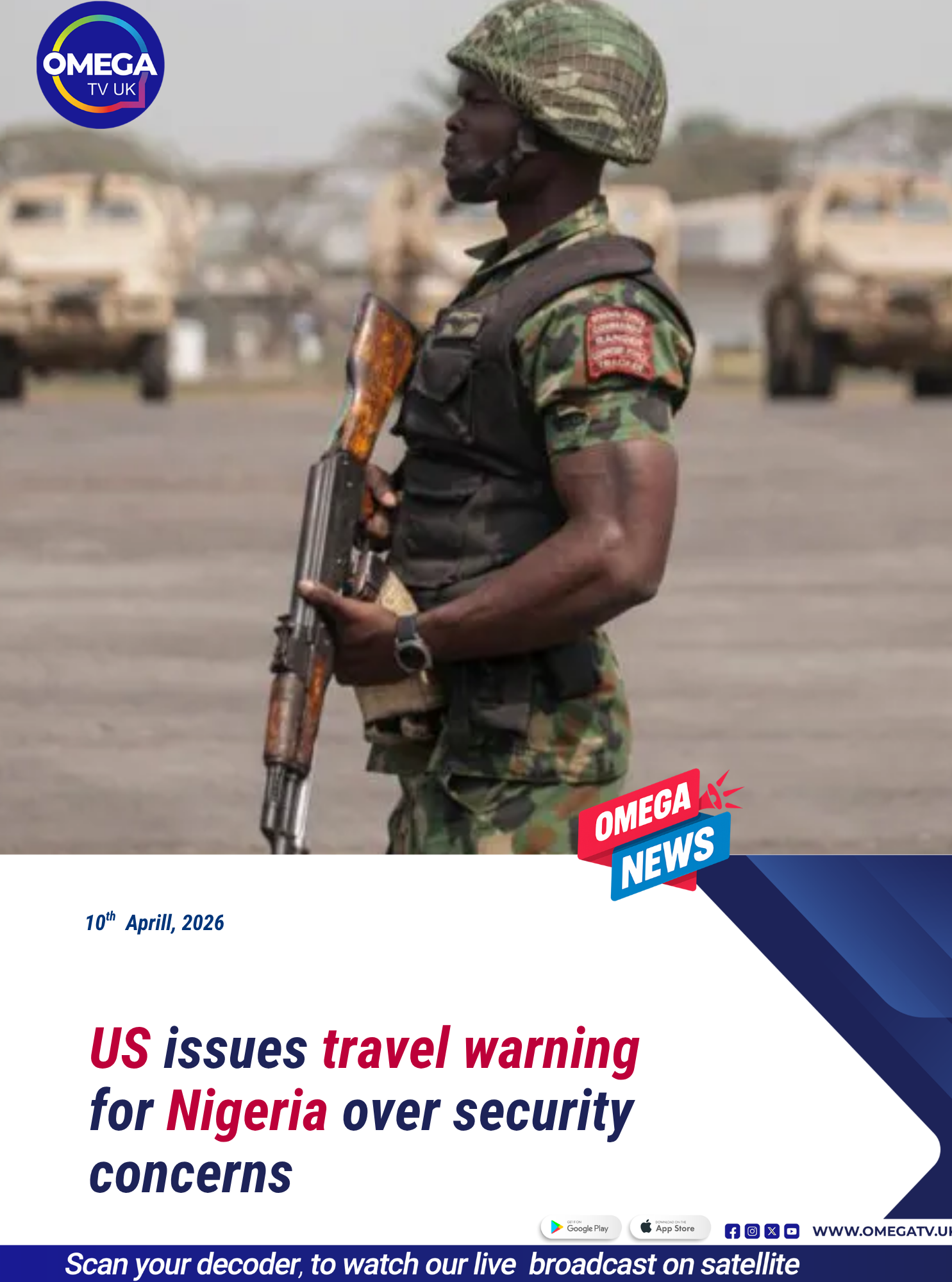
US warns citizens against travel to Nigeria over rising security threats

The US State Department has urged American citizens to reconsider travel to Nigeria, citing heightened risks of terrorism, kidnapping, and civil unrest in parts of the country.
In an updated travel advisory issued Wednesday, US officials placed at least 23 Nigerian states under the highest “do not travel” classification, warning that the security situation in those regions remains “unstable and uncertain.”
The advisory also confirmed that non-emergency staff and family members at the US Embassy in Abuja have been authorised to leave, reflecting concerns over a deteriorating security environment.
The warning comes amid ongoing violence in several parts of Nigeria, despite continued security cooperation between Washington and Abuja on counter-terrorism, intelligence sharing, maritime security, and military training.
US support has included surveillance assistance and equipment such as aircraft and helicopters used in operations against insurgent groups.
The State Department warned that attacks could occur “with little or no warning” in public spaces, including markets, hotels, schools, places of worship, and transport hubs.
Violence in Nigeria has been driven largely by multiple security crises. In the northeast, groups such as Boko Haram and Islamic State West Africa Province continue to carry out attacks on civilians and security forces.
In the north-central region, including states such as Plateau and Benue, renewed violence linked to banditry, communal clashes, and reprisal attacks has further contributed to instability.
The US maintains an overall “Level 3: reconsider travel” advisory for Nigeria, while identifying certain regions as “Level 4: do not travel” due to extreme risk.
Officials have not provided a timeline for the departure of embassy personnel, and it remains unclear whether the measure affects only American staff or also locally employed workers.
Nigerian authorities have not yet issued a formal response to the latest advisory, though previous warnings have sometimes been criticised by officials who argue they do not reflect improvements in security conditions and may negatively affect the country’s global image.
The advisory comes at a sensitive time for Nigeria, which is also working to attract foreign investment and maintain international engagement amid ongoing security challenges.