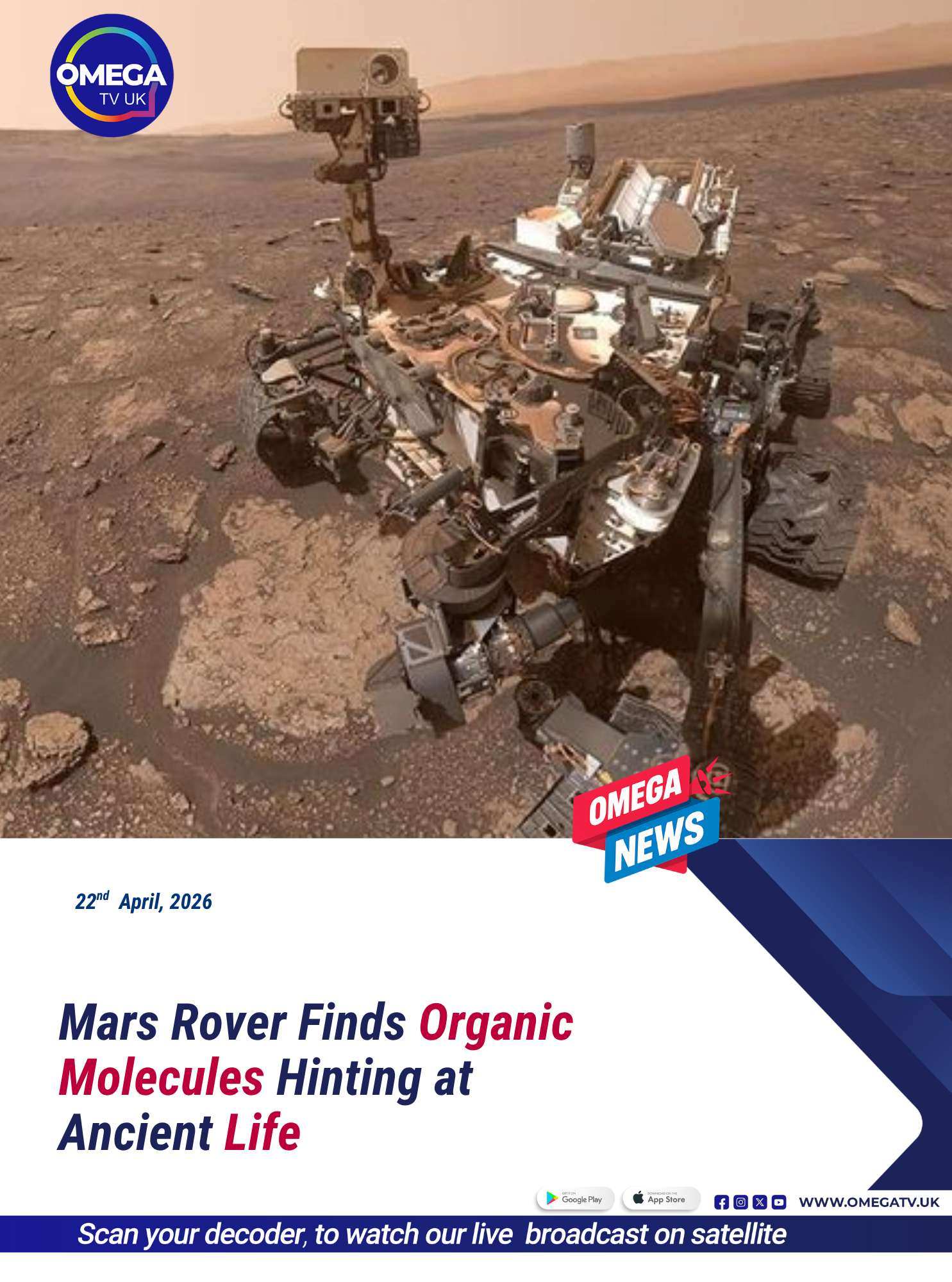
NASA Rover Finds New Organic Molecules on Mars in Possible Hint of Ancient Life
NASA’s Curiosity rover has discovered previously undetected organic molecules on Mars, raising new questions about whether the Red Planet may have once been capable of supporting life.

The findings come from a rock sample drilled in 2020 in the Mount Sharp region by Curiosity rover, which scientists have now confirmed contains complex organic compounds.
Researchers say the discovery does not confirm past life on Mars, but it strengthens the case that the planet once had the right chemical conditions to support it.
Among the compounds identified is a nitrogen heterocycle, a molecular structure considered a potential building block for RNA and DNA. Scientists describe this as particularly significant because it has never been detected before on the Martian surface or in confirmed Martian meteorites.
Another compound found in the sample, benzothiophene, has previously been observed in meteorites and is linked to early prebiotic chemistry in the solar system.
The rock sample, nicknamed “Mary Anning 3” after the famous English fossil hunter Mary Anning, was collected from an area of Mount Sharp that is believed to have once been covered by ancient lakes and streams.
Scientists involved in the mission say the discovery reflects years of careful analysis and teamwork between engineers and researchers working with the rover.
While the organic molecules could have formed through either biological or geological processes, the findings add to growing evidence that ancient Mars had the necessary ingredients for life.
The announcement follows recent milestones in space exploration, including progress from NASA’s Artemis programme, which continues to push human spaceflight further into deep space.
For now, scientists caution that more evidence is needed before drawing conclusions—but the latest discovery keeps the possibility of ancient Martian life firmly on the scientific radar.