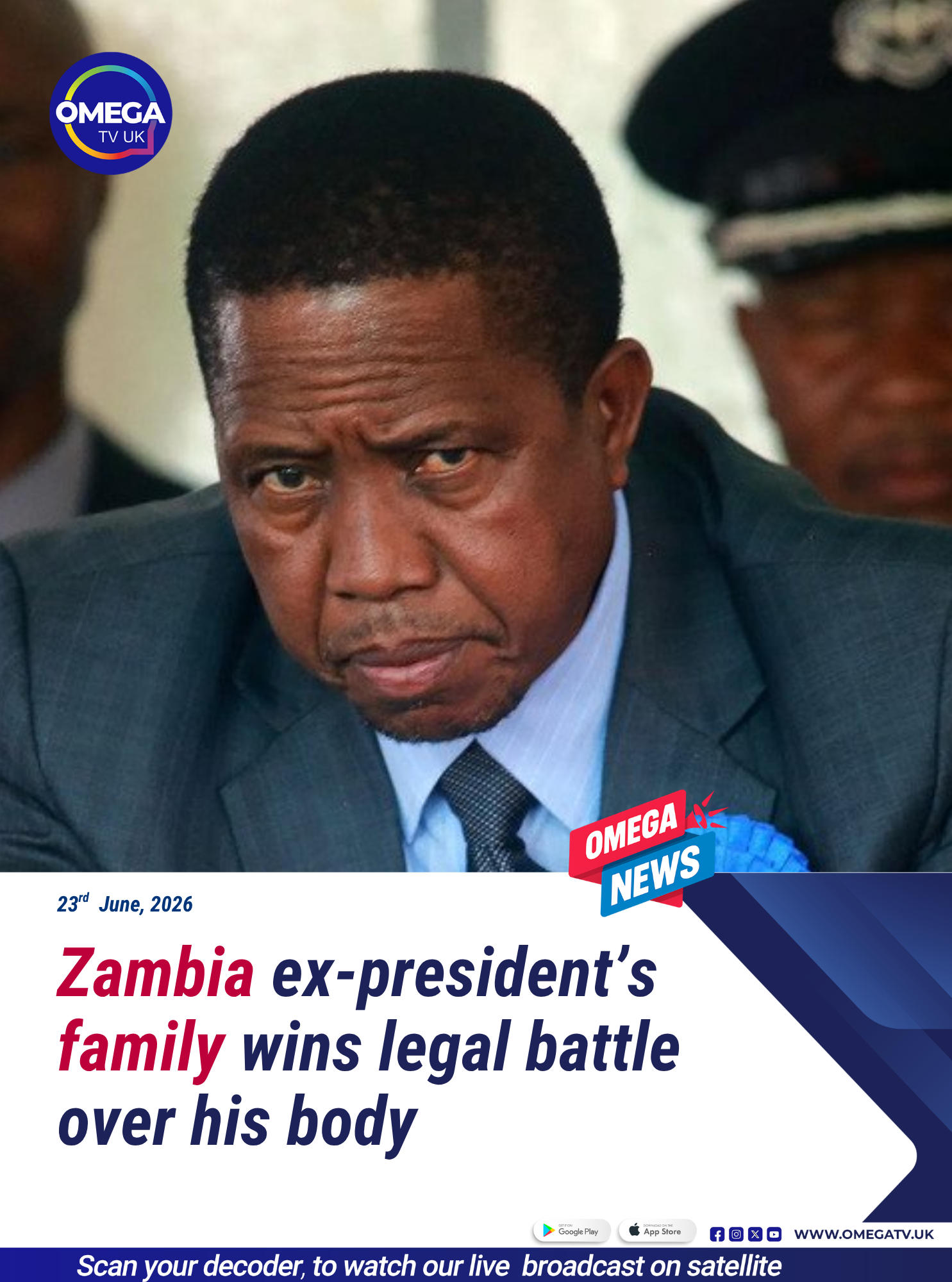
A long-running dispute over the burial of Zambia’s former president has been resolved after the country’s Supreme Court of Appeal ruled that the family of late leader Edgar Lungu has the final authority over where he will be laid to rest.

The judgment brings an end to more than a year of legal and political tension following Lungu’s death in South Africa, where he passed away aged 68 after an undisclosed illness. His remains had been at the centre of a bitter disagreement between his family and the Zambian government over whether he should receive a state funeral or a private burial.
The ruling overturns a previous decision by a South African high court in Pretoria, which had allowed the Zambian government to repatriate his body for a formal state funeral in Lusaka. The government had argued that, as a former head of state, Lungu should be honoured in his home country and buried alongside other national leaders in Zambia’s presidential burial site.
However, Lungu’s family strongly opposed this plan, insisting on a private burial in South Africa. They argued that negotiations with the government over funeral arrangements had broken down and that the late president had expressed concerns about the nature of his send-off.
The dispute was further complicated by the tense political relationship between Lungu and his successor, President Hakainde Hichilema. The two leaders were long-standing political rivals, and their feud continued even after Lungu’s death, influencing how the funeral arrangements were handled.
According to court documents, the judges concluded that Lungu had viewed himself as unwelcome in his own country and feared he would not receive a dignified burial if his successor attended the ceremony. This finding played a key role in the court’s decision to uphold the family’s appeal.
The legal battle saw several twists, including a brief moment in which the South African court appeared to transfer authority over the body to the Zambian government, only to later reverse the decision pending further proceedings. These conflicting rulings added to public confusion and emotional distress among mourners.
At one stage, rival mourning arrangements were held in Zambia, with separate condolence books and conflicting announcements from the government and Lungu’s political party, the Patriotic Front, reflecting deep divisions over his legacy.
Following Tuesday’s ruling, the Zambian government said it disagreed with the judgment but would not pursue further legal action, effectively bringing closure to the dispute.
The decision marks the end of a highly sensitive chapter in Zambian politics, one that has highlighted the deep personal and political rifts that can persist even after a national leader’s death.
While the ruling provides legal clarity, it also leaves behind unresolved emotional and political tensions surrounding Lungu’s legacy and his complicated relationship with the state he once led.