Pope Leo XIV has challenged Angola’s leadership to break away from centuries of economic exploitation, warning that the continued reliance on “extractivism” has brought suffering, inequality and environmental damage to the African continent.

Speaking during his visit to Angola, the pope delivered a strong message to government officials, urging them to rethink economic models that prioritise the extraction of natural resources without benefiting the broader population. His remarks came as part of his ongoing Africa tour, which has focused on peace, justice and sustainable development.
“How much suffering, how many deaths, how many social and environmental disasters are brought about by this logic of extractivism,” the pontiff said, highlighting the long-term consequences of systems that prioritise profit over people.
Angola, a resource-rich country with vast reserves of oil, diamonds and critical minerals, has long struggled with inequality despite its economic potential. The pope’s comments directly addressed this contradiction, pointing to a history shaped by colonial exploitation and decades of conflict.
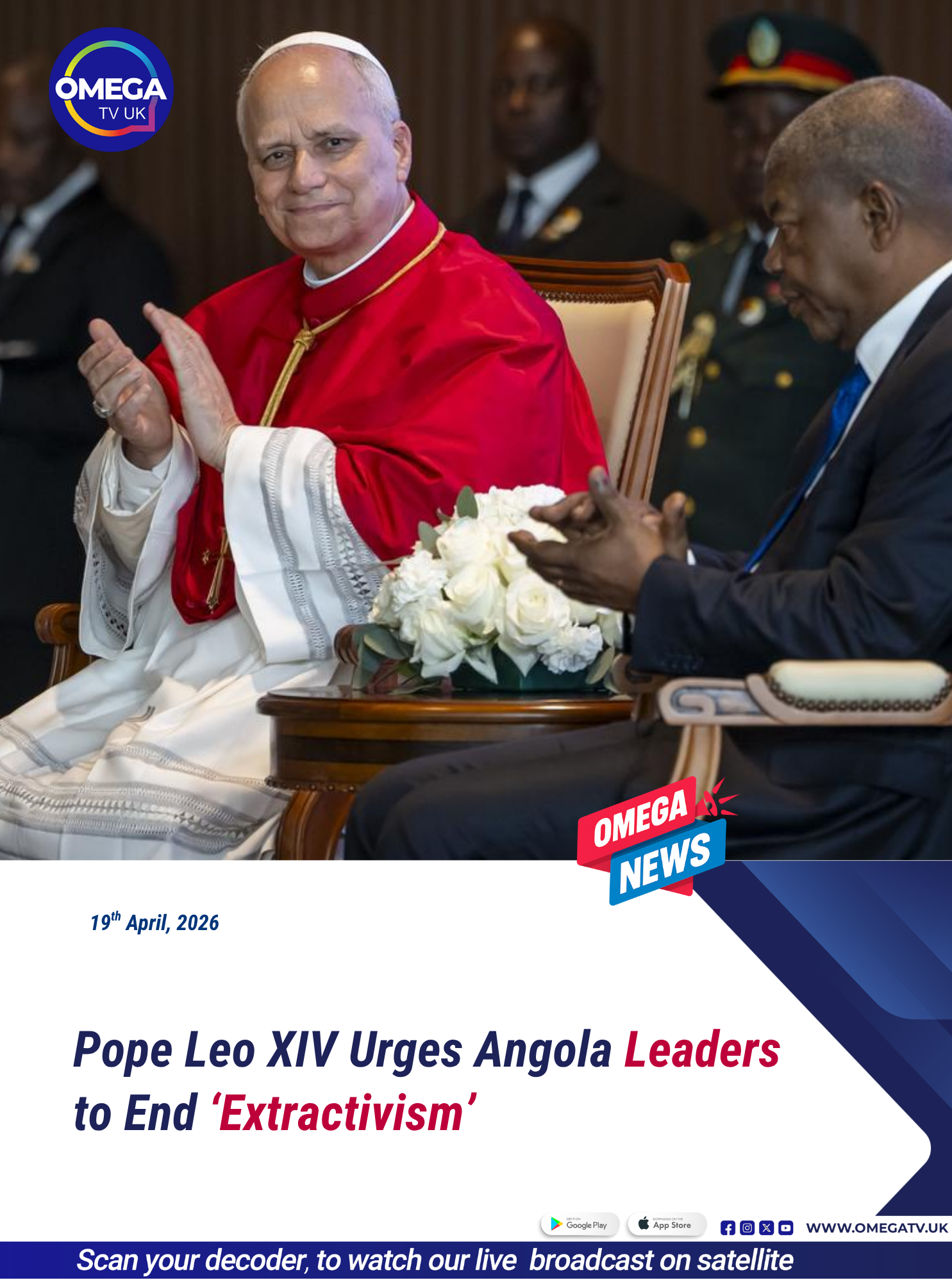
During his visit, Pope Leo met with Angolan President João Lourenço and delivered a speech to government authorities, emphasising the need for inclusive growth and social justice. He acknowledged the resilience of the Angolan people, praising their enduring spirit despite years of hardship.
“I desire to meet you in the spirit born of peace and to affirm that your people possess treasures that cannot be bought or stolen,” he said, adding that the country’s true wealth lies in its people rather than its natural resources.
The pope’s visit marks the third stop on his four-nation African tour, following engagements in Cameroon. His trip comes at a time when global attention is increasingly focused on Africa’s role in supplying critical minerals essential for modern technology and the global energy transition.
Angola gained independence from Portugal in 1975 but was immediately plunged into a brutal civil war that lasted until 2002. The conflict, which claimed more than half a million lives, was fuelled in part by Cold War rivalries, with global powers backing opposing sides.
Today, Angola is one of Africa’s leading oil producers and ranks among the world’s top producers of diamonds. However, wealth from these resources has not been evenly distributed. According to the World Bank, a significant portion of the population continues to live in poverty, highlighting deep structural challenges within the economy.
Pope Leo’s criticism of extractivism reflects broader concerns about how African nations can balance economic growth with social equity and environmental sustainability. He warned that external interests have historically viewed Africa primarily as a source of raw materials, often at the expense of local communities.
“You know well that all too often people have looked — and continue to look — to your lands in order to give, or, more commonly, in order to take,” he told Angolan officials.
Beyond economic issues, the pope also touched on global political tensions during his journey. While travelling from Cameroon to Angola, he addressed ongoing commentary about his perceived disagreement with US President Donald Trump. He reiterated that he had no interest in engaging in political debates and remained focused on promoting peace and unity.
“It’s not in my interest at all to debate,” he said, reinforcing his message that his mission in Africa is centred on spiritual leadership and dialogue rather than geopolitical disputes.
The visit has drawn significant attention across the continent, particularly among young people, as Pope Leo continues to emphasise themes of empowerment, anti-corruption and community development. His call for Angola to move beyond extractivism is likely to resonate in other resource-rich African nations facing similar challenges.
As his tour continues, the pope is expected to maintain pressure on leaders to adopt policies that prioritise people over profit, while encouraging citizens to play an active role in shaping their countries’ futures.
His message in Angola ultimately underscores a broader vision: a shift away from exploitation towards a more just and sustainable model of development that benefits all.