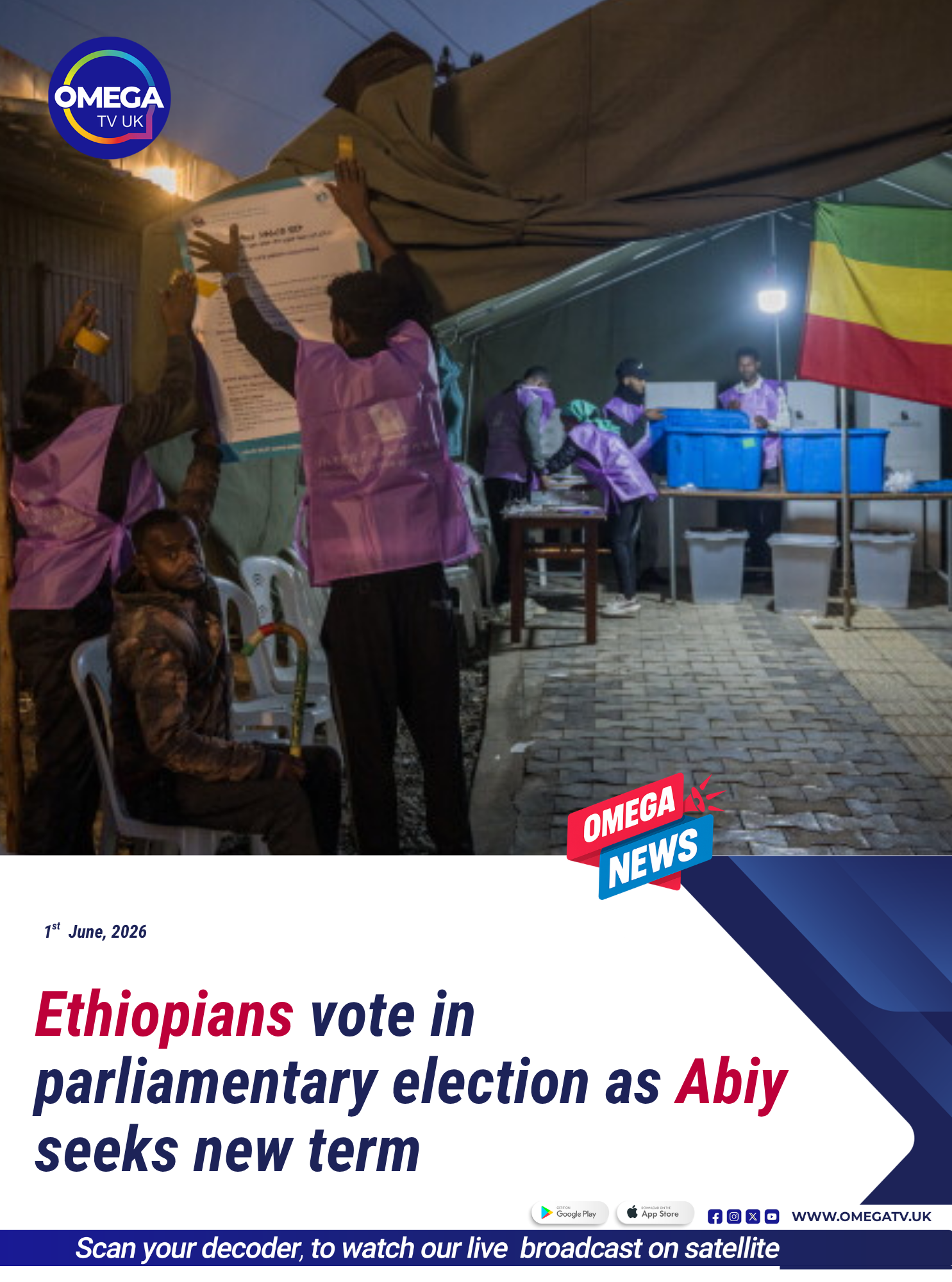
Millions of Ethiopians headed to the polls on Monday as Prime Minister Abiy Ahmed seeks a new term in office, with his ruling Prosperity Party widely expected to secure a decisive victory.

The election comes at a critical moment for Ethiopia, which continues to grapple with political tensions, armed conflicts and deep ethnic divisions despite recording some of the fastest economic growth rates in the world.
Abiy, who came to power in 2018, initially won international praise for introducing reforms and restoring relations with neighbouring Eritrea, a move that earned him the 2019 Nobel Peace Prize. However, his government has since faced criticism from opposition groups and human rights organisations over alleged authoritarian tendencies and restrictions on political dissent.
Political analysts and opposition parties have expressed concerns about the competitiveness of the election, arguing that the political environment has become increasingly restrictive. Many opposition figures are either in exile, imprisoned or operating under significant constraints, while dozens of constituencies reportedly feature no challenger to the ruling party.
More than 50 million registered voters were eligible to cast their ballots across approximately 48,000 polling stations nationwide. Voting began early Monday morning and was scheduled to continue until the evening, with election officials indicating that polling hours could be extended if necessary.
The Prosperity Party enters the election from a position of strength after winning an overwhelming majority in the previous parliamentary election in 2021. The party secured about 96 percent of parliamentary seats during that vote, cementing its dominance over Ethiopia’s political landscape.
Meanwhile, opposition parties remain fragmented, with more than 40 groups contesting the election. Many have complained about limited financial resources and unequal access to political campaigning opportunities.
Despite political challenges, Ethiopia’s economy continues to show strong growth. According to projections from the International Monetary Fund, the country is expected to achieve economic growth exceeding nine percent this year, making it one of the fastest-growing economies globally.
However, security concerns remain a major issue. Armed conflicts continue in the populous regions of Oromia and Amhara. In Amhara, nationalist Fano militias have been engaged in clashes with federal forces and previously threatened to disrupt the electoral process. Nevertheless, election authorities cancelled voting in only a small number of constituencies within the region.
In Oromia, where the Oromo Liberation Army has remained active, election officials maintained that polling stations would operate as planned.
International observers from the African Union and the Intergovernmental Authority on Development are monitoring the election process. However, the Ethiopian government did not approve a proposal from the European Union to deploy election observers.
Official results are expected within approximately ten days after the polls close. The outcome is likely to determine the direction of Ethiopia’s political and economic future as the country continues to balance development ambitions with ongoing security and governance challenges.