Women are facing the greatest risk in the ongoing Ebola outbreak in the Democratic Republic of the Congo (DRC), health experts have warned, as confirmed infections continue to rise across the country and neighbouring Uganda.

According to health authorities, the number of confirmed Ebola cases in the DRC has climbed to 282, with the majority recorded in Ituri Province. Additional cases have been confirmed in North Kivu and South Kivu provinces, while Uganda has reported nine cases linked to the outbreak.
Medical professionals and humanitarian organisations say women are disproportionately affected because of their traditional caregiving responsibilities within families and communities. During previous Ebola outbreaks in the DRC, women and girls accounted for nearly two-thirds of all reported infections, a pattern experts fear could repeat itself.
In a recent statement, UN Women highlighted that women have been overrepresented among Ebola victims for decades. The organisation noted that during the 2018–2019 Ebola outbreak in the DRC, women and girls made up around two-thirds of all reported cases due to their close involvement in caring for sick relatives and community members.
Health workers on the ground say cultural and social responsibilities place women at the centre of the response whenever illness strikes a household. Women are often responsible for bathing sick family members, feeding them, washing contaminated clothing, and providing daily care, all of which increase exposure to the highly infectious virus.
Dr. Furaha Elisabeth, director of the Karibuni Wa Maman Gynecology and Obstetrics Clinic in Bunia, explained that women are usually the first people to come into contact with infected individuals.
“When someone in the community is sick, it is often a woman who provides care. She helps feed the patient, cleans them, and takes care of their personal needs. These responsibilities expose women to a much higher risk of infection,” she said.
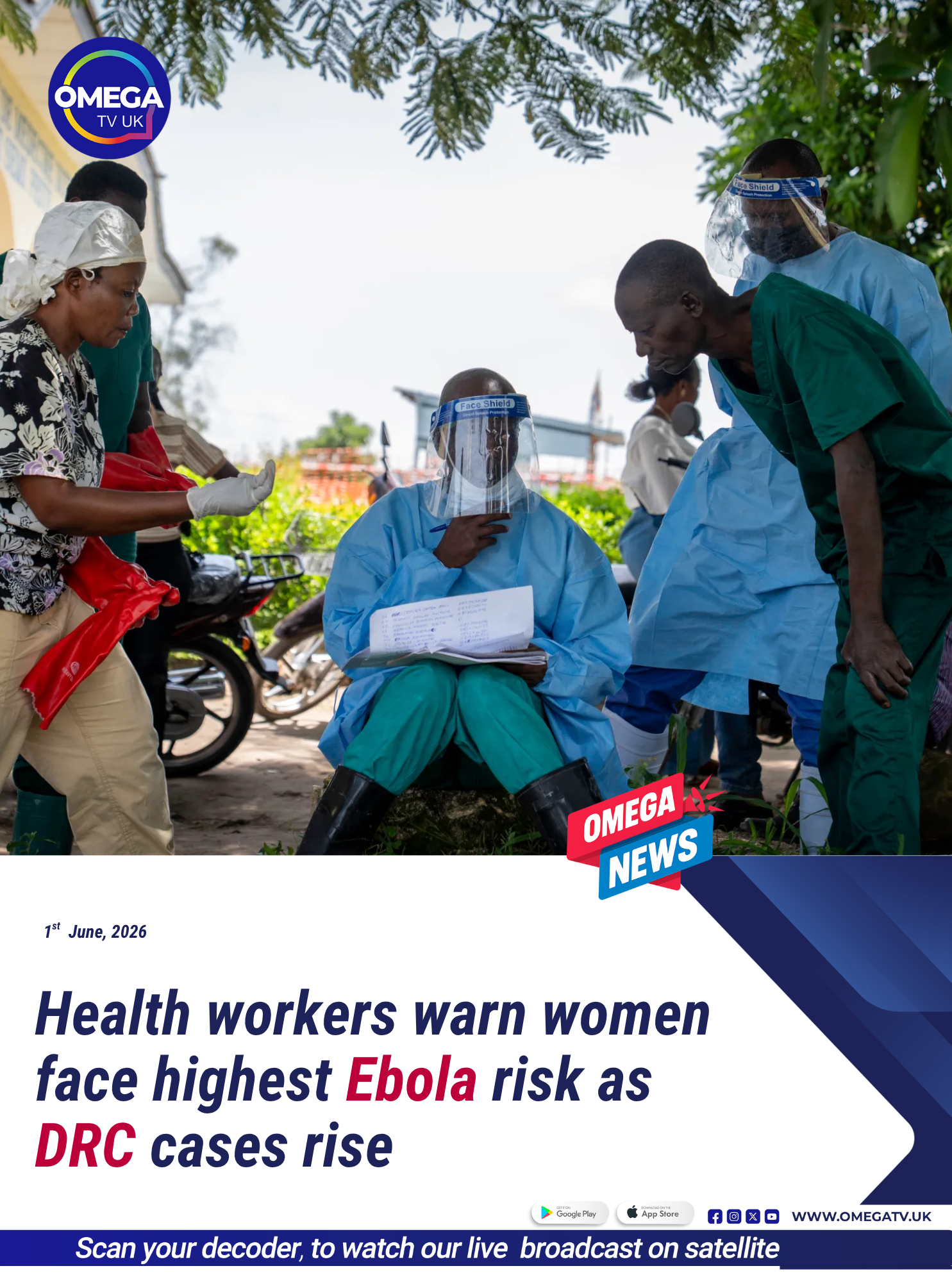
The danger extends beyond homes and into healthcare facilities. Women make up a large proportion of nurses, caregivers and frontline health workers in many parts of the DRC. Medical staff have also raised concerns about shortages of protective equipment, forcing some workers to rely on limited resources while treating patients.
Dr. Elisabeth warned that when women become infected, the virus can quickly spread to other vulnerable members of the household.
“If a woman is exposed and becomes infected, the first people at risk are often her children and relatives. Mothers caring for young children, including breastfeeding infants, can unknowingly pass on the infection, making women, girls and children among the most vulnerable groups during an outbreak,” she said.
Despite the growing number of infections, there have been some positive developments. World Health Organization Director-General Dr. Tedros Adhanom Ghebreyesus announced that five patients have recovered from the disease. He made the remarks during the opening of a new treatment centre aimed at strengthening the response to the outbreak.
Health officials continue to urge communities to follow prevention measures, report suspected cases quickly and avoid direct contact with infected individuals. International health agencies are also working to increase surveillance, improve treatment facilities and provide protective equipment to frontline workers.
The current outbreak remains a major public health concern, particularly in conflict-affected regions where healthcare access is limited. Experts warn that protecting women and healthcare workers will be critical in preventing further spread of the disease and bringing the outbreak under control.