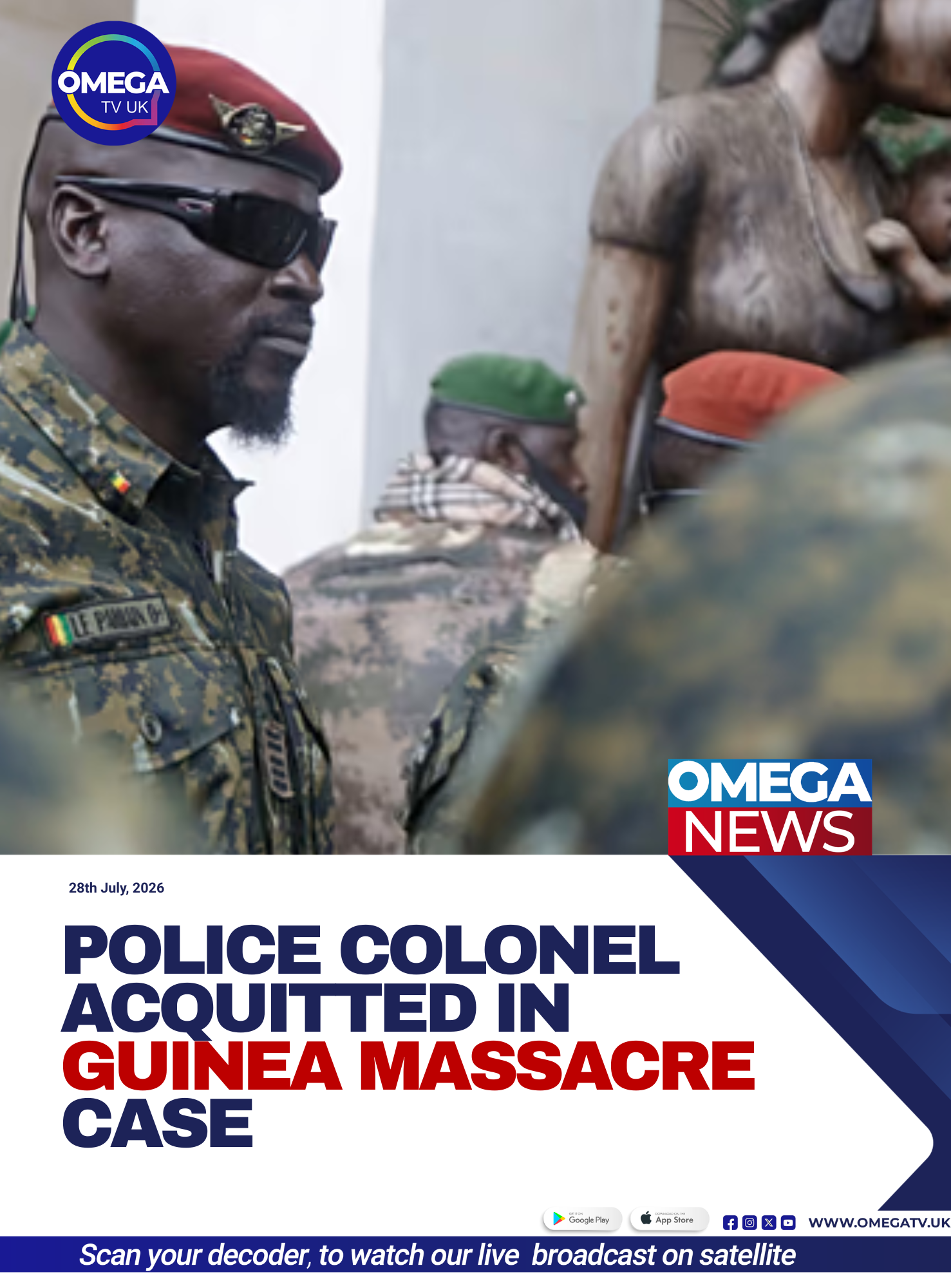
Victims’ lawyers vow to appeal as acquittal revives debate over justice for one of Guinea’s deadliest incidents.
A Guinean court has acquitted Police Colonel Bienvenu Lamah of charges linked to the 2009 stadium massacre, a decision expected to renew debate over accountability for one of the country’s worst human rights tragedies. The court ordered Lamah’s immediate release after clearing him of all charges,

Colonel Lamah, a military police officer who had been in custody since November 2022, faced charges including complicity in abuse of authority, murder, abduction and unlawful detention. Prosecutors had requested a 10-year prison sentence, but the court found insufficient grounds to convict him,
Lawyers representing victims and survivors have rejected the verdict and announced plans to appeal. They argue that justice has not yet been fully served for those affected by the deadly crackdown,
The massacre occurred on September 28, 2009, when Guinean security forces stormed an opposition rally at a stadium in the capital, Conakry. The operation resulted in widespread violence against demonstrators,
A United Nations commission of inquiry concluded that at least 156 people were killed during the attack, while hundreds more were injured. The investigation also documented the rape of more than 100 women, although human rights organisations believe the actual death toll may have been significantly higher,
The acquittal comes two years after Guinea’s landmark massacre trial, which saw former military ruler Moussa Dadis Camara convicted of crimes against humanity. He was sentenced to 20 years in prison before receiving a presidential pardon from junta leader Mamady Doumbouya in March 2025,
The trial also resulted in prison sentences ranging from several years to life imprisonment for seven other defendants. However, three military suspects linked to the case remain fugitives and have not yet been brought before the courts,
The 2009 stadium massacre remains one of the darkest chapters in Guinea’s modern history and has become a symbol of the country’s long struggle to achieve justice for victims of political violence,
Human rights advocates continue to call for full accountability, arguing that every individual allegedly involved in the atrocities should face a fair judicial process. Survivors and victims’ families say lasting justice remains essential for national reconciliation,
Nearly 17 years after the massacre, the latest court ruling has once again placed Guinea’s justice system under public scrutiny, with appeals expected to keep the high-profile case in the national spotlight.