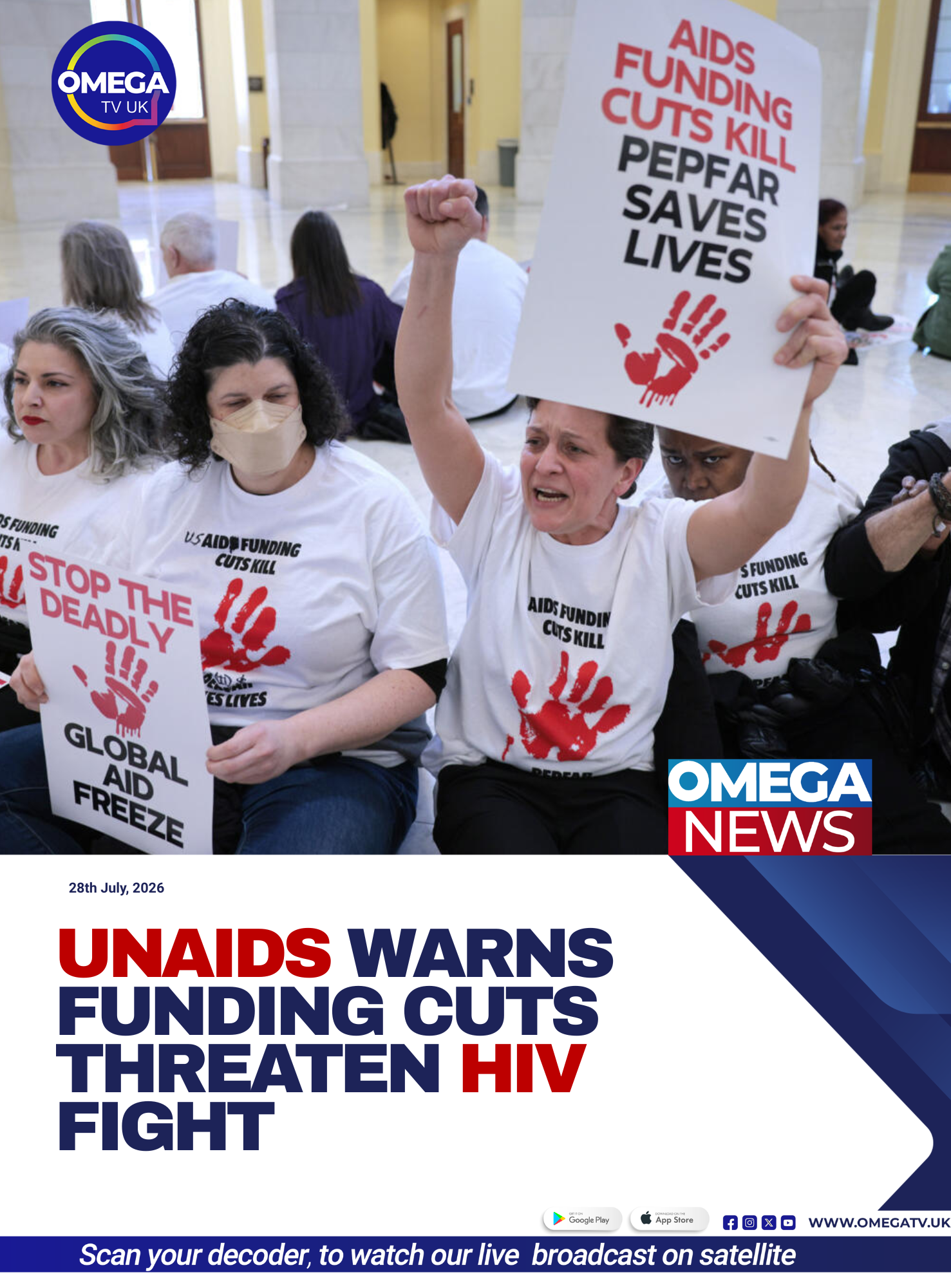
Agency says declining investment and growing inequality could reverse decades of progress toward ending AIDS by 2030.
The Joint United Nations Programme on HIV/AIDS (UNAIDS) has warned that global funding cuts are putting decades of progress in the fight against HIV/AIDS at risk. The agency says reduced investment, widening inequality and setbacks to human rights could slow efforts to eliminate AIDS as a public health threat by 2030,

The warning was issued during the launch of the United to End AIDS report in Rio de Janeiro. The report examines the impact of funding disruptions in 2025 and assesses global progress toward achieving the international goal of ending AIDS within the next decade,
UNAIDS Executive Director Winifred Byanyima said major scientific breakthroughs have made it possible to end AIDS as a public health threat, provided prevention medicines and treatment reach everyone who needs them,
Byanyima stressed that highly effective HIV prevention medicines now exist and have the potential to significantly reduce new infections if they are made widely accessible. She said the scientific tools needed to end the epidemic are already available,
However, she warned that declining financial support, increasing inequality, attacks on human rights and shrinking civic space are threatening to reverse years of progress made in expanding HIV prevention and treatment programmes,
According to Byanyima, the greatest challenge to ending AIDS is no longer scientific but political. She said governments and international partners must maintain their financial commitments to ensure life-saving services remain available,
UNAIDS cautioned that continued reductions in HIV funding could lead to rising numbers of new HIV infections and increased AIDS-related deaths, particularly in countries that rely heavily on international assistance for healthcare programmes,
The report also highlights the importance of protecting human rights and ensuring equal access to healthcare services, arguing that discrimination and inequality continue to prevent many vulnerable communities from receiving treatment and prevention support,
The findings were presented during the International AIDS Conference in Rio de Janeiro, where global health leaders, researchers and policymakers are meeting to discuss strategies for accelerating progress in the fight against HIV/AIDS. The conference runs until July 31, 2026,
UNAIDS is urging governments, donors and international organisations to strengthen investments in HIV programmes to safeguard previous achievements and keep the world on track to end AIDS as a public health threat by 2030.