US Launches Major Strikes on Iran After Tanker Attacks in Strait of Hormuz
Washington Targets More Than 80 Sites Following Attacks on Commercial Shipping
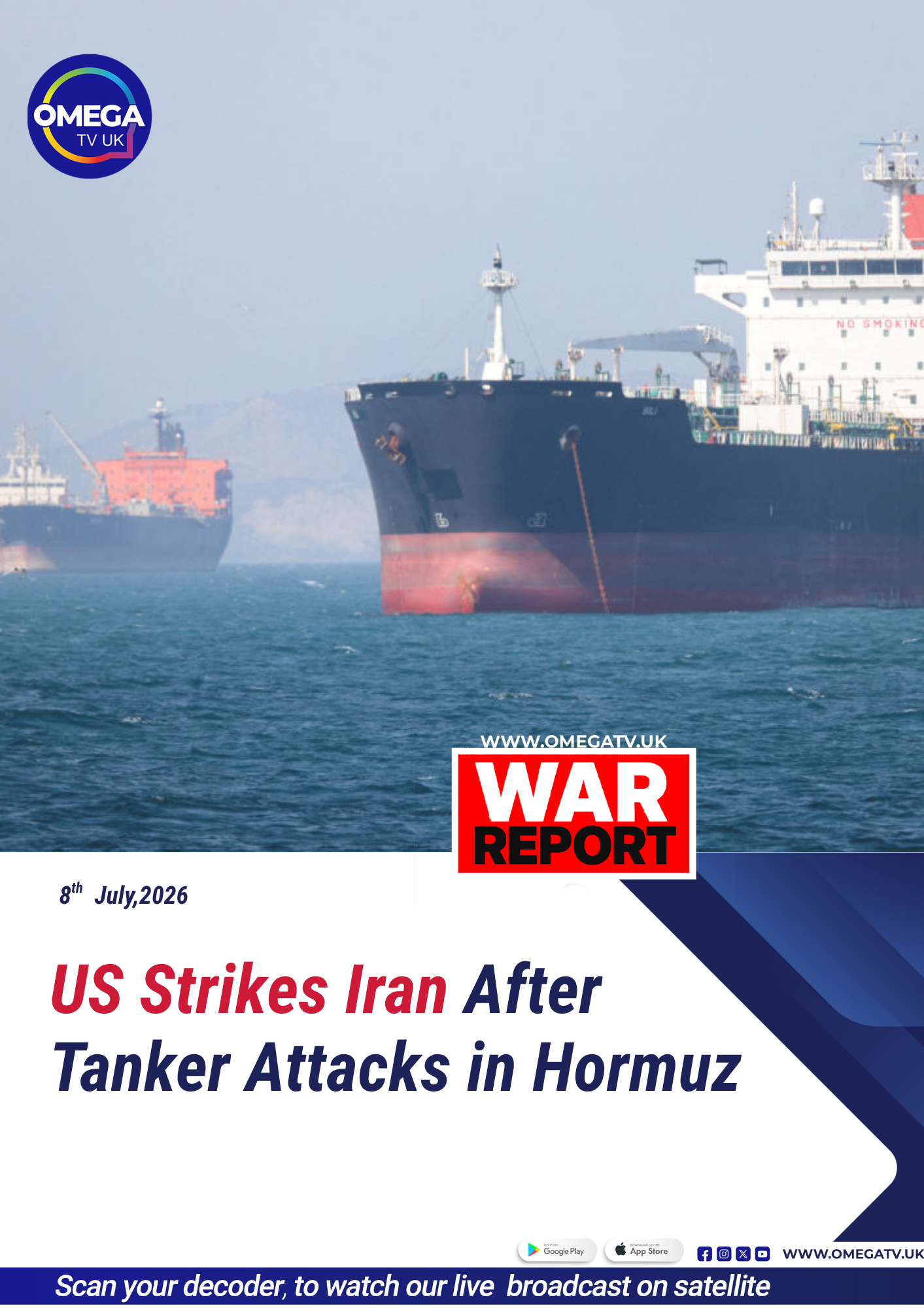
The United States has launched large-scale military strikes against Iran after three oil tankers were attacked in the strategically important Strait of Hormuz, dramatically escalating tensions in the Middle East.

According to the United States Central Command (Centcom), American forces struck more than 80 targets across Iran, including over 60 small boats belonging to Iran’s Islamic Revolutionary Guard Corps (IRGC), as well as missile launch sites and command centres.
The strikes came after what Washington described as “wholly unacceptable” attacks on commercial vessels operating in international waters.
Iran Reports Casualties
Iranian state media reported that several areas, including Qeshm Island, Bandar Abbas and Sirik, were hit during the attacks.
Authorities said multiple people were injured by shrapnel, although no official casualty figures have been released.
Tehran has not directly claimed responsibility for the attacks on the three tankers that triggered the US military response.
However, Iran’s Deputy Foreign Minister condemned the American strikes, calling them a violation of the US-Iran memorandum signed last month.
He warned that Tehran would take “decisive measures” to protect its national interests and security.
Gulf States on High Alert
In the early hours of Wednesday, Kuwait announced that it had activated its air defence systems to intercept missile and drone threats.
Officials did not immediately confirm whether the suspected attacks were launched by Iran, although Tehran has previously targeted US military bases in Gulf countries.
Meanwhile, both Qatar and Saudi Arabia strongly condemned the tanker attacks.
Qatar accused Iran of targeting one of its vessels, identified as the Al-Rekayyat, while Saudi Arabia said its tanker, Wadyan, had also been attacked while passing through the Strait of Hormuz.
Iran rejected the accusations, with Foreign Ministry spokesman Esmail Baghaei describing Qatar’s allegations as contrary to the principles of good neighbourliness.
Commercial Shipping Disrupted
The United Kingdom Maritime Trade Operations (UKMTO) said one tanker reported a fire after an unknown projectile struck its engine room on Monday.
Two additional incidents were reported on Tuesday, with one tanker sustaining minor structural damage and another vessel being struck while leaving the strait but continuing its journey.
The incidents have renewed concerns about the safety of one of the world’s most critical shipping routes, through which a significant portion of global oil supplies passes every day.
Diplomatic Progress at Risk
The military escalation threatens recent diplomatic efforts between Washington and Tehran.
Last month, both countries signed a 14-point memorandum of understanding aimed at extending a ceasefire and reducing tensions across the region.
As part of the agreement, Iran and Oman were expected to hold discussions with other Gulf states regarding the future administration and maritime services of the Strait of Hormuz.
Before the latest strikes, the United States had also revoked a waiver that temporarily eased oil sanctions on Iran, a move Tehran described as evidence of Washington’s “bad faith” and unreliability.
Fears of Wider Conflict
The exchange of military actions has heightened fears of a broader regional conflict that could disrupt global energy markets and further destabilise the Middle East.
Despite the escalation, US officials have indicated that diplomatic efforts remain ongoing and that negotiators are still seeking a long-term agreement with Iran.
However, with both sides trading accusations and military actions intensifying, the prospect of a peaceful resolution appears increasingly uncertain.