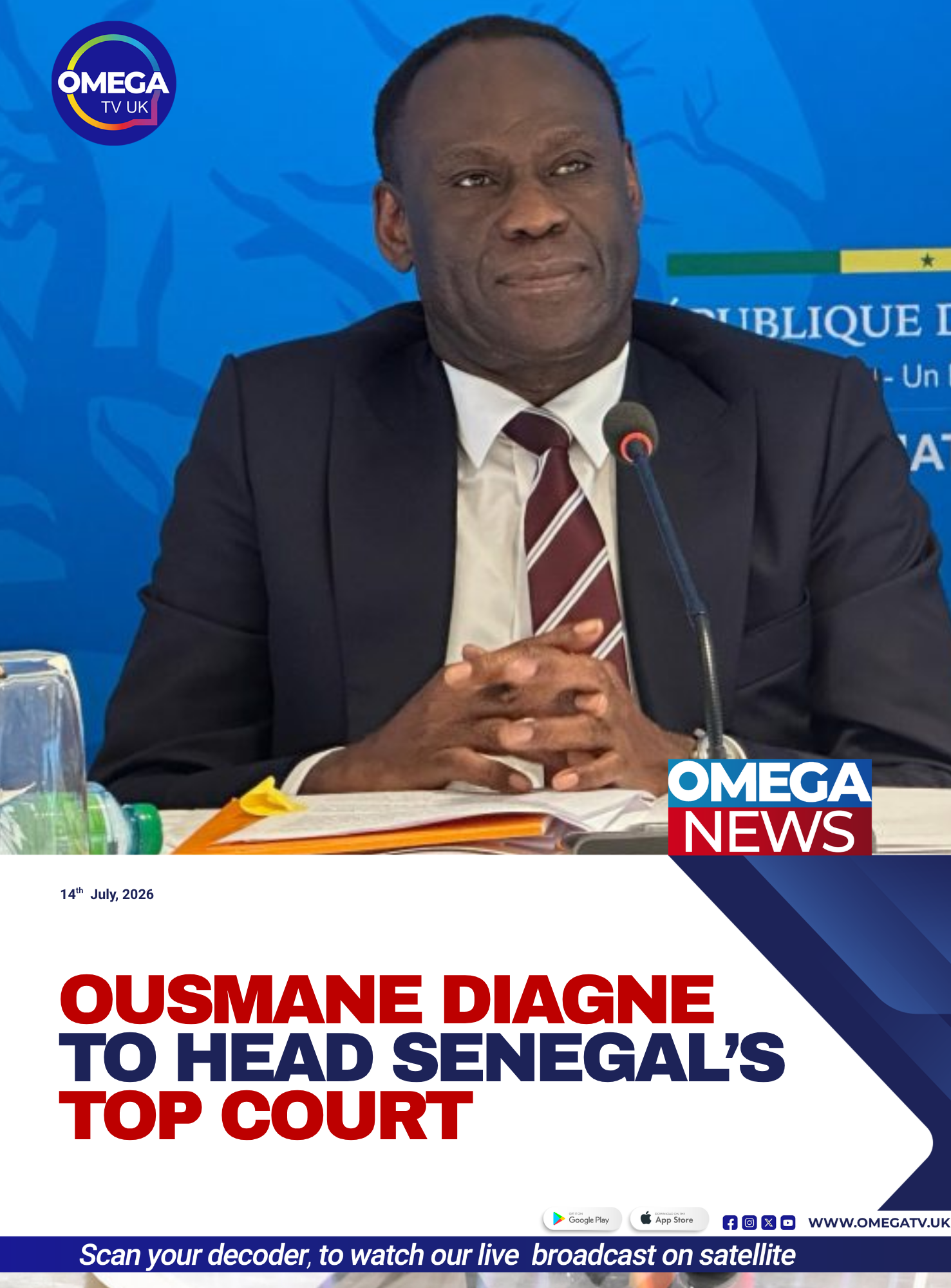
Senegalese President Bassirou Diomaye Faye has appointed veteran magistrate Ousmane Diagne as the new president of the Constitutional Council, according to a decree signed on July 13, 2026.

Diagne, who was already serving as a member of the country’s highest constitutional court, succeeds the late Mamadou Badio Camara and now assumes leadership of one of Senegal’s most powerful institutions.
The Constitutional Council is responsible for reviewing the constitutionality of laws, overseeing electoral disputes and ensuring the regularity of presidential and parliamentary elections.
Diagne brings decades of legal and judicial experience to the position. Throughout his distinguished career, he has held several of Senegal’s most senior judicial offices, including prosecutor general at the Dakar Court of Appeal, first advocate general at the Supreme Court and minister of justice.
According to local media reports, President Faye selected Diagne from a shortlist of highly qualified candidates that included former Supreme Court presidents, a prosecutor general and another sitting member of the Constitutional Council.
His appointment comes at a crucial moment for the institution, just days after the Constitutional Council struck down a constitutional amendment approved by the National Assembly.
The court ruled that the proposed reform had not been adopted according to the procedures required under Article 82 of Senegal’s Constitution, effectively invalidating the legislation.
The decision was considered a significant legal setback for constitutional reforms backed by the parliamentary majority led by Prime Minister Ousmane Sonko.
Despite the ruling, Sonko accepted the court’s decision and reiterated his commitment to respecting the country’s democratic institutions and judicial independence.
The Constitutional Council has become increasingly influential in Senegal’s political affairs over the past few years.
In February 2024, the court made international headlines when it overturned former President Macky Sall’s decision to postpone the presidential election. The ruling paved the way for elections that ultimately brought Bassirou Diomaye Faye to power.
Political analysts say Diagne’s appointment signals continuity and stability at a time when constitutional oversight remains central to Senegal’s democratic process.
As he takes charge of the Constitutional Council, Diagne faces the challenge of preserving the institution’s independence and credibility while overseeing future constitutional and electoral matters that could shape the country’s political future.
His leadership begins at a time when the court’s decisions continue to have far-reaching consequences for Senegal’s governance and democratic development.