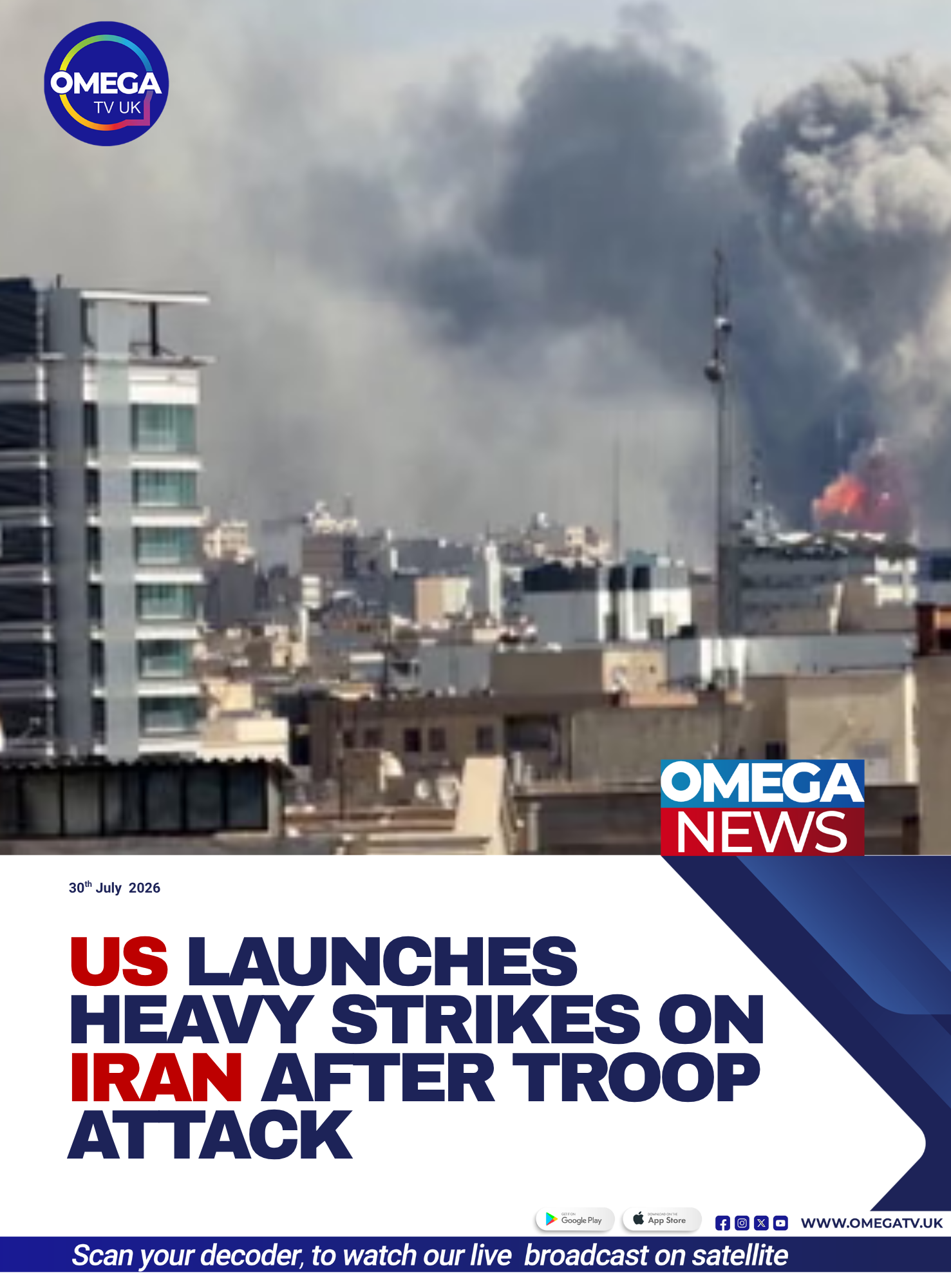
US Launches Heavy Strikes on Iran After Missile Attack on American Forces

The United States has launched a major new wave of strikes against Iran after Tehran attempted to attack American military forces in the Middle East, marking another sharp escalation in the ongoing conflict between the two countries.
US Central Command (CENTCOM) said American forces carried out a “heavy wave” of strikes against dozens of Islamic Revolutionary Guard Corps (IRGC) targets across Iran. The operation was described as a response to Iranian ballistic missile attacks directed at US forces in the region.
The US military said the latest strikes targeted military command centres, missile and drone facilities, coastal surveillance and defence systems, as well as maritime capabilities. The operation lasted about two hours, according to US officials.
Iranian state media reported casualties following the strikes. Iran’s official IRNA news agency said three people were killed and two others wounded on Qeshm Island, although details surrounding the reported deaths have not been independently verified.
The latest confrontation follows an attempted Iranian missile attack on US forces in Jordan. Washington said the missiles were successfully intercepted before reaching their targets, prompting President Donald Trump to promise a strong military response.
The renewed fighting comes after several days of relative calm, during which the United States and Iran appeared to leave room for diplomacy. Trump had described discussions with Tehran as positive, although Iranian officials had disputed the suggestion that formal negotiations were taking place.
Tensions have also spread beyond the direct US-Iran confrontation. Earlier this week, US and Saudi forces carried out strikes against Iran-backed militias in Iraq following attacks that Washington and Riyadh blamed on Iran-linked groups. At least 20 militia members were reported killed in those strikes, further widening the conflict.
Iraq has condemned the strikes against militia positions, saying they violated its sovereignty. The developments have increased concerns that the conflict could draw more countries and armed groups into direct confrontation.
The Strait of Hormuz remains another major flashpoint. The strategically important waterway is central to global energy shipments, and Iran has sought to restrict shipping through the strait during the conflict. Any prolonged disruption could have significant consequences for oil and gas markets.
The conflict has now entered another dangerous phase after the collapse of an earlier ceasefire and repeated rounds of strikes and counter-strikes.
With US forces continuing military operations and Iran maintaining its ability to launch missiles and drones, fears are growing that the latest escalation could make a return to negotiations even more difficult.
Regional governments are now watching closely as the United States, Iran and their allies weigh their next moves, with growing concern over the possibility of a broader Middle East war.