Wife of US Scholar Urges Trump to Raise China Detention With Xi
The wife of a US scholar detained in China on espionage and national security allegations has appealed to President Donald Trump to raise her husband’s case when he meets Chinese President Xi Jinping in Washington next week.

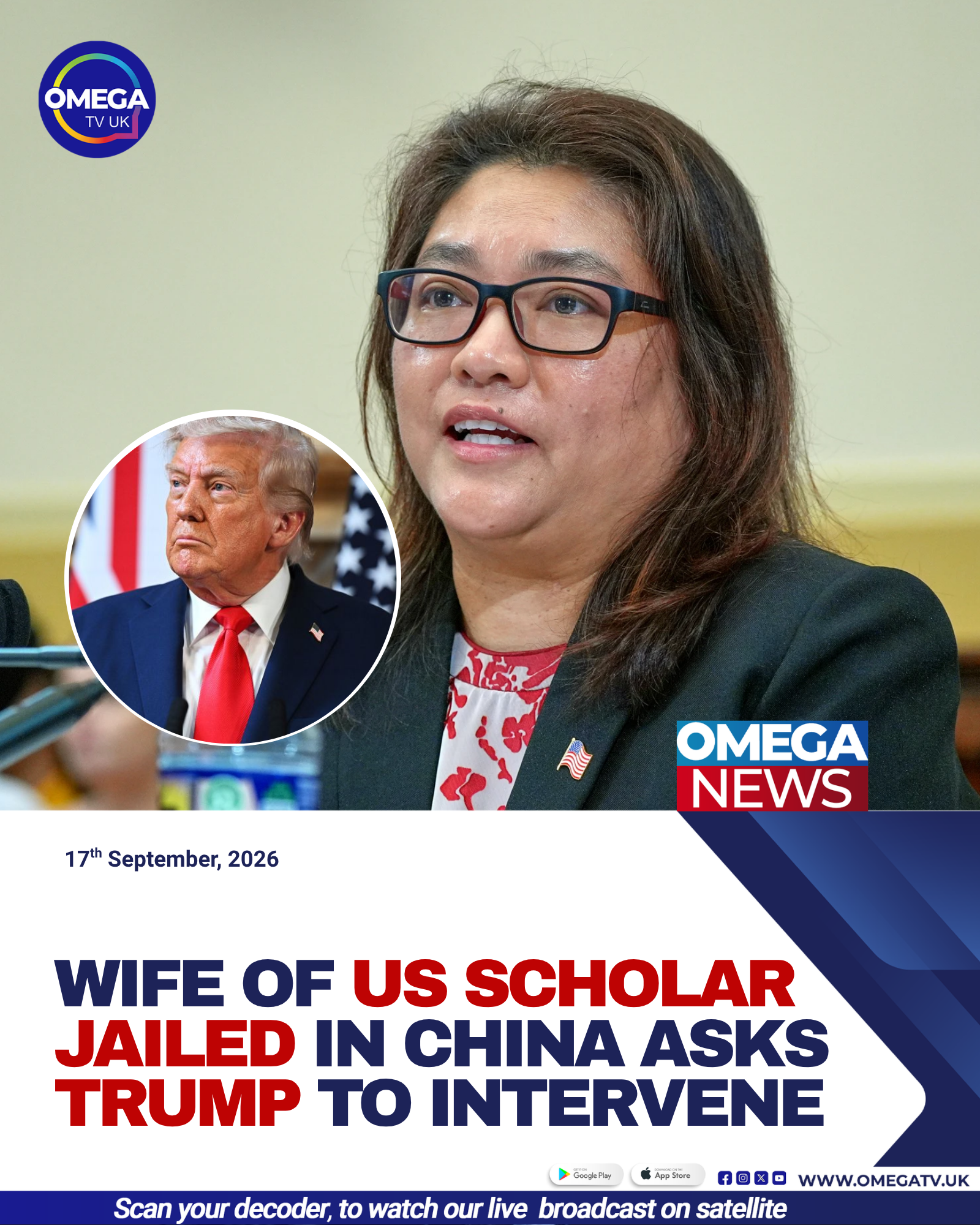
Sylvia Zin made the appeal during a congressional hearing on Wednesday, saying she remained hopeful that Trump would intervene on behalf of her husband, U Min Zin, who was arrested in China in June.
Min Zin, a US citizen and Myanmar scholar, travelled to Kunming for an academic conference before Chinese authorities detained him. China has accused him of espionage and activities that endanger national security, allegations that his family and US officials dispute. The US State Department has formally designated him as wrongfully detained.
“I’m deeply hopeful that President Trump will raise my husband’s case with President Xi Jinping at the summit next week,” Sylvia Zin told lawmakers.
She appeared before the House Foreign Affairs Committee’s East Asia and Pacific Subcommittee during a hearing titled Lives, Not Leverage: The Long Arm of China and North Korea’s Repression.
Xi is expected to travel to Washington for a state visit, following Trump’s meeting with the Chinese leader in Beijing in May. Families of Americans detained in China have travelled to the US capital ahead of the visit to press for their relatives’ release.
Sylvia Zin also appealed for the release of Youlin Chen, a US seismologist who has been detained in China since November 2024 and faces espionage charges. Chen was detained while visiting China and has been held without trial for nearly two years. Secretary of State Marco Rubio designated him as wrongfully detained in March.
“Knowing the president’s historic record on bringing wrongfully detained Americans home has reassured me that he will also be able to secure the swift release of Min Zin and other wrongfully detained citizens,” Zin said.
Young Kim, the Republican chairwoman of the congressional subcommittee, warned during the hearing that Americans travelling to China could face detention in circumstances that become part of diplomatic disputes.
Kim said Min Zin’s detention appeared to send a message to researchers whose work could conflict with Beijing’s interests, although China maintains that its authorities are handling the case according to Chinese law.
Min Zin is a former student activist who participated in Myanmar’s 1988 pro-democracy movement. He currently directs the Myanmar Institute for Strategic and Policy Studies, a think tank that examines Myanmar’s politics and China’s interests and influence in the country.
Another family seeking US intervention is that of Hong Kong media tycoon Jimmy Lai. His son, Sebastien Lai, appeared on Capitol Hill and urged Trump to help secure his father’s release. Trump previously raised Lai’s case with Xi, who reportedly told him it would be a difficult matter.
The White House said the release of Americans detained abroad remains a priority for Trump.
“Resolving the wrongful detentions of US citizens is always a top priority for the President,” a senior White House official said.
The State Department has designated both Min Zin and Chen as wrongfully detained. The designation allows their cases to receive additional attention from the Office of the Special Envoy for Hostage Affairs and gives the US government greater resources to pursue their release.
Sylvia Zin, who lives in Thailand, said she has not been able to speak directly with her husband since his detention. She said the family relies on visits from US consular officials for reassurance that he remains alive.
She also said US officials told her that Min Zin faced interrogations lasting as long as six hours a day when he was first detained.
“I’m trying to be strong for our daughter, but I’m constantly wondering if he’s OK and how to get him back home to us,” she said.
The case comes as Washington and Beijing continue diplomatic engagement over several contentious issues. Trump’s previous intervention in the case of Chinese pastor Jin Mingri was followed by his release two months later, giving Min Zin’s family hope that direct presidential intervention could produce a similar outcome.
China, however, rejects the US characterisation of wrongful detention and maintains that its judicial authorities handle such cases according to Chinese law.