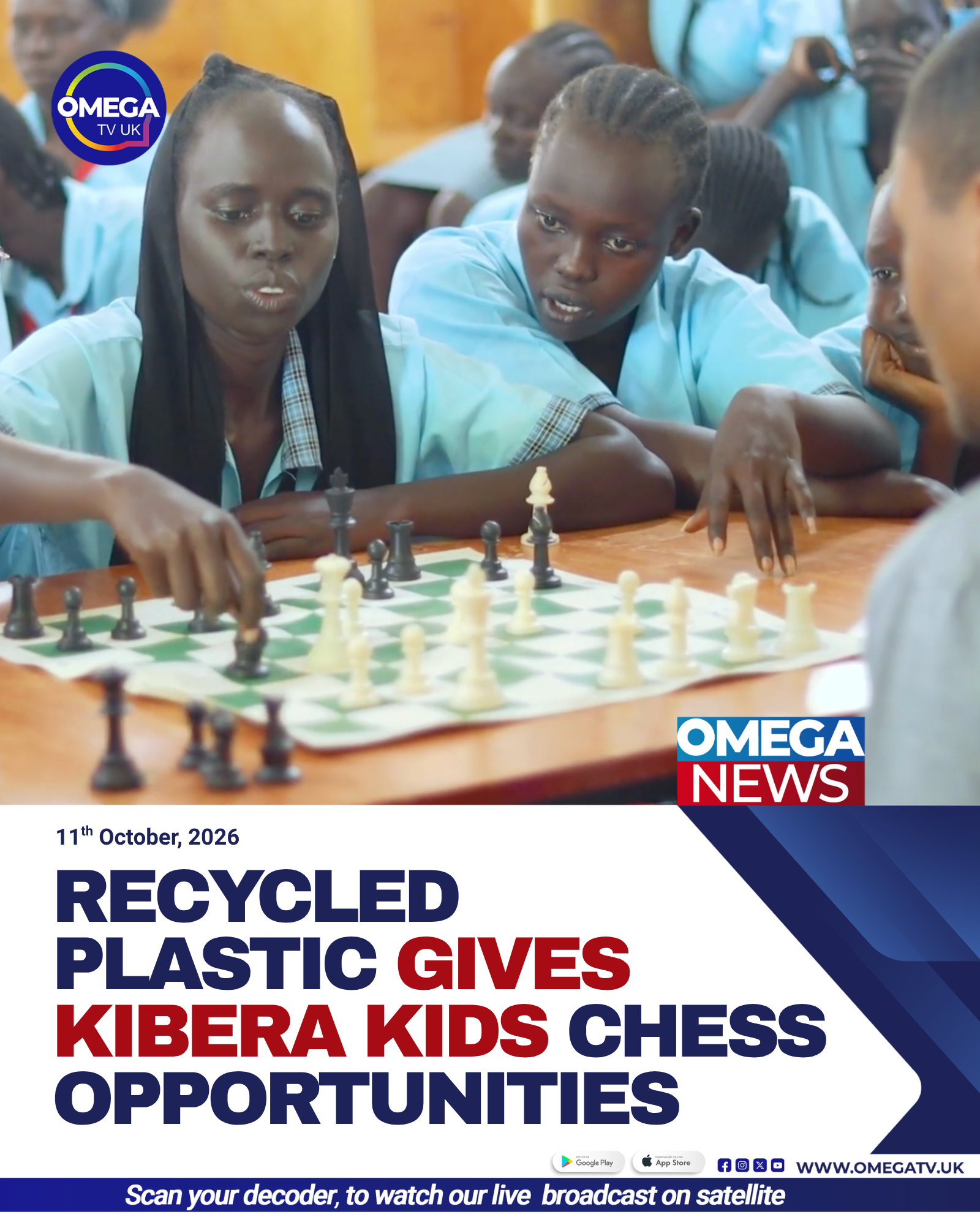
A Nairobi community initiative has recycled about 200 kilograms of plastic waste into almost 2,000 chess sets for poor children who may not afford the game.

The Gift of Chess project and Kijiji Solutions partner to provide chess sets made of plastic waste in the informal settlement of Kibera.
Plastic waste and other materials are gathered and sorted out in Kibera before the plastics are taken to processing. The recycled plastics are made into pellets usable in manufacturing, and the organisation uses the material to make chess pieces.
“We get it back to us here, after washing, shredding, and other processes as pellets that we use in our process, which is an extruder with moulds that we had custom-made here in Nairobi that are in the shape of chess pieces,” said Richard Haukom, the founder of Kijiji Solutions.
Haukom said the impact of their work in bridging the gap of plastic pollution was limited since the sets required less plastic. “The total amount of plastic removed, it’s more symbolic than it is impactful in terms of the plastic waste problem,” he said.
However, he added that they would produce significantly more if they could meet the demand for the sets. The manufactured sets are being used by children in Kibera, who have limited access to the game and proper chess training. Chess teacher Ian Ombati said the game gave poor children a chance to focus on their abilities and not their backgrounds. “Once they go to that board, it does not matter where you come from,” Ombati said. “It’s just your skills and your competence.”
At the Centre of Hope School in Kibera, students often use the locally manufactured sets during practice. Some pupils and teachers believe the game has improved concentration, problem-solving, and performance, but they do not have evidence that it is a direct cause.
“Once I started playing chess, I was not very good, so I always came for training every day,” said 11-year-old Esther Mutua. “So after some months, I started improving in my academics.”
Mutua has participated in several tournaments, winning certificates and medals. “Chess has helped me a lot with concentrating in class and also with answering questions, especially in mathematics,” said 9-year-old Markham Odhiambo.
Wilson Akhonya, the head teacher, said students who played chess had improved in critical thinking, problem-solving, leadership, and performance. The school has embraced chess, including its inclusion in its curriculum. “It makes them to be attentive, to be active, to focus, to concentrate,” said Isabel Omondi, the school’s founder.
Studies have shown a link between chess and improved academic performance, although the relationship is not fully understood. Researchers continue to debate the extent to which chess contributes to a child’s improvement in learning.
For Kijiji Solutions and their partners, they have managed to integrate plastic recycling and provide a strategic game to the community’s children.