
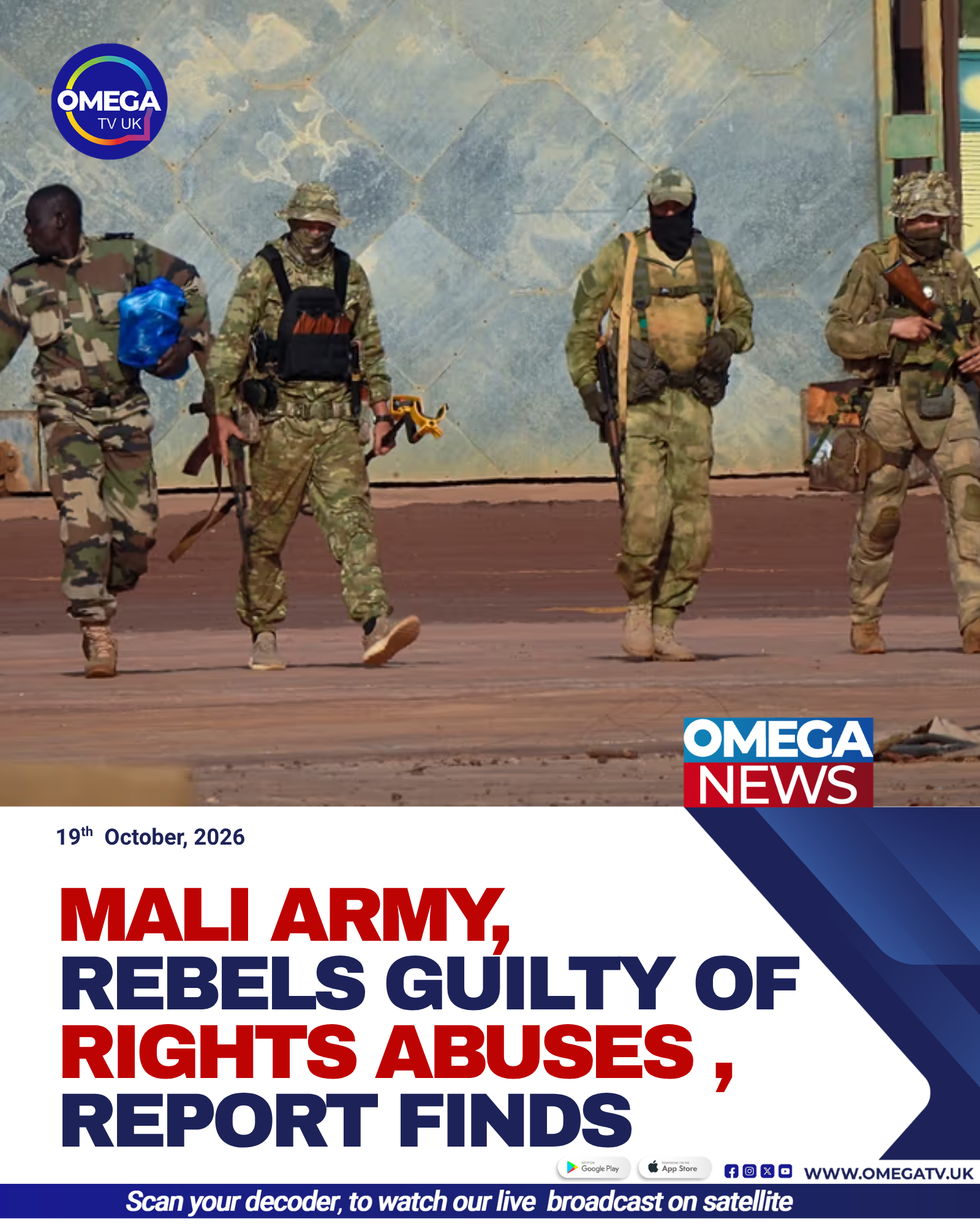
HRW Reports Civilian Abuses by Mali Army and Rebels
Human Rights Watch says Mali’s military, its Russian paramilitary allies and armed rebel groups have committed serious human rights violations, including killings, torture and attacks that have harmed civilians during the country’s prolonged conflict.

Rights group urges urgent international action
In a report released on Monday, Human Rights Watch called on the African Union’s Peace and Security Council to take urgent action to prevent further atrocities in Mali.
The organisation warned that the Malian military, armed groups and insurgent forces were committing serious violations of the laws of war, while international organisations and governments had largely failed to respond adequately.
The findings highlight continuing concerns about civilian protection in the West African country, where years of insecurity have left communities exposed to violence from multiple armed actors.
Conflict has persisted since 2012
Mali has faced a prolonged security crisis since 2012, involving government forces, jihadist fighters, Tuareg separatists and criminal groups.
The military government, which came to power following coups in 2020 and 2021, has increasingly relied on Russian support to fight armed groups.
Russian paramilitaries initially associated with the Wagner Group have operated alongside Malian forces. The group was succeeded by Russia’s Africa Corps, which became the main structure for Moscow’s military involvement in the country.
Human Rights Watch said Malian soldiers and Russia-controlled Africa Corps personnel had killed and wounded civilians during attacks and while people were in custody, in alleged violations of international humanitarian law.
The organisation also accused Islamist and separatist fighters of serious abuses, including the torture and execution of captured Malian soldiers.
Drone attacks hit civilian locations
The report documented two apparently indiscriminate drone attacks carried out by Malian military forces.
One strike partially destroyed a health centre in Talhandak village in the northern Kidal region in July. Another attack struck a market in Tombonkore, central Mali, in August, killing six civilians and injuring at least 20 others, according to the organisation.
The findings raise concerns about the use of military drones in populated areas and the risks faced by civilians when attacks fail to distinguish between military targets and non-combatants.
Human Rights Watch said the incidents formed part of wider allegations of unlawful attacks during counter-insurgency operations.
Girls and other civilians reportedly killed
The organisation also reported that Malian soldiers shot and killed five girls during a counter-insurgency operation in the central Segou region in mid-July.
Later that month, members of the Dozo militia, which the report identified as allies of the military, allegedly killed three civilians in the central Mopti region.
Human Rights Watch said the reported killings had occurred without accountability, raising further questions about investigations into alleged abuses by government forces and allied groups.
The organisation added that it had sent a letter outlining its findings and questions to Mali’s defence minister on August 5 but had received no response.
Rebel groups accused of torture and executions
The report also documented alleged abuses by fighters from Jama’at Nusrat al-Islam wal-Muslimin, known as JNIM, an Al-Qaeda-affiliated group, and separatists from the mainly Tuareg Azawad Liberation Front.
In July, the groups attacked a military convoy in Tabrichat, in the northeastern Gao region. Human Rights Watch said fighters subsequently tortured and executed at least 19 Malian soldiers who had been captured.
JNIM acknowledged that prisoners were killed in Tabrichat but denied ordering the deaths, according to the report. The Azawad Liberation Front acknowledged clashes involving the army and Russian personnel but denied executing captured soldiers.
Calls for accountability grow
Human Rights Watch based its report on interviews conducted between July 30 and September 20 with 30 people in central and northern Mali, including activists, community leaders, journalists and a Malian soldier.
The findings add to concerns about the impact of the conflict on civilians and the lack of accountability for alleged violations by opposing forces.
The organisation urged regional and international bodies to take action to protect civilians and ensure that those responsible for serious abuses are held accountable.


