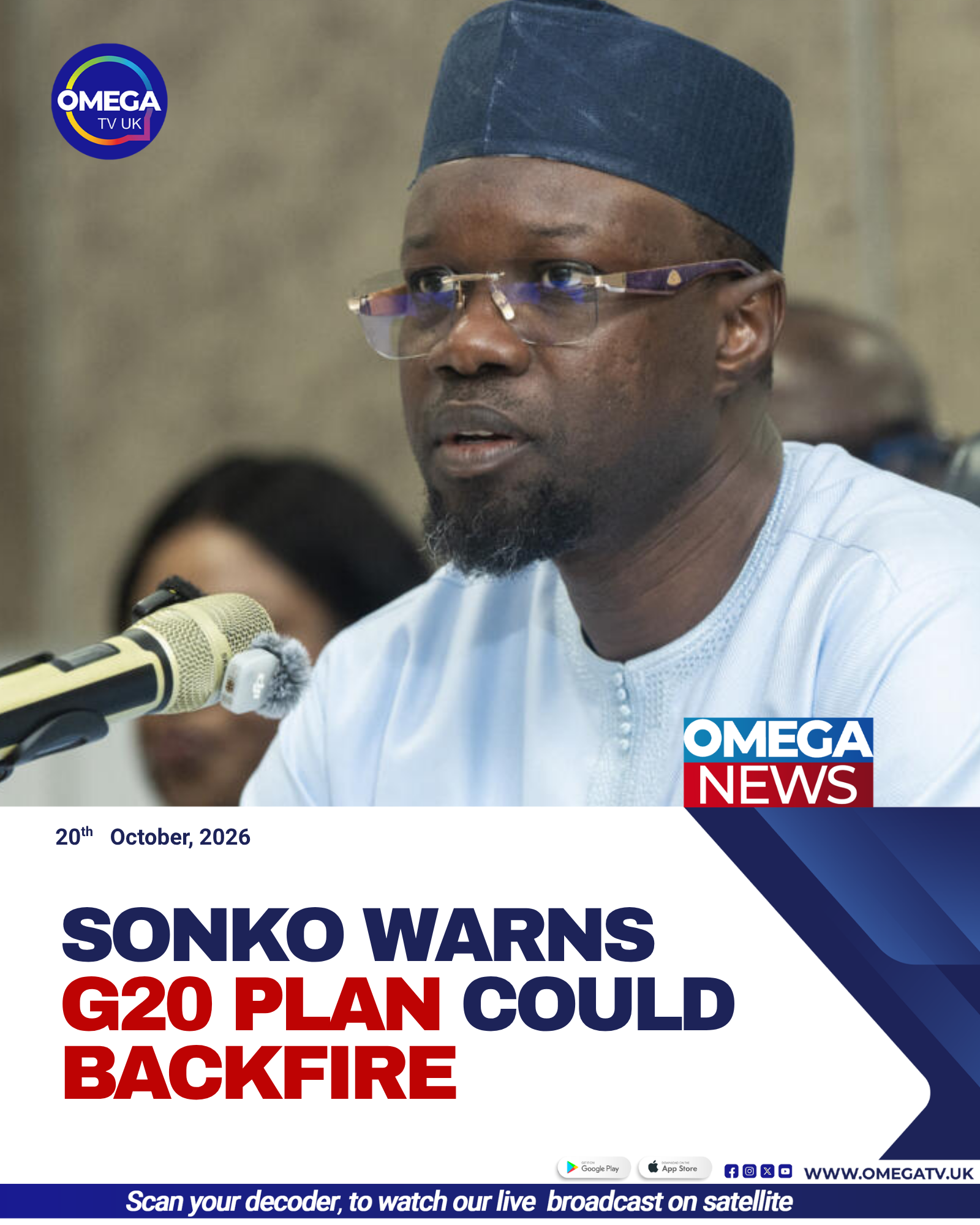
Sonko Warns G20 Debt Plan Could Stall
Senegalese opposition figure Ousmane Sonko has criticised the government’s decision to use a G20-backed mechanism to address the country’s mounting public debt, warning that the process could complicate negotiations rather than resolve the crisis. Sonko, who leads the parliamentary majority, argues that Senegal’s immediate problem is a shortage of cash and difficulties meeting repayment deadlines, not necessarily the total amount it owes.

Creditors Rule Out Debt Reduction
Sonko says Senegal does not need a complicated international process to adjust its repayment schedule, a step known as debt reprofiling. He argues that lenders have already made clear they will not accept a reduction in the amount owed.
“There was no need to go to the G20 for a simple matter of reprofiling,” Sonko said, adding that creditors had ruled out changing the total value of the debt.
His criticism centres on whether the government’s chosen approach matches the country’s financial needs. While restructuring can help countries manage unsustainable obligations, Sonko believes Senegal should focus on repayment timing and access to cash rather than pursue a process he considers unnecessarily complex.
Senegal Should Not Be a Test Case
Sonko has also questioned why Senegal should become the first country to use the new G20 initiative, describing the prospect as worrying.
“Senegal did not need to be the first guinea pig,” he said, arguing that the country faces cash-flow problems that do not necessarily require a reduction in its outstanding debt.
The government’s decision comes amid pressure to stabilise public finances and restore confidence among international lenders. Washington has called for the restructuring process to be completed within a year, placing additional pressure on Senegal and its creditors to reach an agreement.
Threat of Parliamentary Deadlock
Sonko has warned that disagreements over the process could develop into a political standoff if the executive fails to adopt what he considers a practical approach.
He said his position was not intended to obstruct the government but warned that his side would refuse to support a major finance bill if negotiations reached a deadlock.
“The deadlock, as I’ve said, means that we will not vote for this significant finance bill,” Sonko said, placing responsibility for any impasse on the executive.
The warning raises the possibility that Senegal’s debt negotiations could become entangled in domestic political disputes, potentially complicating efforts to agree on a financial plan.
G20 Framework Faces Scrutiny
The G20 Common Framework was established to coordinate debt treatment for countries facing financial distress. However, previous cases, including Zambia and Ghana, drew criticism over lengthy negotiations between governments, official lenders and private creditors.
Senegal’s case is attracting attention as Washington presents it as a test of the initiative’s improved process. The push for a faster resolution reflects concerns about the time countries can spend negotiating debt relief while facing pressure on public finances.
Undeclared Borrowing Deepened Crisis
Senegal’s debt difficulties intensified in 2024 after an audit uncovered borrowing that had not been fully disclosed by the previous administration. The findings raised concerns about the country’s true debt position and added pressure to secure financial support.
Senegal is seeking a $2.2 billion programme from the International Monetary Fund and is negotiating with official lenders and private bondholders. The government is aiming to reach an agreement in principle with creditors by December.
Public Spending at Stake
The outcome of the negotiations could influence Senegal’s ability to restore debt sustainability while maintaining public spending and supporting economic growth. A faster agreement could provide greater clarity for the government and its lenders, while a prolonged dispute could add uncertainty to the country’s financial outlook.
Sonko’s objections highlight a central disagreement over how Senegal should address its obligations: through the G20-backed framework or a more direct adjustment of repayment schedules. The government must now navigate the debt talks alongside the political challenge of securing support for its financial plans.