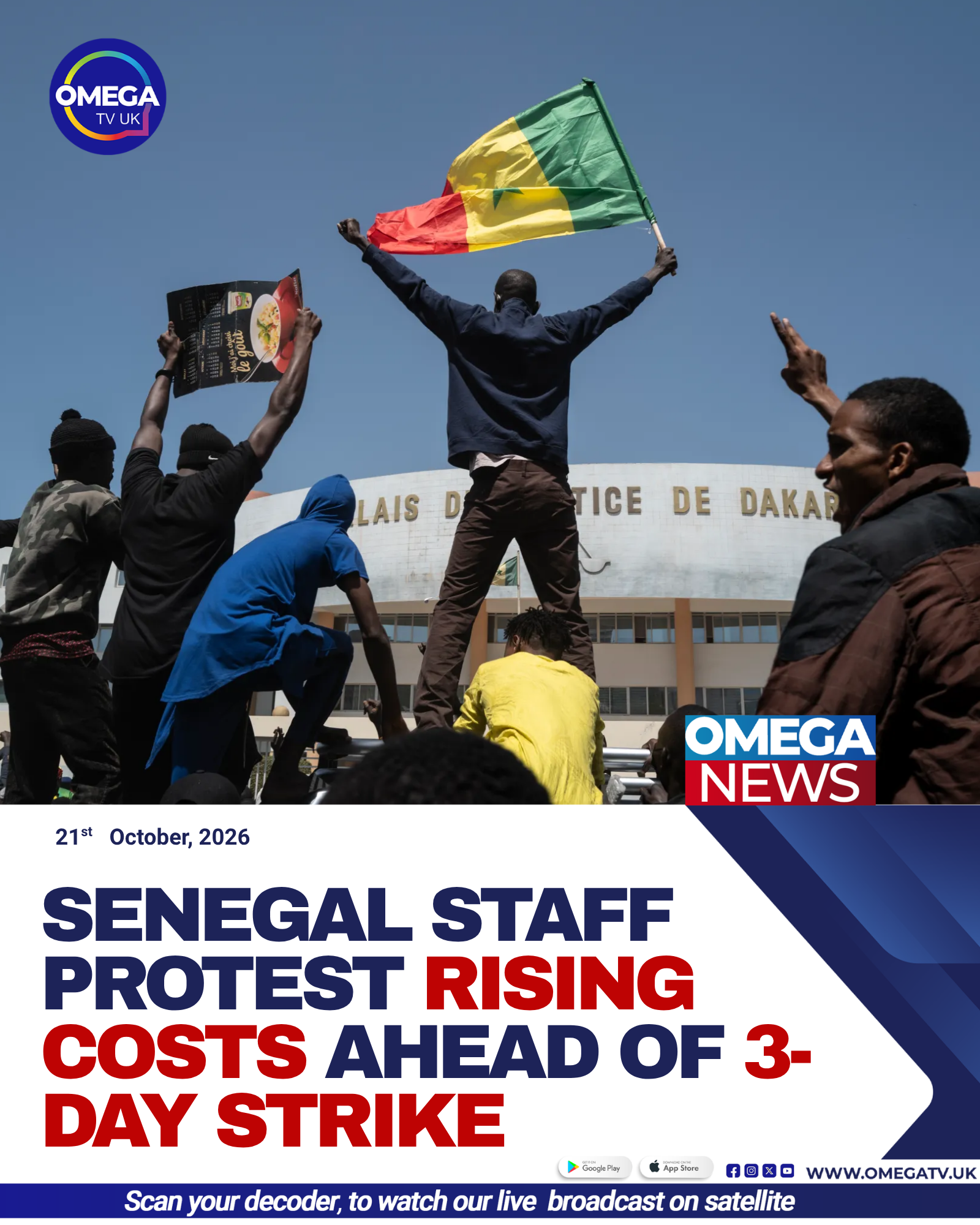
Senegal Workers Protest Ahead of Strike
Workers Demand Action on Living Costs

Around 150 people marched in Senegal’s capital, Dakar, demanding that authorities honour previous agreements with trade unions and address mounting financial pressures on workers. The demonstration comes as unions prepare for a 72-hour general strike beginning Wednesday, amid concerns over rising living costs and declining purchasing power.
The protesters called for action on workers’ demands, reflecting growing dissatisfaction with the government’s response to economic concerns. The planned strike could disrupt services across several sectors as unions seek progress on outstanding commitments.
Trade Unions Call for Greater Engagement
Sara Konaré, secretary general of Senegal’s National Union of Petroleum and Gas Workers, said the turnout demonstrated growing unity among trade unions.
She also accused authorities of failing to engage meaningfully with workers over their concerns. The unions are pressing the government to implement agreements already reached and address the financial difficulties affecting employees.
The demonstration forms part of broader efforts by organised labour to draw attention to the impact of rising prices on household budgets and workers’ ability to meet everyday expenses.
Healthcare Services Face Possible Disruption
The planned strike has raised concerns about access to essential services, particularly healthcare.
Ndeye Seck Fall, who manages a dialysis centre, warned that industrial action could severely disrupt medical services and leave patients with limited treatment options.
She said many people would struggle to afford private healthcare if public services were paralysed. Patients who depend on regular treatment could therefore face additional difficulties if the strike affects healthcare provision.
Her warning highlights the potential consequences of the industrial action for people who rely on continuous medical care.
Youth Olympic Games Add Pressure
The mobilisation comes as Senegal prepares to host the Youth Olympic Games, placing additional attention on the country’s preparations and public services.
With unions threatening a three-day strike, authorities face pressure to respond to workers’ demands while managing the potential disruption.
The outcome of discussions between the government and trade unions could determine whether the planned action proceeds as announced and how widely services are affected.