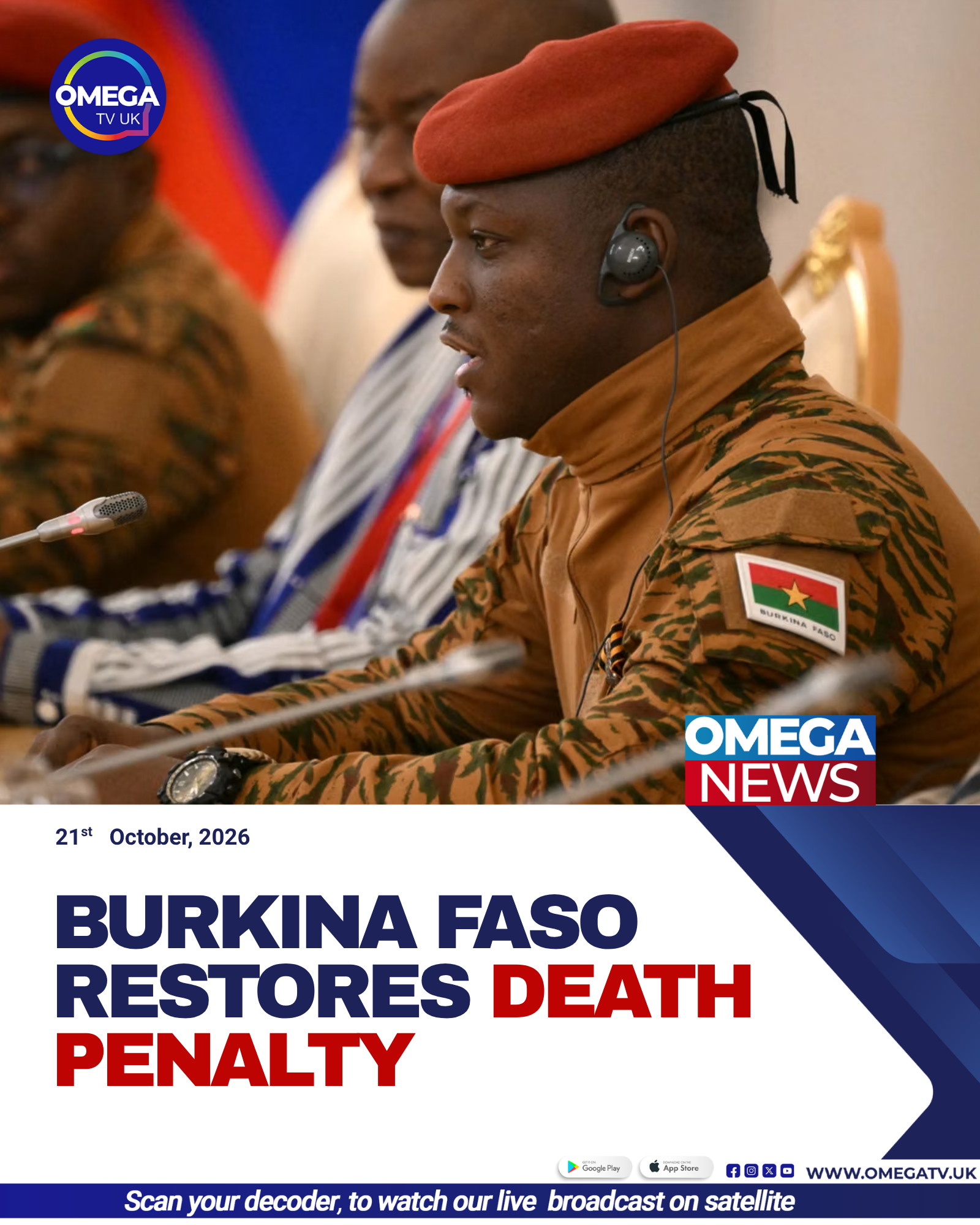
Burkina Faso Restores Death Penalty
Burkina Faso has reinstated the death penalty after its unelected legislature unanimously approved a new penal code, reversing the country’s 2018 abolition of capital punishment.

Government Reverses 2018 Abolition
The Justice Ministry announced the decision on Tuesday, marking a major change in the country’s criminal justice system. Authorities say the revised code is intended to strengthen public order, uphold national values and improve security.
The move restores capital punishment nearly eight years after Burkina Faso abolished it. The last recorded execution in the West African country took place in 1988, according to the information provided in the report.
The reinstatement also follows a pledge by military leader Captain Ibrahim Traoré, who announced plans to restore the death penalty last year. Burkina Faso has been under military rule since a coup in 2022, with Traoré leading the authorities.
Crimes Punishable by Death
According to the state news agency, the revised penal code introduces the death penalty for several offences, including terrorism, espionage, treason and patricide, which refers to the killing of one’s father.
The legislation also provides for capital punishment in cases involving the importation of expired or prohibited products that cause death.
The inclusion of these offences broadens the range of crimes that may attract the ultimate criminal penalty under the new legal framework. The full implementation of the revised code will determine how the provisions are applied in practice.
The government has presented the changes as part of its efforts to strengthen security and reinforce public order. However, the decision has renewed debate over the role of capital punishment in the justice system and the safeguards required when the state imposes the most severe criminal sentence.
Human Rights Concerns
The decision has drawn criticism from human rights advocates, including Amnesty International, which had urged Burkina Faso’s authorities not to restore the death penalty.
Opponents of capital punishment have raised concerns about its use and the possibility of irreversible miscarriages of justice. Once an execution has been carried out, a wrongful conviction cannot be corrected through the normal legal process.
The reinstatement also places Burkina Faso’s criminal justice policy under renewed scrutiny from organisations advocating for the protection of human rights and the abolition of capital punishment.
The government’s stated objectives of improving security and upholding national values now stand alongside questions about the application of the new provisions, the treatment of accused persons and the legal protections available to defendants.
A Major Shift in Criminal Justice
Burkina Faso’s decision marks a departure from the policy adopted in 2018, when the country abolished capital punishment under its previous penal code.
Although the last recorded execution occurred in 1988, the latest legislation restores the death penalty as a possible punishment for specified offences.
The change comes as the country remains under military-led rule following the 2022 coup. Traoré had previously indicated his intention to bring back capital punishment, and the legislature’s unanimous vote has now advanced that policy.
The reinstatement is likely to keep attention focused on Burkina Faso’s approach to criminal justice, security and human rights as authorities begin implementing the revised penal code.