Spain Train Crash: 69 Dead as Investigators Examine Possible Signalling Failures
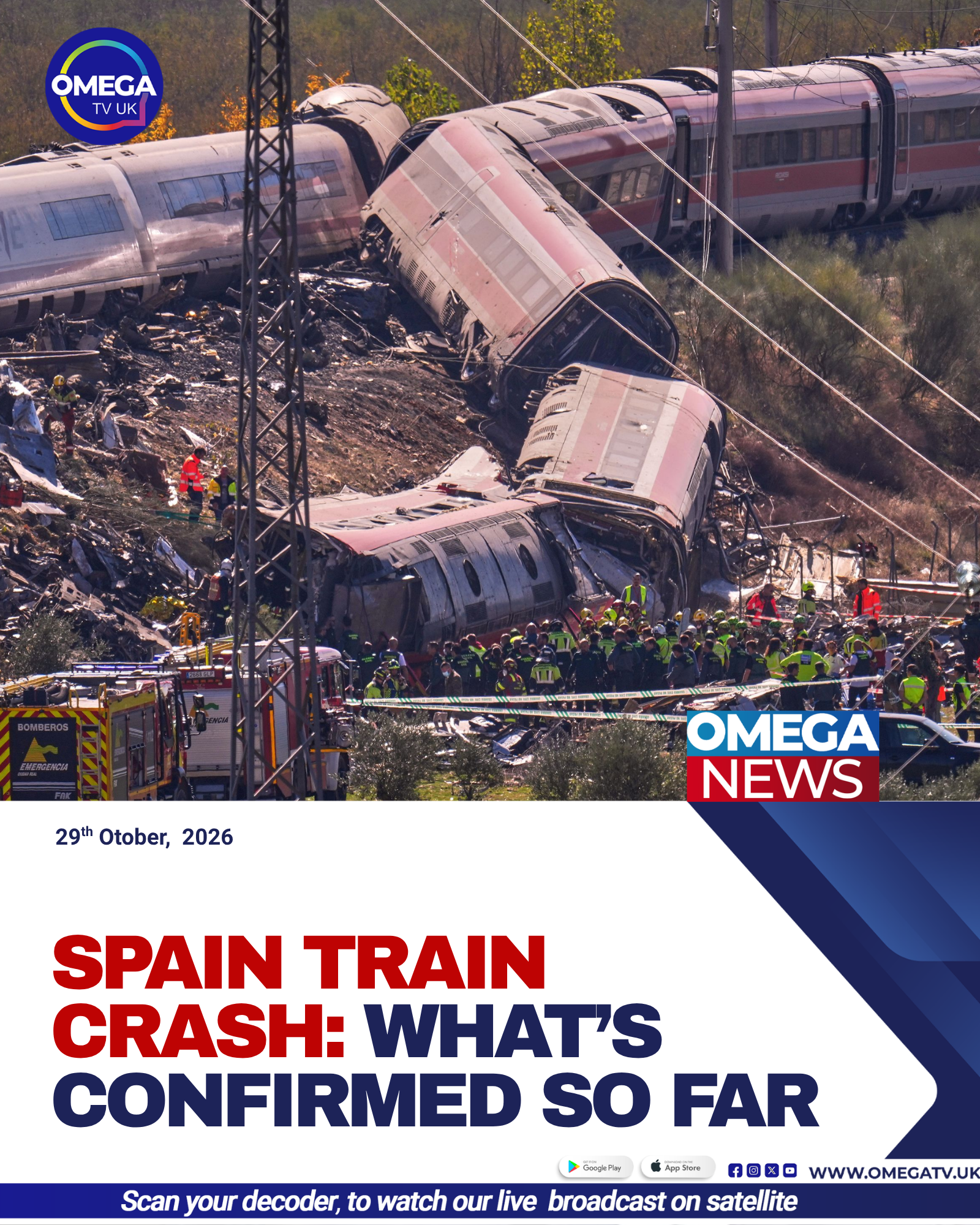
At least 69 people have been killed after a high-speed Renfe train collided with a stationary Iryo train near Urda in central Spain, prompting a major investigation into possible failures in the railway signalling system.

The collision occurred at approximately 08:53 local time on Wednesday, 28 October, along the high-speed railway connecting Madrid and Seville. More than 540 passengers were travelling on the two trains, and dozens were seriously injured.
By Thursday, around 50 injured passengers remained in hospital, including 15 in critical condition, according to reports from Spanish authorities. The disaster is one of Spain’s deadliest railway accidents in more than a decade. <Cite refs={[“turn338791news24″,”turn338791search0”]}/>
The crash involved a state-operated Renfe train and a privately operated Iryo service. The Renfe train struck the rear of the Iryo train, causing carriages to derail and some to fall down an embankment.
What caused the collision?
Spanish Transport Minister Óscar Puente said a computer malfunction had disrupted the LZB signalling and safety system at around 08:30, forcing several trains to stop along the affected stretch of track.
The control centre subsequently took over managing train movements. According to Puente, the Renfe train was then authorised to resume its journey at normal speed, despite the signalling failure and the presence of a stationary train further along the line.
He described the decision to allow the train to continue without speed restrictions as “inexplicable”.
Audio recordings reported by Spanish media appear to show a controller instructing the Renfe driver to disconnect and reconnect the LZB system before continuing at normal speed. In separate communications, the Iryo driver reportedly told the control centre that the train remained stationary because its safety system would not allow it to move.
These accounts have placed the decisions made by the central control centre at the centre of the investigation. However, authorities have not yet completed their inquiries, and the precise sequence of failures remains under examination. <Cite refs={[“turn338791search3″,”turn338791search5”]}/>
More than 540 passengers aboard
Regional government spokesperson Esther Padilla said the Iryo train was carrying 146 passengers and one baby, while 397 passengers were aboard the Renfe service.
More than 100 people received treatment for injuries following the crash. Emergency teams, firefighters, police officers and medical personnel worked at the scene as rescue operations continued.
Hospitals across the region suspended some planned procedures to accommodate casualties, while blood donation centres appealed for urgent donations.
The Spanish Civil Guard also established offices in Madrid, Toledo, Seville and Córdoba to help identify missing people and reunite families with relatives. DNA samples were collected where necessary to assist the identification process.
Prime Minister promises answers
Prime Minister Pedro Sánchez visited the crash site and expressed his condolences to the victims and their families.
He said the government would investigate the circumstances surrounding the disaster and promised that any negligence or safety failures discovered would be addressed.
Opposition leader Alberto Núñez Feijóo also called for answers about the condition and management of Spain’s railway infrastructure.
Political parties suspended many public engagements following the tragedy, while the Spanish royal family expressed its condolences. Three days of official mourning were declared, and the European Union offered assistance if required.
Railway safety under scrutiny
The collision has renewed concerns about railway safety in Spain, which experienced another deadly high-speed train disaster in January, when 46 people died in a collision near Adamuz in southern Spain.
Both tragedies involved trains operated by Renfe and Iryo on the Madrid-Seville high-speed corridor, increasing pressure on authorities to establish whether further safety improvements are necessary.
Investigators will now examine the signalling failure, the instructions issued by the control centre and why the Iryo train remained stationary as the Renfe service approached.
For now, the priority remains supporting the injured, identifying the victims and providing answers to grieving families. The final findings of the investigation will be crucial in determining what went wrong and how similar tragedies can be prevented.