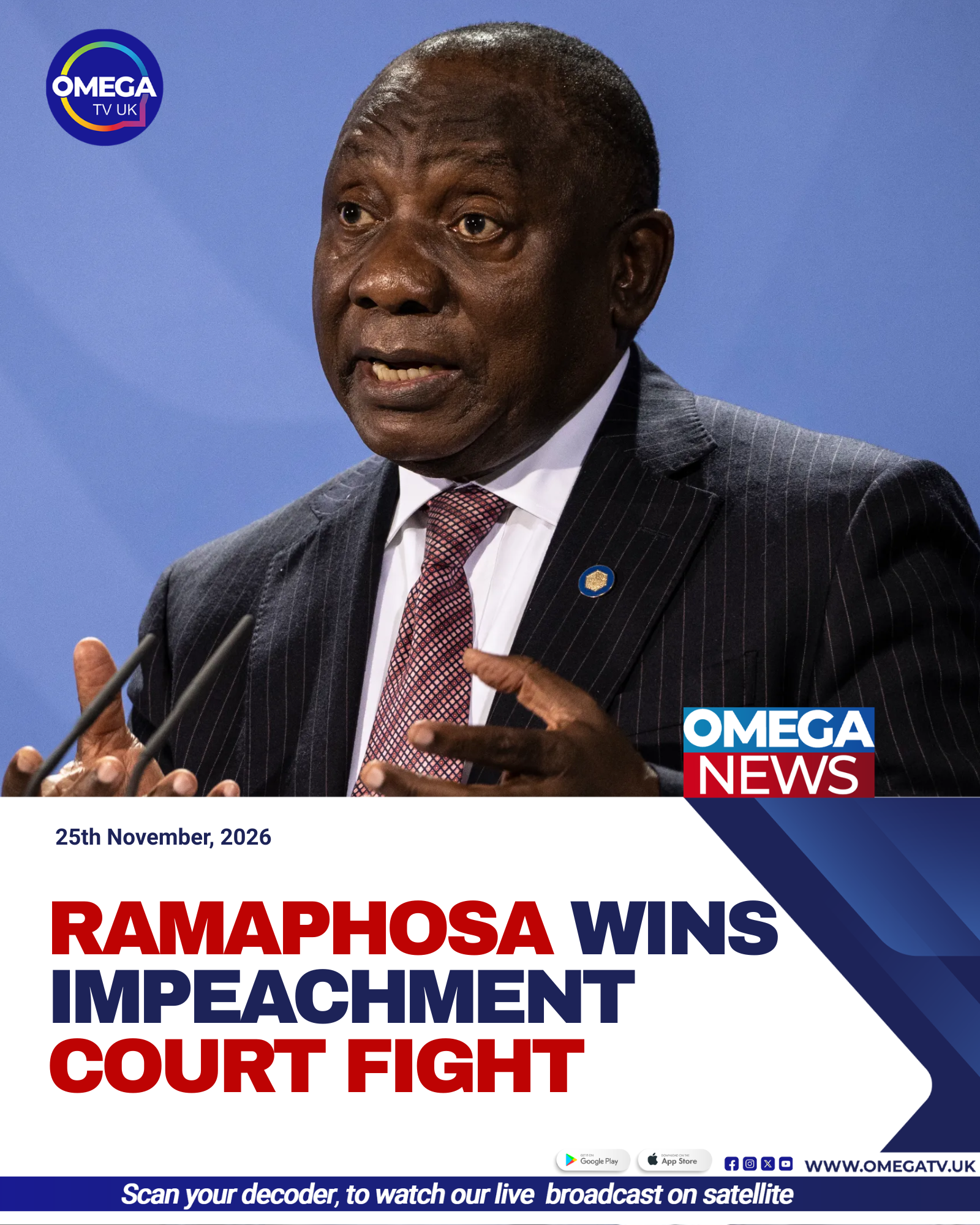
South Africa’s Ramaphosa Wins Court Battle Over Impeachment Threat
South African President Cyril Ramaphosa has won a major legal victory after the Western Cape High Court overturned a report that had found he may have a case to answer over the theft of $580,000 from his private farm.

The ruling sets aside the findings of an independent parliamentary panel established in 2022 to investigate allegations surrounding the money stolen from Ramaphosa’s Phala Phala game farm in Limpopo province. The president has consistently denied any wrongdoing.
The controversy, widely known in South Africa as the Phala Phala scandal or Farmgate, began after thieves allegedly broke into the farm in 2020 and stole bundles of US dollar bills hidden inside a sofa.
The incident became a major political issue after former intelligence chief Arthur Fraser reported the matter to the police in 2022. Fraser, who is associated with former President Jacob Zuma, accused Ramaphosa of concealing the theft from law enforcement authorities and tax officials.
Ramaphosa acknowledged that a robbery had occurred but maintained that the money came from the legitimate sale of buffalo through his livestock business.
The president subsequently faced questions about the origin of the cash, whether the theft had been properly reported and whether he had breached his constitutional responsibilities.
An independent panel appointed by parliament investigated the allegations and published a report in 2022. It concluded that there was substantial doubt about the legitimacy of the source of the stolen money and that Ramaphosa had a case to answer over possible misconduct.
The findings triggered calls for impeachment and threatened his political future.
However, Ramaphosa challenged the report in court, arguing that the panel had misunderstood its responsibilities, misjudged the available evidence and incorrectly interpreted the allegations against him.
In its latest judgment, the Western Cape High Court ruled that the independent panel had acted unlawfully and set aside its report in its entirety.
Judge Nolwazi Mabindla-Boqwana said the panel had misunderstood the purpose and nature of its investigation and the recommendations it was expected to make.
The judge also found that the panel had exceeded its legal authority and made several significant errors of law.
The court further declared unlawful the steps taken by parliament in connection with the report.
The decision represents an important setback for efforts to pursue impeachment proceedings against Ramaphosa based on the panel’s findings.
Political analyst Khanyi Magubane described the judgment as a victory for the president, saying it restored some of his political and constitutional credibility.
However, she stressed that the ruling did not amount to a criminal finding clearing Ramaphosa of every possible concern relating to the farm incident.
Instead, it focused on the legality and shortcomings of the independent panel’s investigation.
Magubane said the president had received significant relief but noted that the controversy would continue to cast a shadow over his leadership.
The legal dispute has also been shaped by previous decisions involving parliament and the country’s Constitutional Court.
Ramaphosa initially challenged the panel’s findings but withdrew his application after parliament voted against adopting the report.
He revived the legal challenge in May after the Constitutional Court ruled that parliament had acted unconstitutionally by blocking moves to impeach him. The court ordered parliament to refer the report to an impeachment committee.
The latest High Court judgment could bring the current impeachment process to an end unless parliament successfully appeals the decision.
If an appeal succeeds, a parliamentary committee could examine the allegations and decide whether to recommend impeachment.
Any recommendation to remove Ramaphosa would require a two-thirds majority in parliament. His African National Congress (ANC) currently holds enough seats to block such a move.
Ramaphosa remains the first South African president to face impeachment proceedings under the rules introduced in 2018.
Although the court victory provides significant relief, opposition parties have indicated that they intend to challenge the decision, meaning the political consequences of the Phala Phala scandal may not be over.