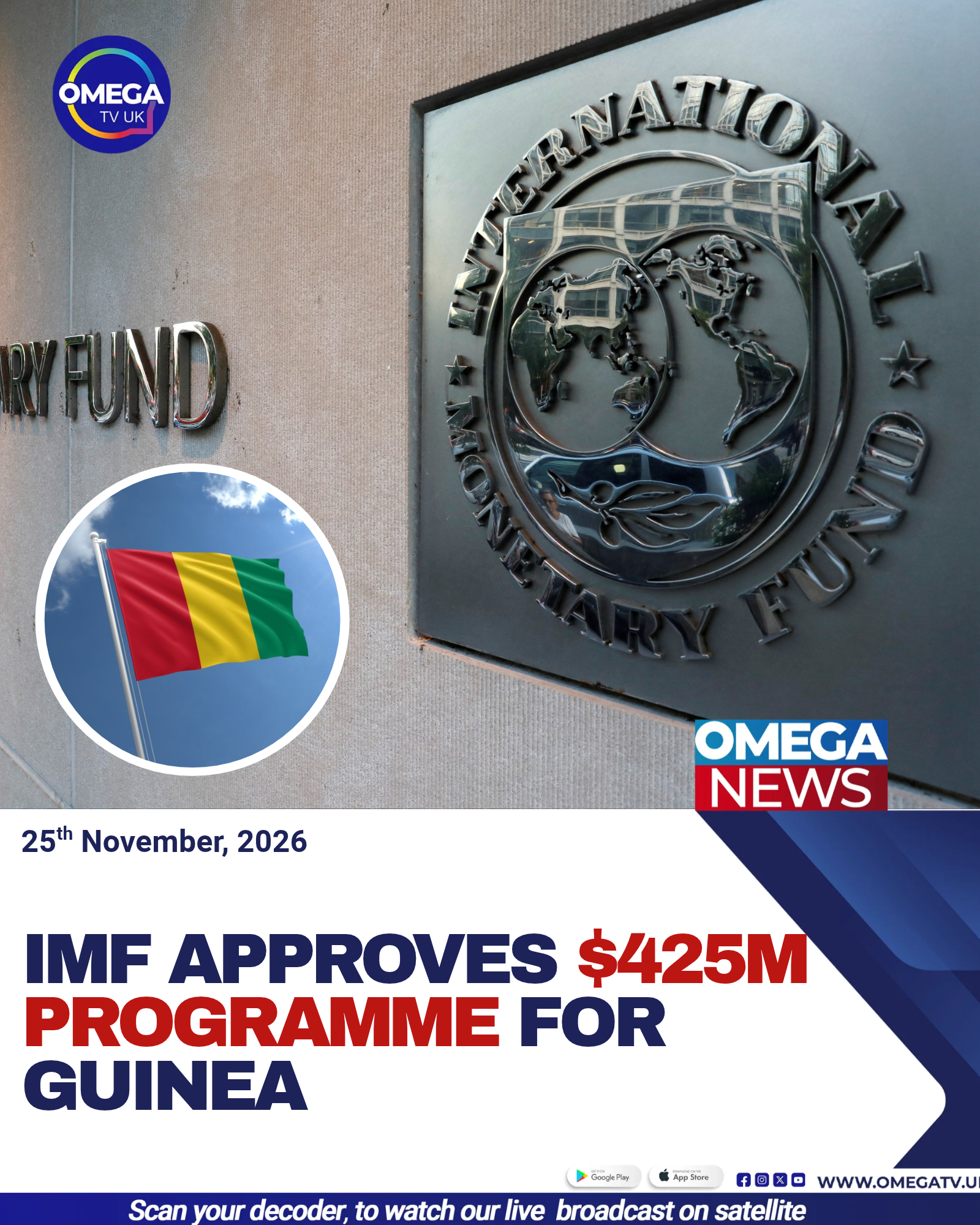
The International Monetary Fund (IMF) has approved a $425 million economic support programme for Guinea to strengthen public finances and support reforms over the next three years.

The Guinean government announced the approval on Monday, following an agreement reached with the IMF in August for a package initially valued at $439 million.
The approved amount is $14 million lower than the figure announced when the agreement was reached.
The programme is backed by the IMF’s Extended Credit Facility (ECF) and Extended Fund Facility (EFF).
Prime Minister Amadou Oury Bah welcomed the conclusion of what he described as difficult negotiations, saying the agreement sent a positive signal about Guinea’s economic prospects.
He said IMF oversight would provide more than financial assistance, offering technical expertise and tools to improve economic management.
The partnership is expected to strengthen domestic revenue mobilisation, improve budget transparency and enhance public financial management.
Guinea is seeking to accelerate economic growth through the development of its vast Simandou iron ore deposit and the wider Simandou 2040 development programme.
The country possesses significant mineral resources, particularly bauxite and iron ore, but has struggled to translate its natural wealth into broader economic and social benefits.
Bah acknowledged that implementing the IMF-backed programme would present challenges for the administration.
He said the government would need to strengthen its management and administrative capacity to deliver the planned reforms over the coming years.
The agreement represents a significant step in Guinea’s efforts to improve economic governance and establish stronger foundations for sustainable growth.