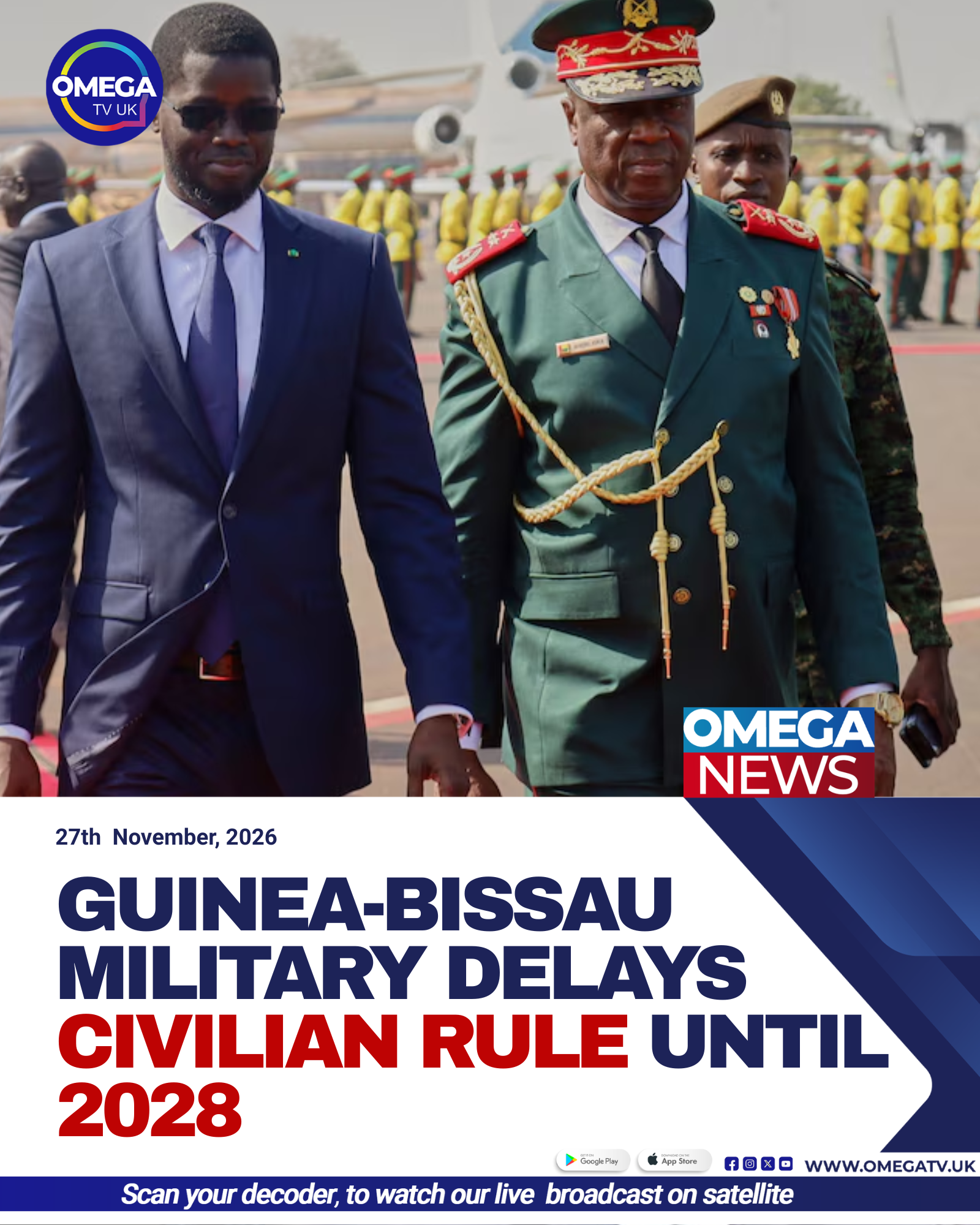
Guinea-Bissau Military Leaders Delay Elections Until 2028
Military leaders in Guinea-Bissau have postponed presidential and parliamentary elections by two years, delaying the country’s promised return to civilian government.

Transitional President General Horta N’Tam announced in a decree that the elections, originally scheduled for 6 December 2026, would now take place on 26 November 2028.
The decision was announced exactly one year after the military seized power, promising to organise elections and restore civilian rule within 12 months.
According to a statement from the presidency, an assessment of preparations found that the country lacked the necessary technical, material and financial resources to conduct the elections as planned.
The authorities said the additional time would help create the conditions for a credible, transparent and inclusive electoral process, ensuring that all candidates had equal opportunities to participate.
The presidency also repeated its commitment to organising Guinea-Bissau’s first local government elections, although no date has been announced for those polls.
General N’Tam became transitional president in November 2025, a day after military officers overthrew President Umaro Sissoco Embaló.
The coup happened just three days after general elections had been held and one day before provisional results were expected to be released.
At the time, both Embaló and his main challenger, Fernando Dias, had claimed victory in the disputed election.
Embaló has since been living in exile in Morocco. Last month, he was prevented from returning to Guinea-Bissau despite expressing interest in taking part in the postponed elections.
The latest decision has further extended the military’s control over the West African country, raising questions about when civilian leadership will be restored.
Guinea-Bissau has a long history of political instability, having experienced several coups and attempted military takeovers since gaining independence from Portugal in 1974.
The latest postponement means the country will now have to wait until November 2028 for the presidential and parliamentary elections, two years beyond the original timetable.