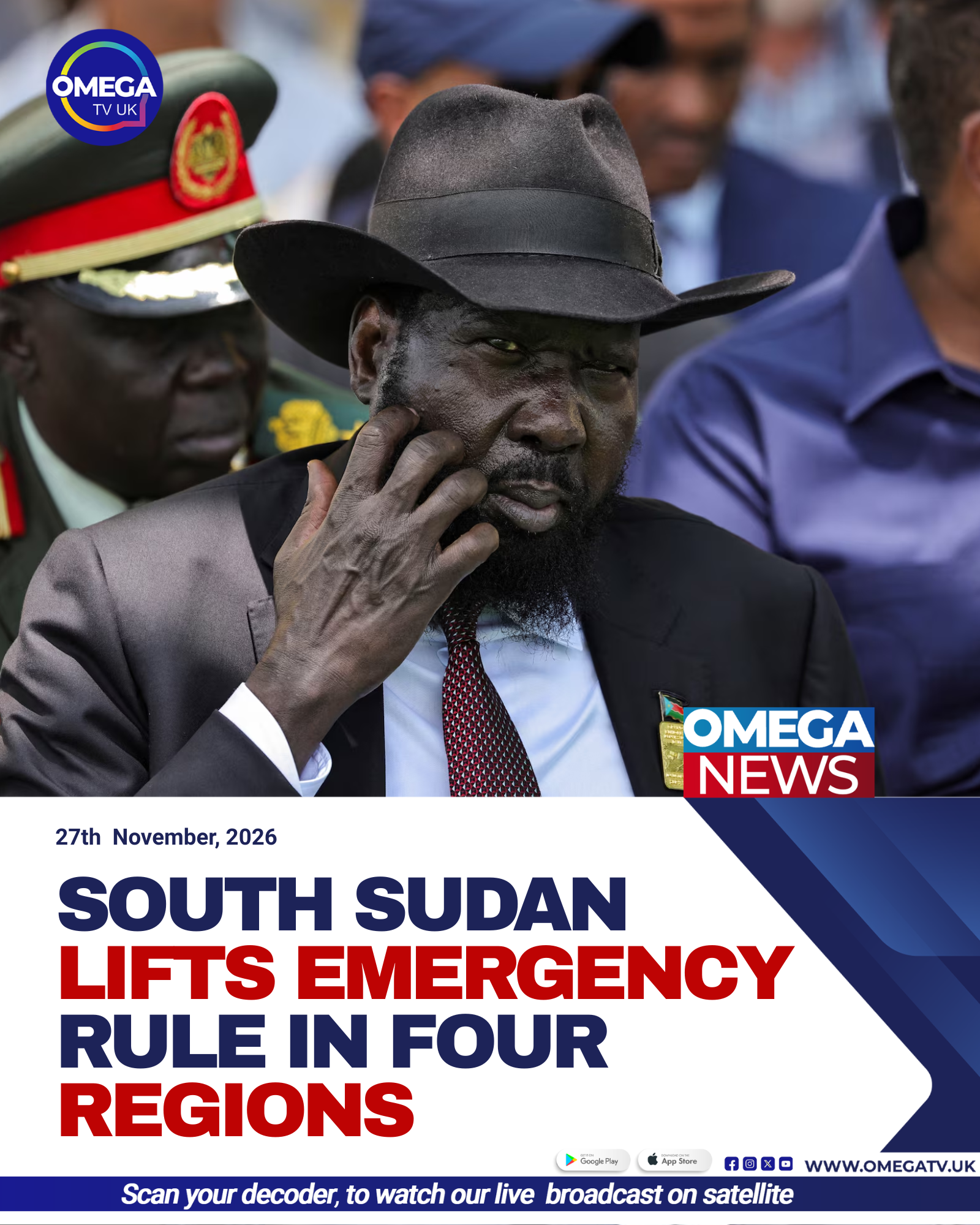
South Sudan Lifts State of Emergency in Four Regions Ahead of Elections
South Sudanese President Salva Kiir has lifted the state of emergency in four regions as the country prepares for its long-delayed national elections, scheduled for February 2027.

The South Sudan Broadcasting Corporation announced on Thursday that the measure had been removed from Lakes, Warrap, Western Bahr el Ghazal and Unity states.
No official explanation was provided for the decision.
The announcement comes after an inter-party political dialogue in the capital, Juba, which ended with calls for greater political freedoms, wider participation in the electoral process and improved security ahead of the polls.
Civil society organisations have also welcomed the move, saying lifting the emergency measures could help prevent unnecessary restrictions on the electoral process.
A state of emergency gives authorities additional powers and can suspend certain constitutional protections. In South Sudan, the measures have restricted important freedoms, including civilians’ ability to move freely.
Warrap state had been under emergency rule since 2025, following deadly clashes between communities that reportedly killed hundreds of people. However, it remains unclear when the emergency provisions were first introduced in the other three regions.
The decision comes as South Sudan continues to face serious political, security and economic challenges. Inter-communal violence and widespread poverty remain major concerns, while the government has faced criticism over its handling of these issues.
The country’s first general elections since gaining independence from Sudan in 2011 have been repeatedly delayed.
The latest timetable sets 11 February 2027 as the date for the national vote, which is expected to mark an important stage in the country’s transition towards an elected government.
The lifting of the emergency measures in the four states comes ahead of that vote, although questions remain about security conditions and the extent of political freedoms available to parties and voters.
South Sudan Lifts State of Emergency in Four States Ahead of Elections
South Sudanese President Salva Kiir has lifted the state of emergency in four states as the country prepares for its long-delayed national elections scheduled for February 2027.
The South Sudan Broadcasting Corporation (SSBC) announced on Thursday that the measure had been removed in Lakes, Warrap, Western Bahr el Ghazal and Unity states.
No official reason was given for the president’s decision.
The announcement follows the conclusion of an inter-party political dialogue in the capital, Juba, where participants called for greater political freedoms, inclusive participation and improved security ahead of the elections.
Civil society groups have also welcomed the decision, arguing that removing emergency restrictions could help protect the electoral process and allow political activities to take place more freely.
The state of emergency gives authorities additional powers and can suspend certain constitutional protections, including the right of civilians to move freely.
Warrap state had been under emergency rule since 2025 following deadly clashes between rival communities that killed hundreds of people. However, it remains unclear when the restrictions were introduced in the other three states.
Despite the lifting of the measures, security concerns remain, particularly in Warrap and neighbouring Unity state, where inter-communal violence has continued.
The decision comes as South Sudan faces ongoing political instability, widespread poverty and criticism over its handling of insecurity.
The country gained independence from Sudan in 2011 and has yet to hold its first national general elections. The polls have been postponed several times, with the latest electoral timetable setting 11 February 2027 as the voting date.
The election delay was announced earlier this month by the National Elections Commission, extending the wait for the country’s first nationwide vote since independence.
The latest move by Kiir comes amid growing calls from political parties and civil society organisations for conditions that would allow candidates and voters to participate safely and freely.