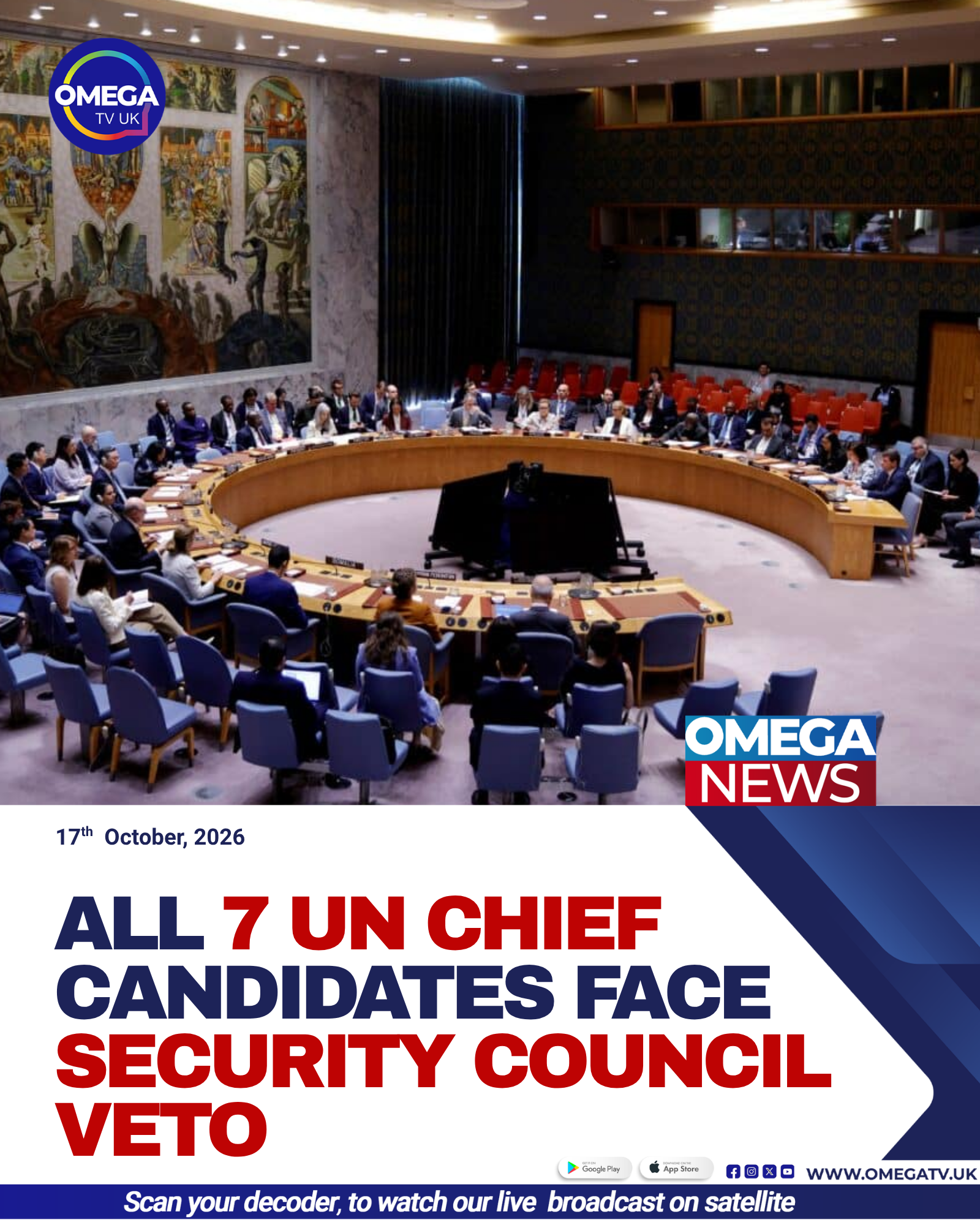
UN Chief Race: All Seven Candidates Face Vetoes
All seven contenders to become the next United Nations secretary-general have received at least one “discourage” vote from a permanent Security Council member, complicating the selection process.

Grynspan leads despite opposition
Costa Rica’s Rebeca Grynspan received the highest number of “encourage” votes in Friday’s informal poll, continuing her strong performance across the first five rounds. However, she also received five “discourage” votes, including two from the five permanent members: Britain, China, France, Russia and the United States. The latest round marked the first time permanent members used coloured straws to signal their opposition, while the 10 elected council members continued using plain markers. US media reports suggest Washington opposes all seven candidates, although US envoy Mike Waltz declined to comment directly. He said the United States wanted “the best” candidate and added that countries remained free to nominate additional contenders.
New names emerge as race continues
Diplomats have identified several possible new entrants, including Nickolay Mladenov, the high representative for Gaza under the US-backed Board of Peace, and Lana Nusseibeh, the United Arab Emirates’ minister of state for foreign affairs. Turkey’s Feridun Hadi Sinirlioglu, who heads the Organization for Security and Co-operation in Europe, has also been mentioned. The seven current candidates are Grynspan, Guyana’s former foreign minister Carolyn Rodrigues-Birkett, Argentina’s Rafael Grossi, Senegal’s Macky Sall, Ecuadorian candidates Ivonne A-Baki and Maria Fernanda Espinosa, and Uganda’s Olara Otunnu.
Vetoes remain a major hurdle
To be recommended by the 15-member Security Council, a candidate needs at least nine votes and must avoid opposition from any of the five permanent members, each of which holds veto power. A successful candidate would then be put forward to the UN General Assembly for confirmation. The informal straw-poll system was introduced in the early 1980s to help resolve deadlocks between candidates blocked by vetoes. Members anonymously classify contenders as “encourage,” “discourage” or “no opinion.” The process has continued despite criticism over its lack of transparency.
Regional rotation shapes expectations
Outgoing secretary-general António Guterres is due to complete his second five-year term on December 31, 2026. Under the UN’s informal tradition of rotating the leadership among regions, Latin America is expected to be in line for the position this time, although candidates from other regions are also in the running.