Burnham Pledges Social Care Reform, Leaves Door Open to Tax Rises

UK Prime Minister Andy Burnham has vowed to overhaul England’s adult social care system, promising long-term reforms while refusing to rule out future tax increases to help fund the changes.
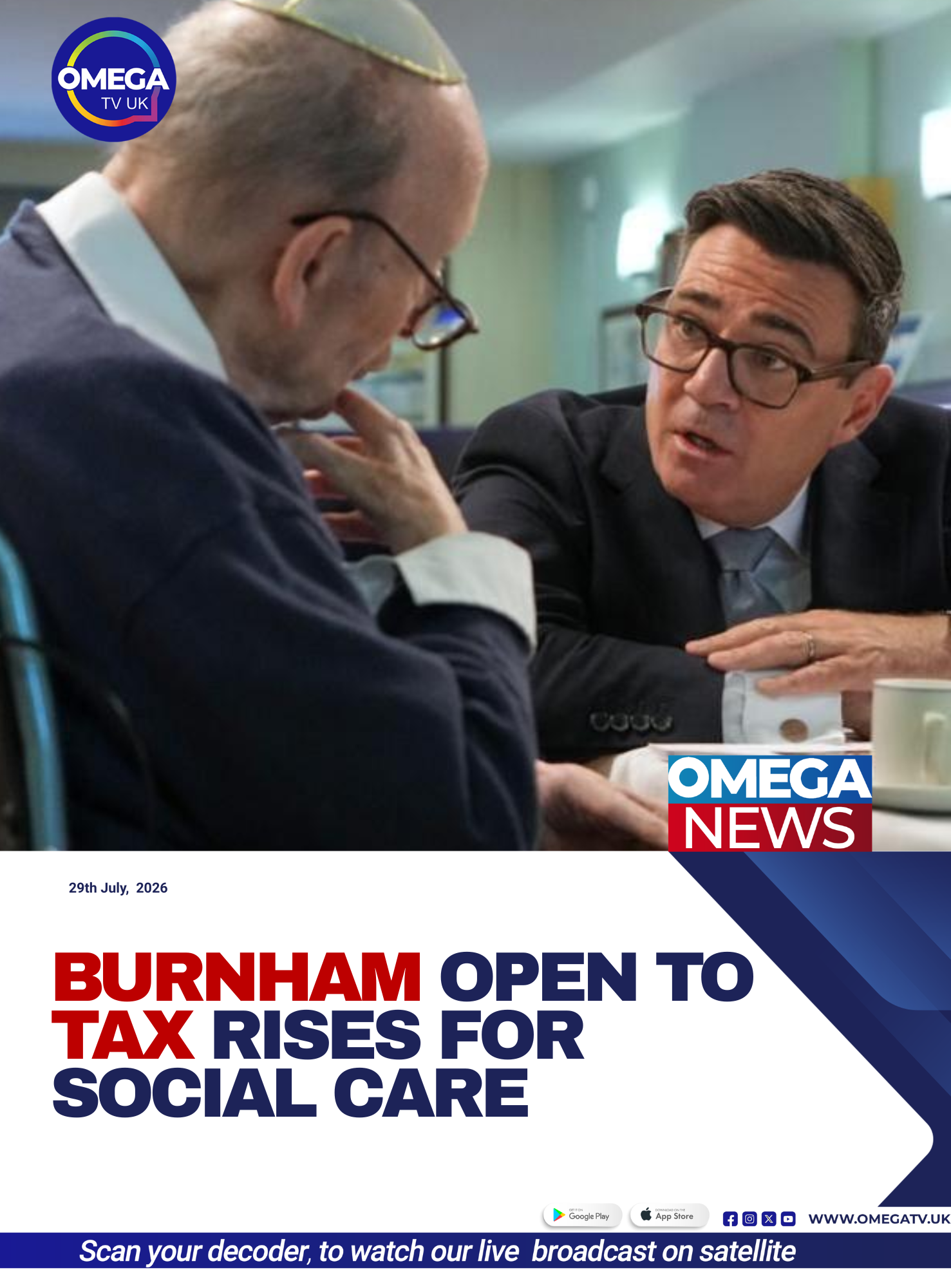
Speaking at a care home in north London, Burnham described the failure of successive governments to fix the social care system as a “major dereliction of public duty.” He said his government was determined to deliver lasting reforms, even if difficult financial decisions were required.
Central to the proposed reforms is the creation of a National Care Service aimed at improving support for older and vulnerable people. The plan also includes higher pay, better training and improved working conditions for care workers, along with closer integration between social care services and the National Health Service (NHS).
Burnham also announced that an independent review into adult social care, led by Baroness Louise Casey, will now be published next summer instead of 2028. The review will examine how a National Care Service could be funded and how the system can become more effective and sustainable.
During his speech, the Prime Minister spoke emotionally about his father, who is living with Alzheimer’s disease. He praised care workers for the support they provide and said he wanted to build a system that would better serve families facing similar challenges.
Burnham stressed that reforming social care would not only improve the lives of vulnerable people but also reduce pressure on the NHS by ensuring patients receive appropriate care outside hospitals.
The Prime Minister has begun discussions with opposition parties in an effort to build cross-party support for the reforms. Liberal Democrat leader Sir Ed Davey participated in the initial talks, while Conservative leader Kemi Badenoch was represented by Shadow Health Secretary Stuart Andrew.
Andrew said any proposals must be backed by a clear, credible and fully costed plan that delivers better care while providing value for taxpayers.
Burnham did not invite Reform UK or the Green Party to the discussions, prompting criticism from both parties, which argued they should be included in conversations about such significant reforms.
When questioned about the possibility of tax increases, Burnham said his government would first focus on making better use of existing resources. However, he acknowledged that achieving broader reforms could require difficult funding decisions in the future.
He also criticised the current social care funding system, arguing that many vulnerable people are forced to spend their life savings or sell their homes to pay for care. Burnham said he wants a fairer approach that protects families from severe financial hardship.
Adult social care in England provides support for older people and adults with disabilities, but unlike the NHS, it is not free at the point of use for everyone. Eligibility for public funding depends largely on a person’s financial circumstances.
Burnham said meaningful reform would require political cooperation and public support, expressing hope that parties across Parliament could work together to deliver a lasting solution after decades of unsuccessful attempts.
The government is expected to continue consultations as it develops plans for one of the UK’s biggest social policy reforms in recent years.