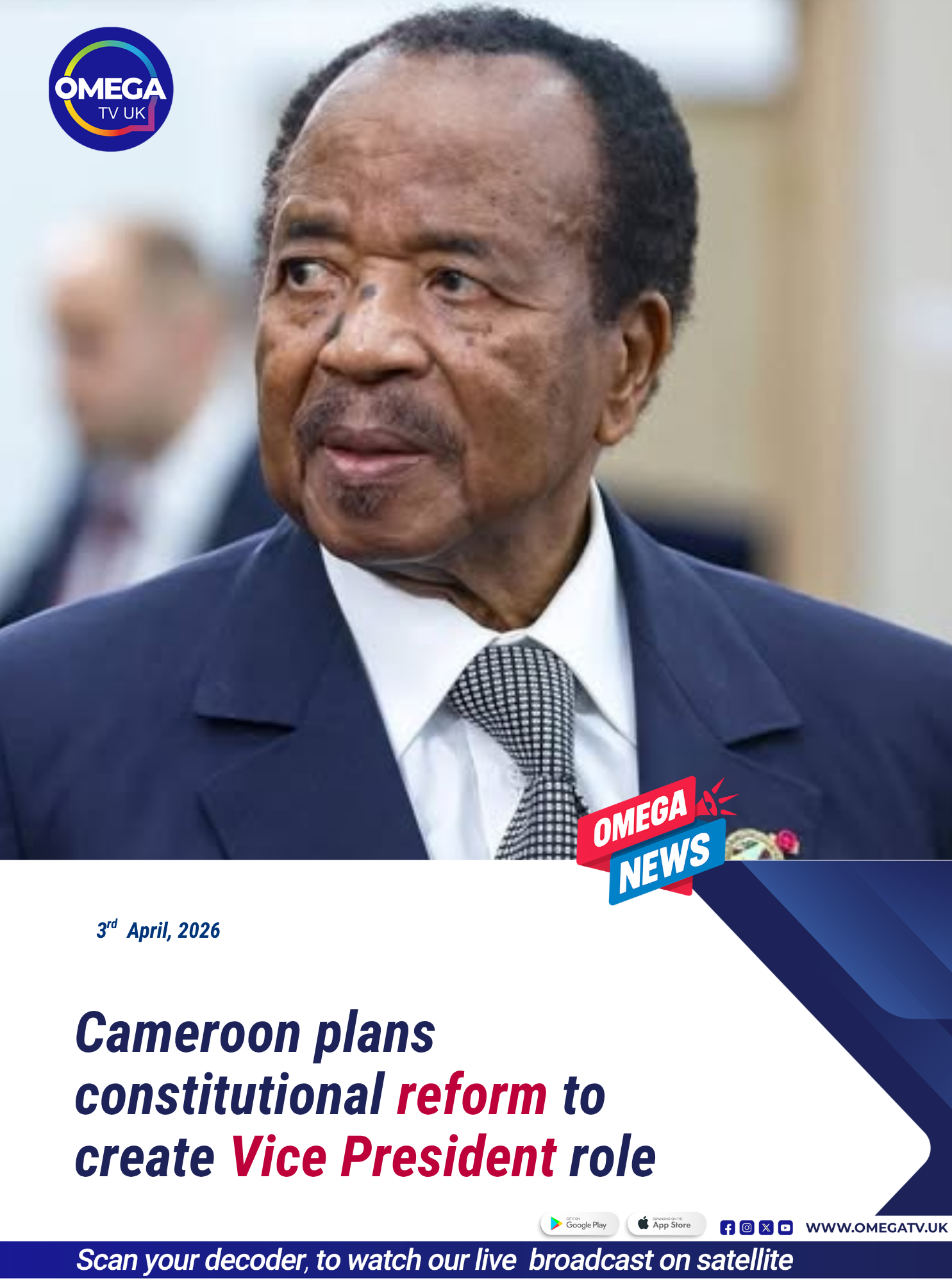
Cameroon is considering a major constitutional reform that would introduce a Vice President position, a proposal that has sparked intense political debate and raised questions about governance, legitimacy, and the future balance of power in the country.
The draft bill, submitted to parliament on April 2, 2026, seeks to amend key sections of the constitution to allow for the creation of the new role. President Paul Biya has called for an urgent joint session of the National Assembly and Senate, known as a congress, to accelerate the review and possible adoption of the proposed changes.
Supporters of the reform argue that establishing a Vice President would strengthen institutional stability and ensure continuity in leadership, particularly in the event of a vacancy at the top level of government. Under the proposal, the Vice President would be appointed and would assume presidential duties if the sitting president is unable to continue in office.
Proponents within the ruling party say the move is a logical step toward improving governance structures. Tabouli Célestin, a member of the ruling party, defended the proposal, stating that the constitutional amendments would help ensure the “proper and harmonious functioning of institutions.”
According to him, the introduction of a Vice President would bring clarity to succession procedures and reduce uncertainty during times of political transition. Supporters also believe the reform could modernise Cameroon’s political system and align it with governance models used in other countries.
However, the proposal has faced strong criticism from opposition figures, who question both the timing and the process behind the reform. Critics argue that such a significant constitutional change should involve broader public consultation rather than being fast-tracked through parliament.
Ndam Njoya Hermine Patricia Tomaino has been among the most vocal critics, raising concerns about the legitimacy of the process. She pointed out that some lawmakers currently in office are serving under extended mandates, which she argues undermines their authority to make major constitutional decisions.
“Submitting such an important reform to officials whose mandates are already in question raises serious concerns,” she said, calling for a more inclusive and transparent approach that involves citizens and civil society groups.
The debate has intensified as the proposal, which had previously circulated as speculation, is now formally on the legislative agenda. Political observers say the reform could have far-reaching implications for Cameroon’s governance, particularly in how power is structured and transferred.
One of the key concerns raised by critics is that the appointment of a Vice President, rather than an elected position, could consolidate power within the executive branch. This, they argue, might limit democratic accountability and reduce checks and balances within the system.
Others worry that the reform could be used to shape future political transitions in a way that benefits the current leadership. With President Biya having been in power for decades, questions about succession have long been a sensitive topic in Cameroonian politics.
Analysts note that while the creation of a Vice President role could, in theory, provide a clear line of succession, the lack of public debate and consultation risks deepening political divisions. Transparency and inclusivity, they say, will be critical in determining whether the reform is accepted by the wider population.
The government, however, maintains that the changes are necessary for stability and continuity. Officials argue that a well-defined succession plan is essential for maintaining order and avoiding potential power struggles in times of crisis.
As the proposed reform moves through parliament, all eyes will be on how lawmakers handle the debate and whether compromises can be reached. The outcome could reshape Cameroon’s political landscape and set a precedent for future constitutional changes.
For now, the issue remains a focal point of national discussion, highlighting broader tensions around governance, democracy, and institutional reform in Cameroon.