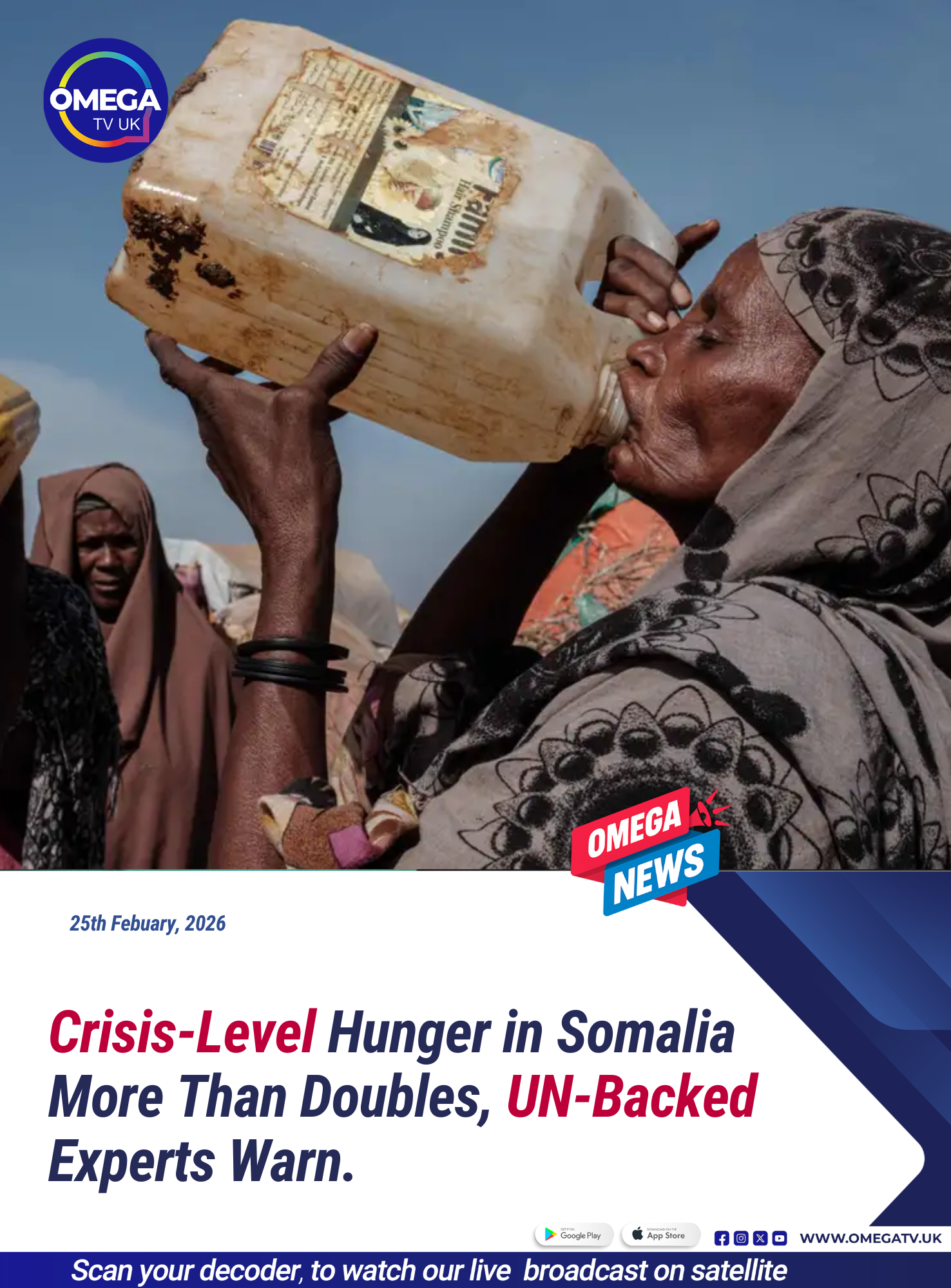
Humanitarian experts have warned that hunger in Somalia has reached crisis levels, more than doubling in recent months. According to UN-backed assessments, millions of people in the country are facing severe food insecurity due to a combination of prolonged drought, conflict, and economic disruption.
The United Nations and partner organizations say that ongoing violence in parts of southern and central Somalia has hindered the delivery of aid, leaving vulnerable populations without adequate access to food, water, and basic healthcare. Experts emphasize that without urgent international support, the situation could escalate into a full-scale famine affecting hundreds of thousands more.
“The scale of the crisis is unprecedented,” said a UN representative. “We are seeing families forced to make impossible choices, including selling assets, skipping meals, and sending children away in search of survival.” The report highlights that women and children are disproportionately affected, with malnutrition rates continuing to rise sharply.
Authorities and aid agencies are calling for immediate action, including increased humanitarian funding, emergency food distribution, and long-term measures to address drought resilience. While local communities have been mobilizing to support those most in need, the challenges of insecurity, inflation, and climate-related shocks are making relief efforts increasingly difficult.
Experts also warn that the lack of consistent rainfall and failed harvests has compounded the crisis. Livestock losses have been significant, and staple food prices have soared, placing additional strain on already fragile households. The UN-backed report calls for both immediate intervention and strategic planning to strengthen food security and prevent further deterioration.
Somalia’s food crisis underscores the urgent need for global cooperation, increased funding, and peacebuilding efforts to stabilize regions affected by conflict. Aid agencies are urging donors and governments to prioritize humanitarian access and accelerate delivery of essential resources before conditions worsen.