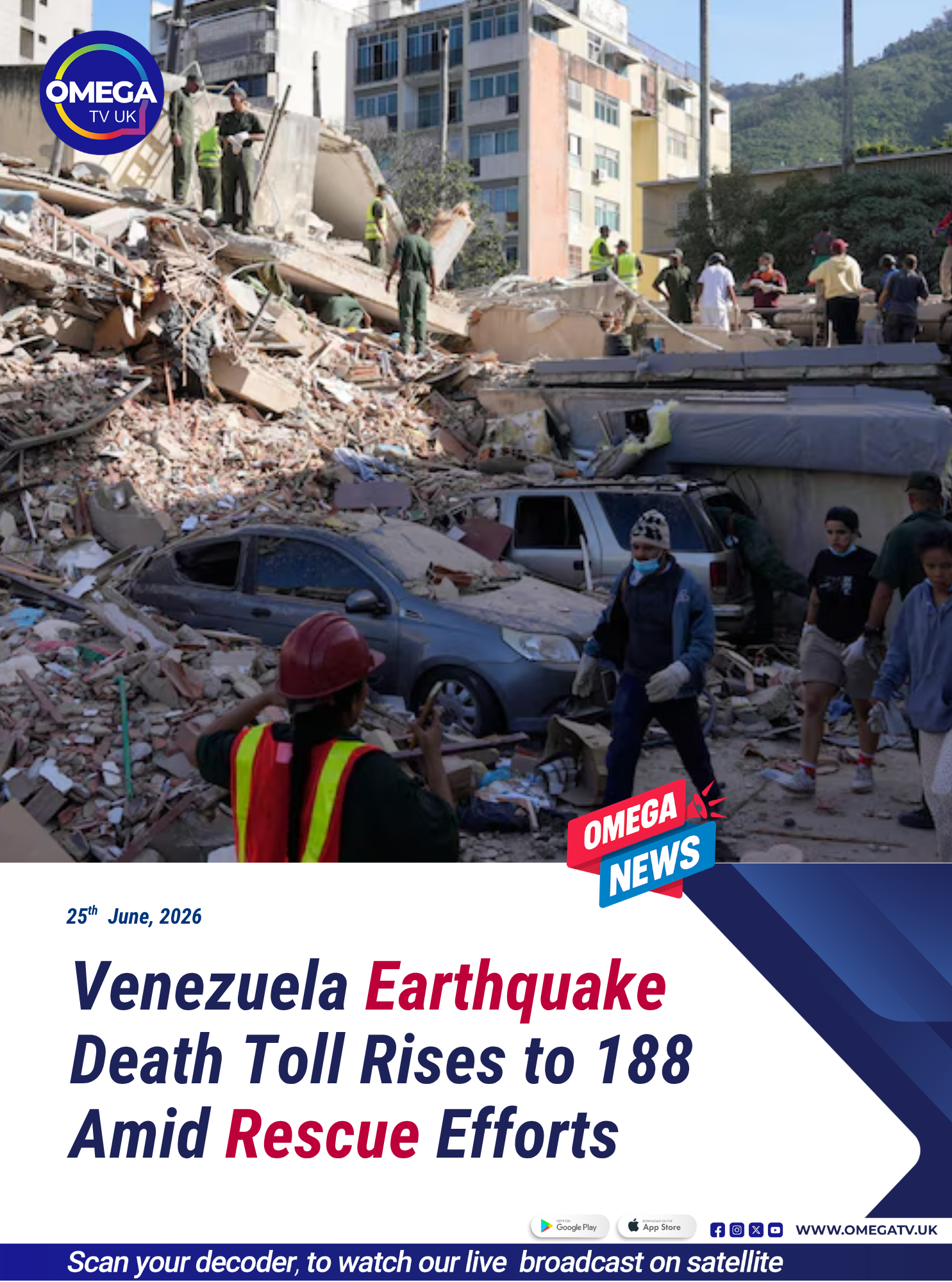
The death toll from Venezuela’s devastating back-to-back earthquakes has risen to at least 188, while more than 1,500 people have been injured as rescue efforts continue across the country.

Emergency teams are racing against time to search through collapsed buildings in Caracas and the coastal state of La Guaira, where widespread destruction has left thousands of residents affected. Authorities fear the number of casualties could continue to rise as rescuers gain access to heavily damaged areas.
According to the United Nations, more than 100 buildings have collapsed following the powerful earthquakes, which struck just one minute apart. Dramatic videos shared online show terrified residents running for safety as buildings shook violently and debris fell into streets.
The earthquakes measured magnitudes of 7.2 and 7.5, making them among the strongest seismic events to hit the country in modern history. The second quake is reported to be the most powerful recorded in Venezuela since 1900, causing extensive damage across multiple regions.
Survivors have described scenes of panic and confusion as the ground continued shaking for an extended period. One resident in Caracas said it felt as though “the world was moving for a long time,” while others reported fleeing their homes in fear of further collapses and aftershocks.
Many families have been forced to spend the night outdoors after their homes were damaged or declared unsafe. One resident, identified as Leander, told the BBC that he slept on the street after the earthquakes left his home uninhabitable.
Rescue crews equipped with search dogs, heavy machinery and specialised equipment continue to comb through rubble in hopes of finding survivors trapped beneath collapsed structures. Hospitals and emergency shelters remain overwhelmed as authorities work to assist injured residents and those displaced by the disaster.
The United States Geological Survey has warned that the final death toll could be significantly higher. Preliminary assessments suggest that thousands of people may have been affected by the disaster, although the full extent of the damage remains unclear.
Government officials and international aid organisations are coordinating relief efforts as emergency responders continue life-saving operations. Temporary shelters have been established for displaced residents, while authorities assess damage to infrastructure, roads, schools and public buildings.
The twin earthquakes have triggered one of the country’s worst natural disasters in recent decades, prompting an outpouring of support from neighbouring nations and humanitarian organisations.
Officials are also monitoring the possibility of aftershocks and have urged residents to remain vigilant, avoid damaged buildings and follow emergency guidance.
As search and rescue operations continue, the focus remains on locating survivors and providing assistance to communities devastated by the powerful earthquakes.