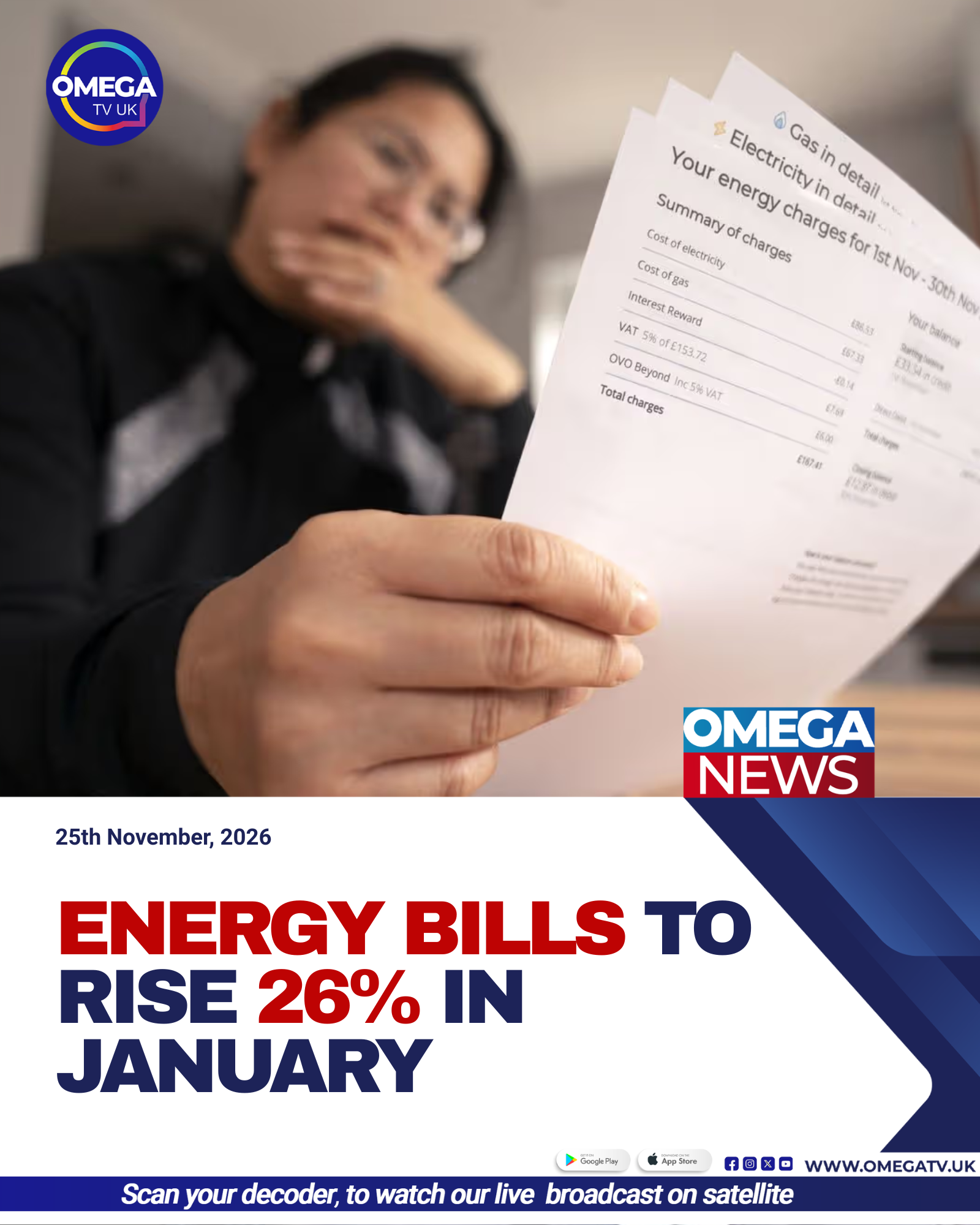
Millions of households across the United Kingdom are facing a sharp increase in energy bills from January, with prices expected to rise by 26% following a surge in wholesale gas costs linked to the war involving Iran.

The increase means a typical household could pay around £37 more per month during the first three months of the year. However, families using more energy during the winter could face additional costs of almost £60 a month.
According to energy regulator Ofgem, a household in England, Scotland or Wales using a typical amount of gas and electricity and paying by direct debit will see its annual bill increase from £1,723 to £2,166 if the new rates remain unchanged for a full year.
The government has announced a £100 payment for millions of households from 4 January to help ease the pressure of higher winter energy costs. This will come alongside an existing reduction in VAT on electricity.
Ofgem said the increase was driven by rising wholesale energy costs faced by suppliers, primarily because of the conflict involving Iran.
Wholesale gas prices rose by 33% during the three-month period used to calculate the January to March price cap. The increase represents the biggest rise in household energy costs since Russia’s invasion of Ukraine triggered a major energy crisis.
The latest announcement has raised concerns among charities and energy suppliers, who warn that more households could struggle to pay their bills and fall into debt.
Dame Clare Moriarty, chief executive of Citizens Advice, warned that families were facing an extremely difficult winter.
Ofgem’s director general for markets, Neil Kenward, said the regulator had written to energy suppliers to remind them of their responsibilities towards customers.
Suppliers have been urged to identify vulnerable households early, make financial assistance easier to access and ensure repayment arrangements are affordable and sustainable.
Campaign organisations Friends of the Earth and Global Witness have also criticised the situation, arguing that major oil and energy companies are benefiting from rising energy prices while ordinary households face higher costs.
However, Energy UK, which represents energy suppliers, said companies responsible for sending household bills do not receive the same financial benefits as international energy producers. It also pointed out that supplier profits are subject to regulatory limits.
The increase is expected to be particularly difficult for households using prepayment meters, as they must pay for energy as they use it rather than spreading costs through regular direct debit payments.
How the new energy price cap will affect households
The price cap limits the amount suppliers can charge per unit of energy, rather than setting a maximum total bill. It mainly affects customers on variable tariffs, while those on fixed-rate deals will generally remain on their agreed prices until their contracts end.
From 1 January, average electricity unit prices will increase from 26.32p to 32.69p per kilowatt-hour.
Gas prices will also rise from 7.97p to 10.96p per kilowatt-hour, taking them above the levels recorded following Russia’s invasion of Ukraine.
Daily standing charges will be set at 54.77p for electricity and 29.65p for gas.
Ofgem reviews the price cap every three months, taking into account wholesale energy costs and other expenses faced by suppliers.
Although international gas prices have fallen in recent days, the reduction will not be reflected in the January cap because the calculation is based on an earlier three-month period. Any sustained fall could instead influence the next review in April.
Energy Secretary Miatta Fahnbulleh acknowledged that the increase would leave many families deeply concerned.
She said British households had been exposed to the effects of overseas conflicts and unpredictable fossil fuel markets for too long.
However, Conservative shadow energy secretary Andrew Bowie criticised the government’s approach, arguing that green levies and taxes were adding to household costs. He also raised concerns about the UK’s participation in an EU energy scheme.
Families prepare for another difficult winter
The impact of rising costs is already forcing some households to make changes to their daily routines.
Stacey, a 40-year-old single mother from Bristol, said managing energy expenses had become a constant struggle and expressed concern about the financial pressure expected in 2027.
She has reduced her central heating temperature from 22C to 19.5C and purchased electric blankets to help keep her family warm.
She also keeps the curtains closed to retain heat inside the house, while her daughters wear thermal clothing when temperatures drop.
Citizens Advice warned that the government’s £100 payment could be used up quickly, particularly by people relying on prepayment meters. The organisation expects more households to seek emergency financial assistance.
Energy UK also described the government support as insufficient and poorly targeted, warning that customer debt could continue to increase.
The government says local councils will additionally have access to a £100 million discretionary fund to assist vulnerable households that do not qualify for the main support scheme.