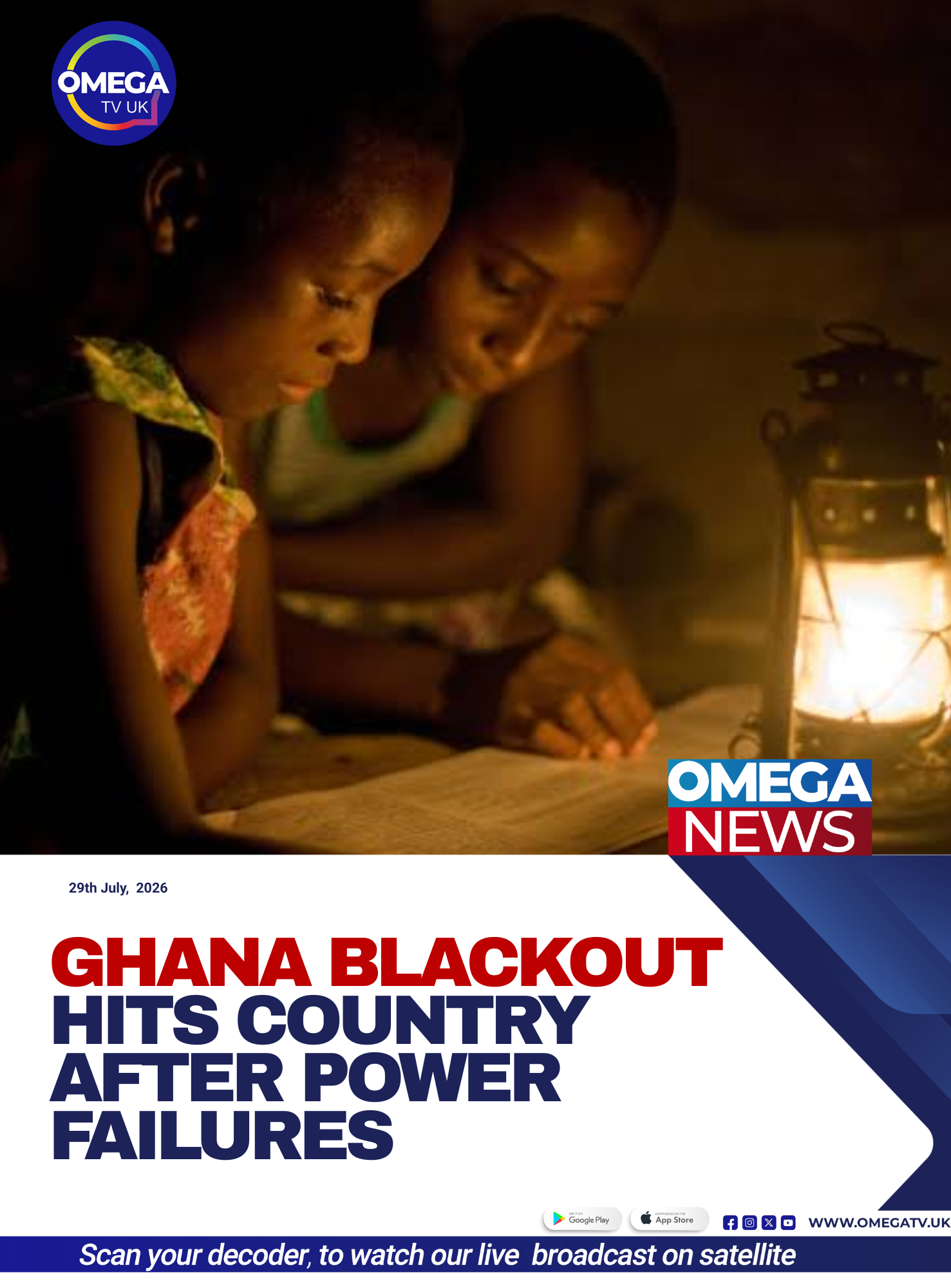
Ghana Hit by Nationwide Blackout After Power Grid Failure

Ghana has experienced a major nationwide blackout after a fault on the country’s power grid forced several electricity plants to shut down, leaving millions of people without power.
The outage affected major cities including the capital, Accra, the commercial city of Kumasi and several communities across northern Ghana. Homes, businesses and essential services were disrupted as electricity supply went off in different parts of the country.
The Ghana Grid Company Limited (GRIDCo), which manages the country’s electricity transmission system, said several power plants were forced to shut down in the early hours of Wednesday following a major technical fault.
GRIDCo said its engineers and system operators were working continuously to restore electricity as quickly as possible while ensuring safety. The company added that a detailed technical investigation was underway to determine the exact cause of the nationwide outage.
However, GRIDCo did not provide a specific timeline for when normal electricity supply would fully return.
The blackout brought back memories of Ghana’s long-running power crisis, popularly known as “dumsor,” a term from the Akan language meaning “on and off.” Although power reliability has improved in recent years, the country continues to face challenges within its electricity sector.
Many households were affected as residents struggled to complete daily activities without electricity. Some commuters also experienced difficulties travelling to work, especially those who could not charge their phones or use digital payment services.
Transport services were disrupted for some people who rely on mobile applications to request taxis, while small businesses that depend on electricity and online services also suffered losses.
Major institutions, including hospitals, were less affected because many have backup generators to continue essential operations during power interruptions.
Ghana’s electricity system has faced challenges due to ageing infrastructure, transmission problems and fuel supply issues. The country has increased the use of natural gas to generate electricity as demand continues to rise due to population growth and urbanisation.
A significant portion of Ghana’s electricity has traditionally come from hydroelectric power plants. However, some of these facilities have faced challenges linked to maintenance and changing water levels.
The introduction of gas-powered electricity generation has helped reduce the frequency of power shortages, but experts say the sector remains vulnerable to technical failures and supply disruptions.
Ghana, one of the world’s leading producers of gold and cocoa, relies heavily on a stable electricity supply to support businesses, industries and economic growth.
Authorities are expected to release further updates as investigations continue and restoration efforts progress. The latest blackout has renewed discussions about the need for stronger infrastructure and greater reliability within Ghana’s energy sector.