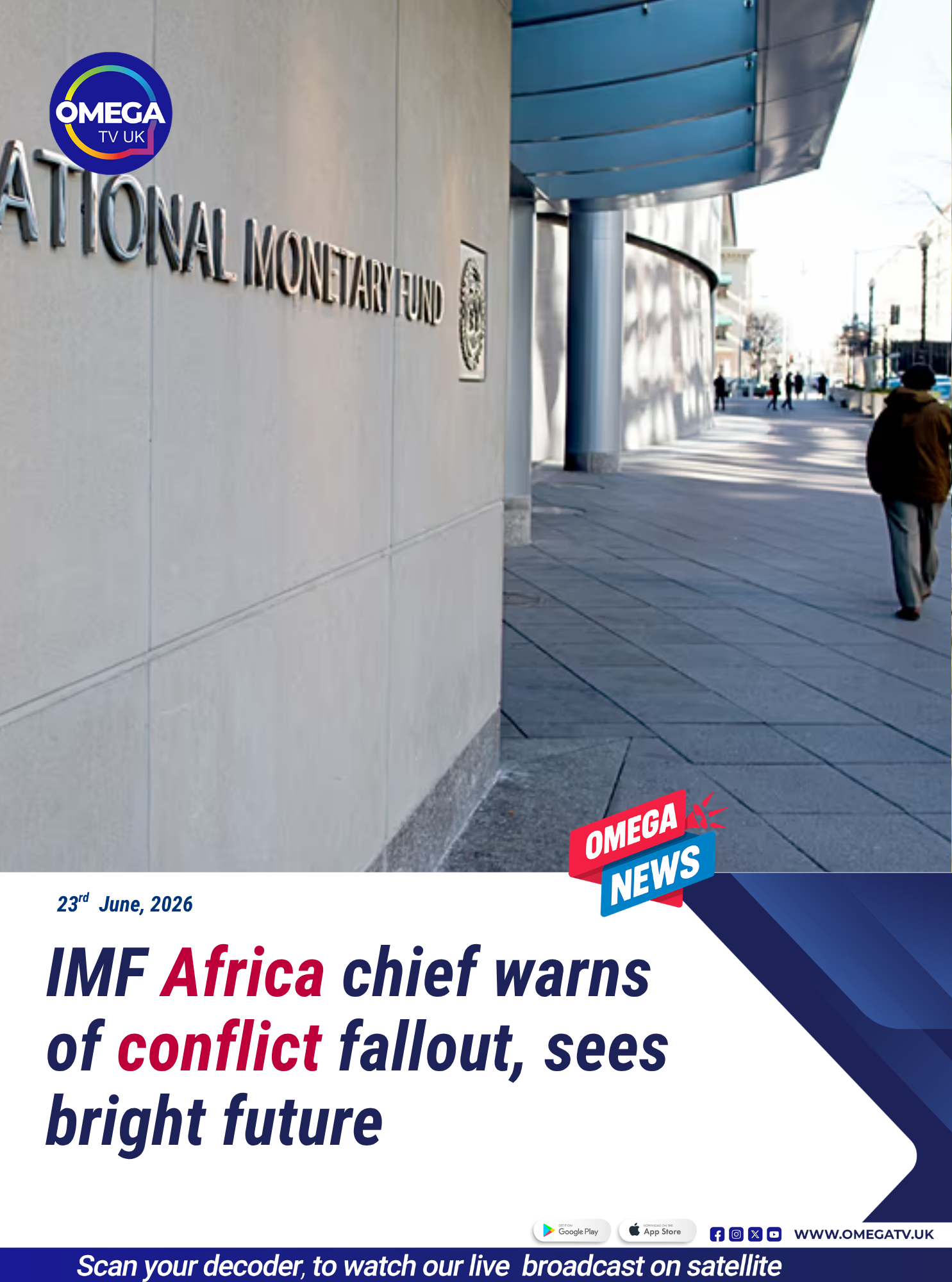
IMF Africa Chief Warns of Middle East Conflict Impact but Sees Strong Growth Potential

The International Monetary Fund’s newly appointed Africa director, Zeine Zeidane, has warned that ongoing conflict in the Middle East could create additional economic pressures for countries across sub-Saharan Africa. Despite these challenges, he remains confident about the continent’s long-term prospects and believes Africa has the potential to become a major driver of global economic growth.
Since assuming leadership of the IMF’s African Department in May, Zeidane has focused on helping African economies cope with the financial and economic consequences of global instability. Rising geopolitical tensions, particularly in the Middle East, are threatening to disrupt critical supply chains, increase energy costs and place additional strain on vulnerable economies already dealing with inflation and debt challenges.
According to Zeidane, interruptions to trade routes, fuel supplies and fertilizer shipments could continue for several months, creating uncertainty for businesses and governments throughout the region. Many African countries rely heavily on imported energy and agricultural inputs, making them particularly vulnerable to global market disruptions.
To help affected nations manage these pressures, the IMF has stepped up financial support across the continent. Additional funding packages have already been approved for Burkina Faso, The Gambia and São Tomé and Príncipe. The institution has also accelerated nearly $200 million in financial assistance for Ethiopia to support its economic recovery efforts and development priorities.
The IMF’s support is aimed at strengthening economic stability, protecting vulnerable populations and helping governments maintain essential public services during a period of heightened global uncertainty. The organization continues to work closely with African governments to address immediate economic risks while promoting long-term growth strategies.
Despite the challenges posed by the Middle East conflict, Zeidane expressed optimism about Africa’s future. He highlighted the continent’s rapidly growing population, expanding workforce, abundant natural resources and increasing levels of innovation as key factors that could drive sustained economic growth in the coming decades.
He argued that with the right policies, investment and economic reforms, Africa could emerge as the world’s next major growth engine. Improved infrastructure, stronger regional trade integration, increased industrialization and greater investment in education and technology could help unlock the continent’s vast economic potential.
Zeidane’s remarks come at a time when many African economies are showing signs of resilience despite global economic headwinds. While challenges remain, including high borrowing costs, climate-related risks and geopolitical uncertainty, international financial institutions continue to view Africa as a region with significant opportunities for future expansion and development.
As global markets monitor developments in the Middle East, African leaders and policymakers will be looking to balance short-term economic pressures with long-term ambitions for sustainable growth. The IMF’s continued support is expected to play a key role in helping countries navigate the current challenges while positioning themselves for future prosperity.